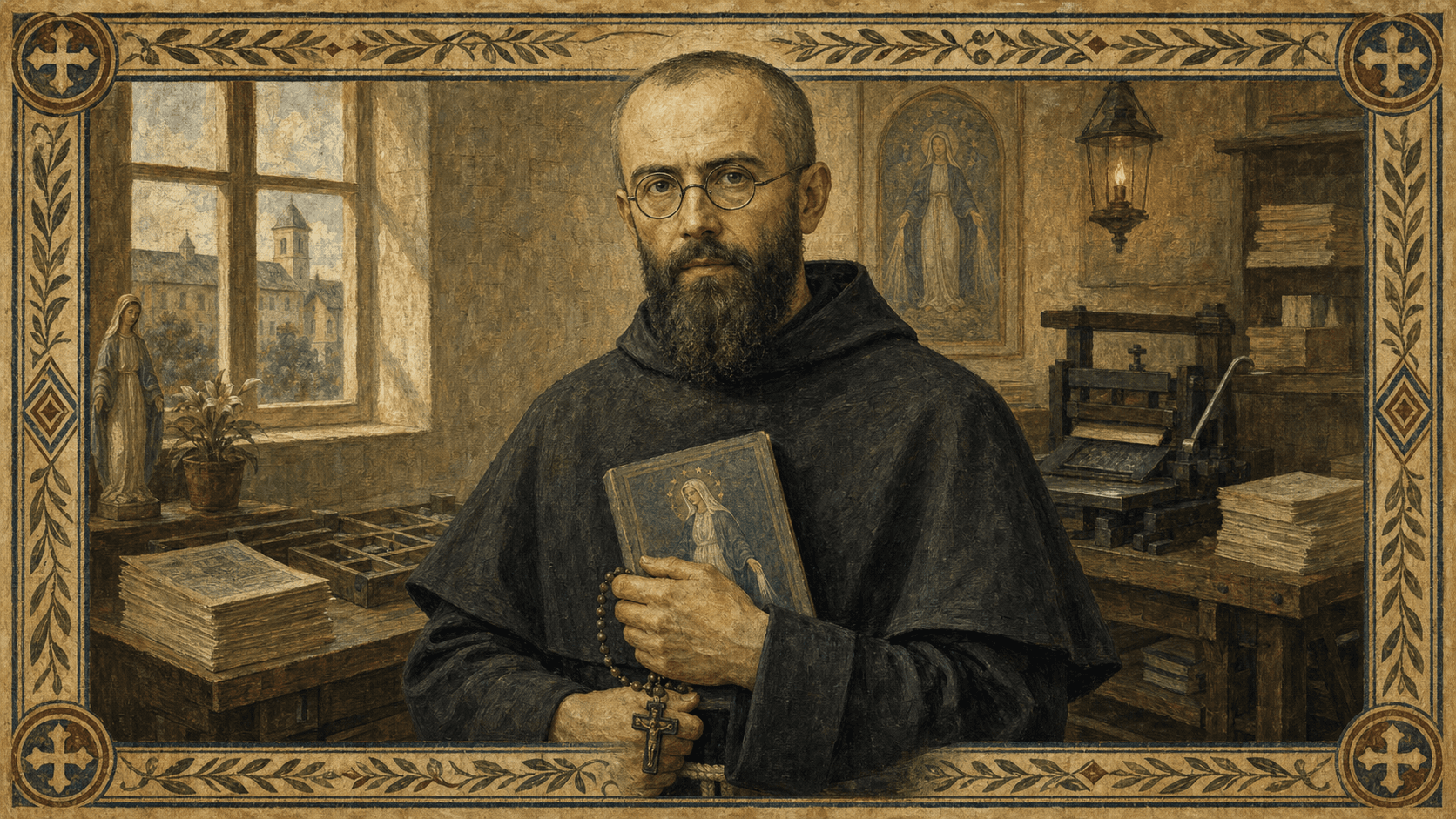
St. Maximilian Kolbe in his Conventual Franciscan habit, holding a rosary and Marian image.

Saints Library

Maximilian Kolbe

Feast August 14 · Martyr of Charity · 1894-1941

The Polish friar who built a city for the Immaculate and, at Auschwitz, stepped out of the line to die in the place of a stranger.

The Story

A man gave his life for a stranger.

Maximilian Kolbe was a Polish Conventual Franciscan with a near-total devotion to the Immaculate Virgin Mary and the organizational drive of an industrialist. He fused them, founding a movement, a magazine, and eventually Niepokalanów - a friary-city and publishing center near Warsaw.

Then Germany invaded Poland. Kolbe's presses were closed, his friary sheltered refugees, and the Gestapo arrested him. In 1941 he was sent to Auschwitz, where he became prisoner 16670 and went on quietly being a priest among men the camp meant to break.

When ten prisoners were condemned to starvation after an escape, Kolbe stepped forward and asked to take the place of Franciszek Gajowniczek, a husband and father. He died so another man could go home. It is the Gospel in its plainest form.
Poland

He was not sentimental.

He was born Raymund Kolbe in 1894 in Russian-occupied Poland, into a poor and devout family. As a child, he later said, he had seen Mary offer him two crowns: white for purity and red for martyrdom. The story is devotional, but it gives the shape his life would take.

As a young Conventual Franciscan he took the name Maximilian, studied in Rome, earned doctorates in philosophy and theology, and was ordained in 1918. Tuberculosis damaged his lungs, but it did not slow his will.

He believed the modern world should be won for Christ through Mary, and that modern tools - printing presses, magazines, efficient organization - should be used for that work. Kolbe was not soft piety. He was a strategist with a printing press and a rosary.

Niepokalanów

A medieval ideal ran on modern presses.

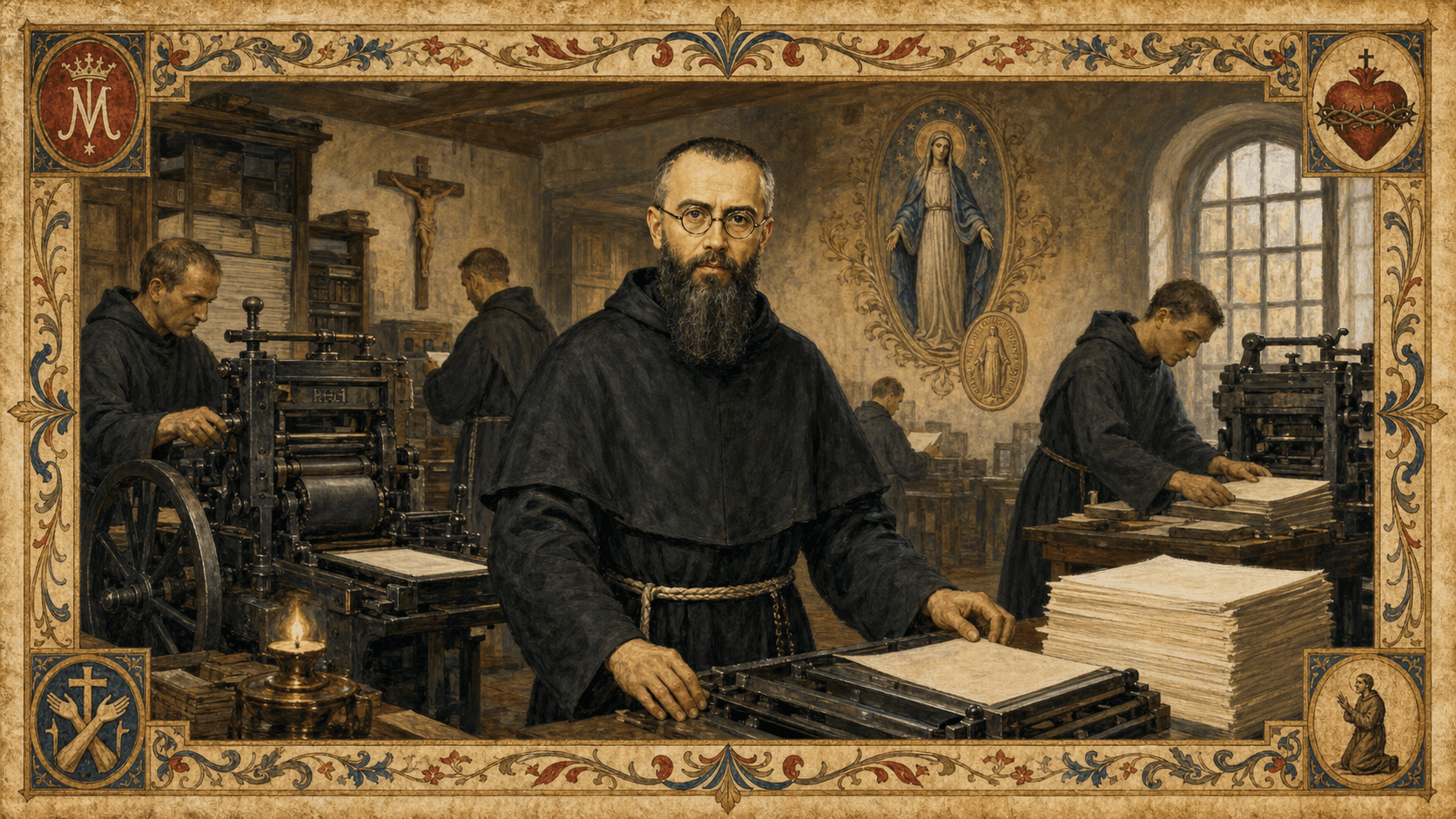
St. Maximilian Kolbe among the printing presses of Niepokalanów.
Kolbe and his friars used modern printing presses for an intensely Marian mission.

In 1917 Kolbe founded the Militia Immaculatae, the Knights of the Immaculate. Back in Poland, he started the Knight of the Immaculate magazine, and its growth demanded a press, then more presses, then a whole place to house the work.

Niepokalanów, the City of the Immaculate, became one of the largest friaries in the world and a major publishing operation. Hundreds of friars ran presses, printed magazines and newspapers, and treated the machinery of mass media as an instrument of evangelization.

In 1930 he left it for Japan, founding another mission at Nagasaki, Mugenzai no Sono, the Garden of the Immaculate. He returned to Poland in 1936, with his health failing. Three years later the Germans came.

Auschwitz

He remained a priest there.

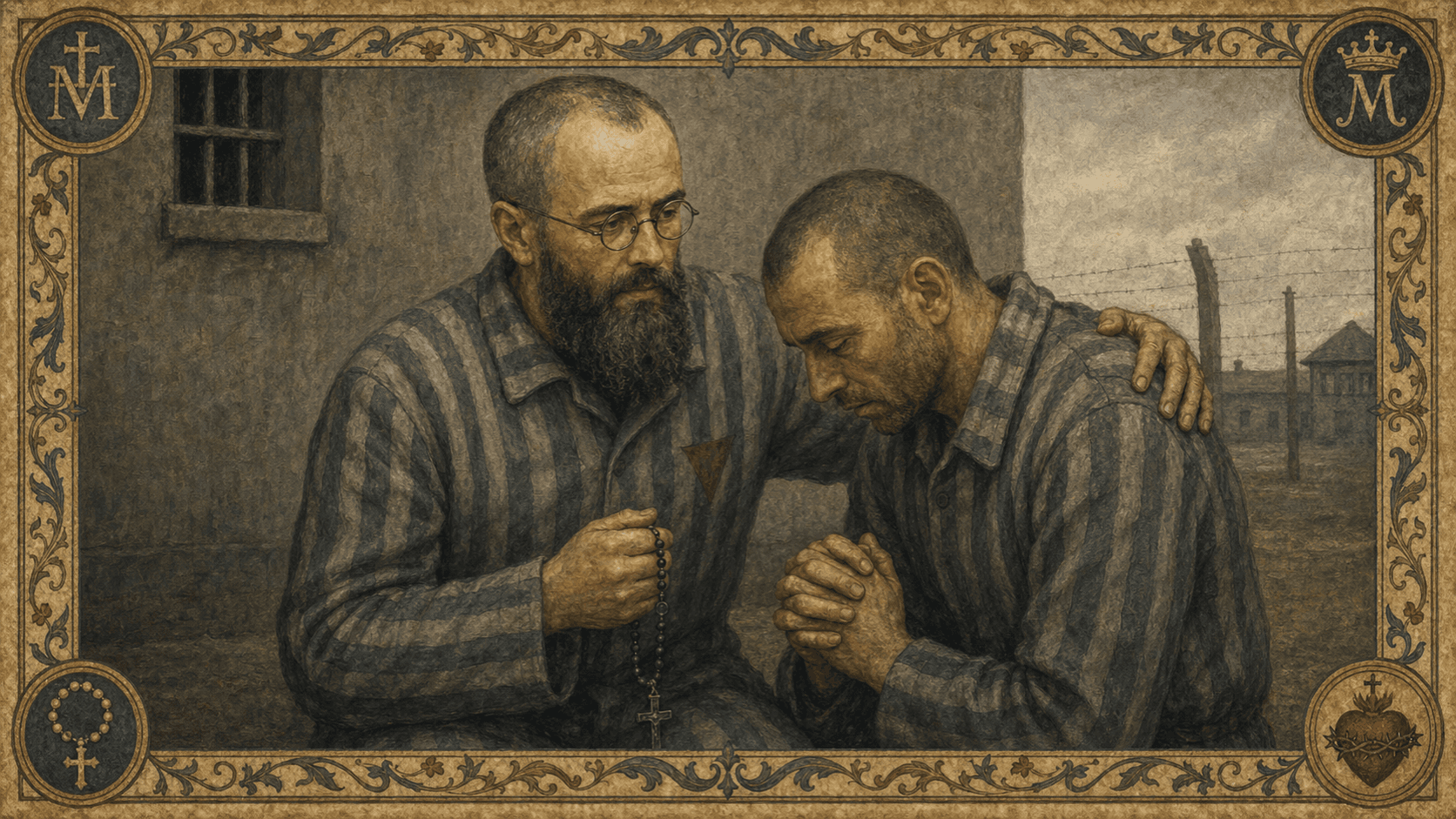
St. Maximilian Kolbe ministering to a fellow prisoner at Auschwitz with grave restraint.
Kolbe ministers to another prisoner at Auschwitz, where witnesses remembered him praying with the dying.

When Germany invaded Poland, Niepokalanów became a refuge for displaced people, including Jews. Kolbe also continued publishing material critical of the occupation. The Gestapo arrested him in February 1941; in May he was transferred to Auschwitz.

There is no need to describe Auschwitz at length. It is enough to say that Kolbe was stripped of his habit, shaved, beaten, starved, and worked like the rest. Witnesses remembered that he heard confessions in secret, gave away food, prayed with the dying, and calmed despair.

The camp was designed to make faith and charity impossible. Kolbe became, in survivor memory, a point of light in the dark.

The Substitution

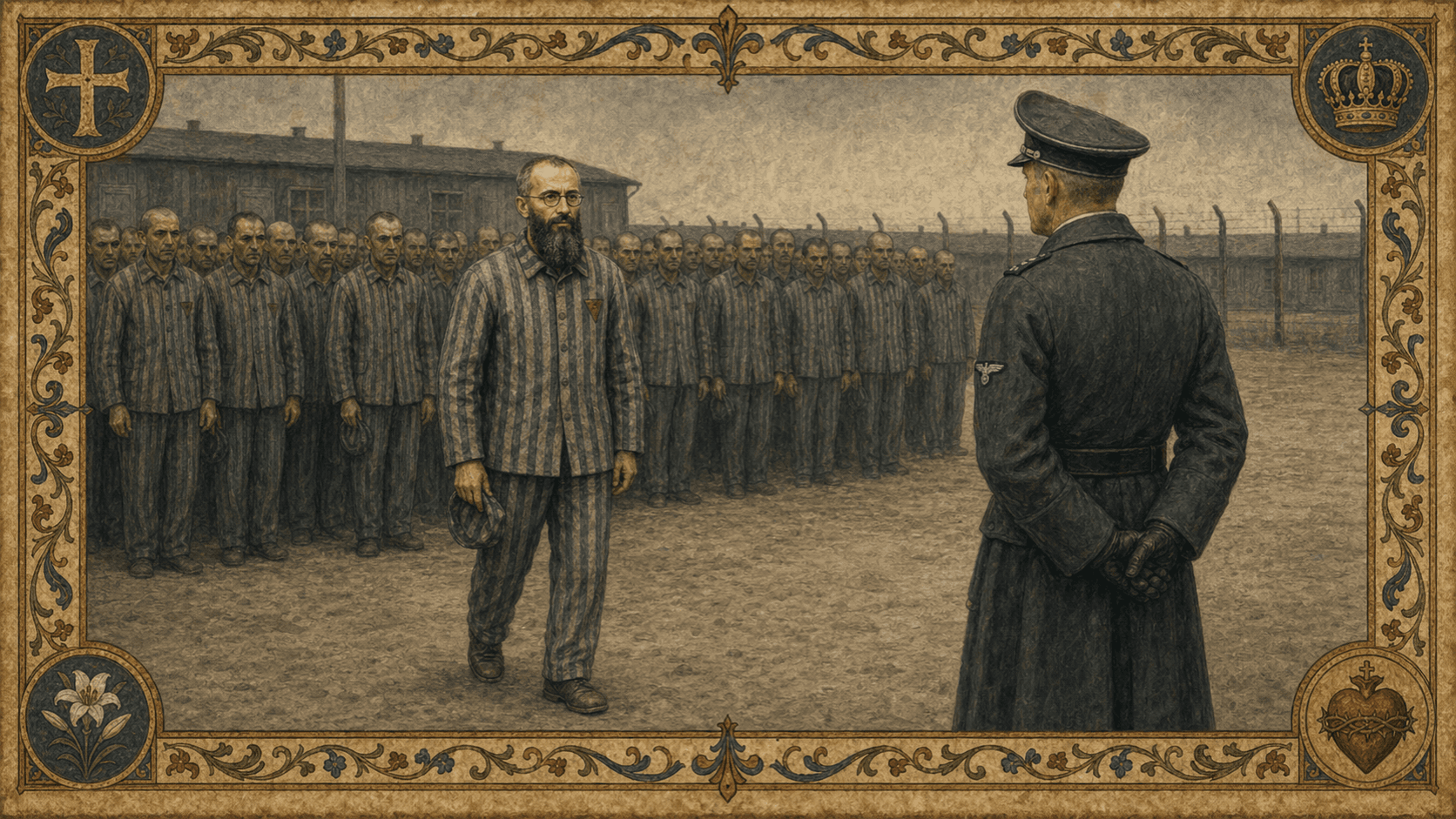
He stepped out of the ranks.

St. Maximilian Kolbe stepping forward at Auschwitz to offer his life for another prisoner.
Kolbe steps forward to take the place of Franciszek Gajowniczek.

At the end of July 1941, after a prisoner escaped from Kolbe's block, the deputy commandant chose ten men to die by starvation. One of them, Franciszek Gajowniczek, cried out for his wife and children.

Kolbe had not been selected. He could have remained silent. Instead he removed his cap, stepped toward the commandant, and asked to take the man's place. The camp accepted the exchange.

There was no advantage in the act, no calculation, no speech for history. One man freely laid down his life so another man could live.

Block 11

The cell became a place of prayer.

The condemned men were locked in the starvation bunker. Bruno Borgowiec, a Polish prisoner assigned to the cells, later testified that what was normally a place of screams became a place of prayers, hymns, and songs to Mary.

Kolbe helped the dying prepare to meet God. One by one the men died. After about two weeks, when the guards wanted the cell cleared, Kolbe was still alive. On August 14, 1941, he was killed by carbolic acid injection. His body was burned at Auschwitz. There is no grave.

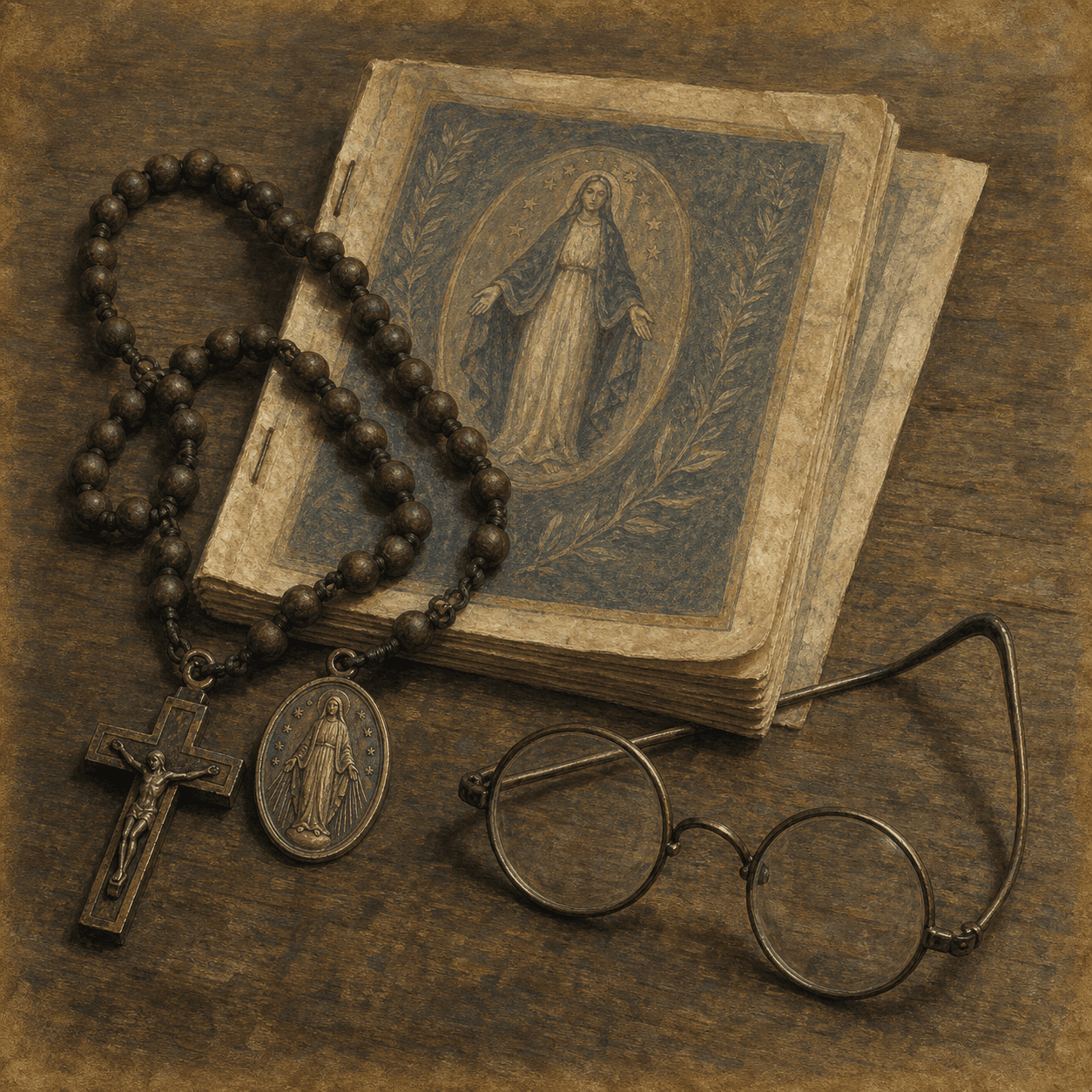
A still life for St. Maximilian Kolbe with a rosary, Miraculous Medal, booklet, and round glasses.
The round glasses, rosary, medal, and presswork gather Kolbe's witness in quiet objects.

Canonization

John Paul II called him a martyr of charity.

Kolbe was beatified in 1971. The classification was complicated: martyrdom is ordinarily death in hatred of the faith, while Kolbe had died in an act of charity. He was beatified as a confessor.

In 1982, Pope John Paul II canonized him and named him a martyr - a martyr of charity. The man he had saved, Gajowniczek, was present in St. Peter's Square. The saved life and the sacrificed life met before the Church.

Modern Witness

He answered the century that tried to disprove the Gospel.

Kolbe matters because he answered the deepest doubt of the modern world by living it down. Auschwitz was the strongest argument the twentieth century made against the dignity of the person. Inside it, Kolbe freely gave his life for one ordinary man with a family.

His sacrifice declares that a single anonymous prisoner was worth a saint dying for, because every human person had already been worth the life of God.

He matters, too, because he was strong. His holiness was not a soft temperament. It was an iron will surrendered to love.

Reading

Meet him through the life and the witnesses.

Kolbe wrote constantly, mostly in Polish and often about the Immaculate. The best path begins with a reliable biography, then the eyewitness accounts of Auschwitz, then selections from his own Marian writings.

Read him soberly. Do not turn Auschwitz into spectacle or flatten the historical questions around his pre-war publications. The saint is not made smaller by honest history.

A Word of Kolbe

The words are almost unbearably plain.

There is no flourish in the sentence. Kolbe says who he is and why he is asking. The reason is not abstract: the condemned man has a wife and children. That is enough.

Greater love has no one than this. A real modern man, in Auschwitz, did it.

Connected Saints

A family of holiness.

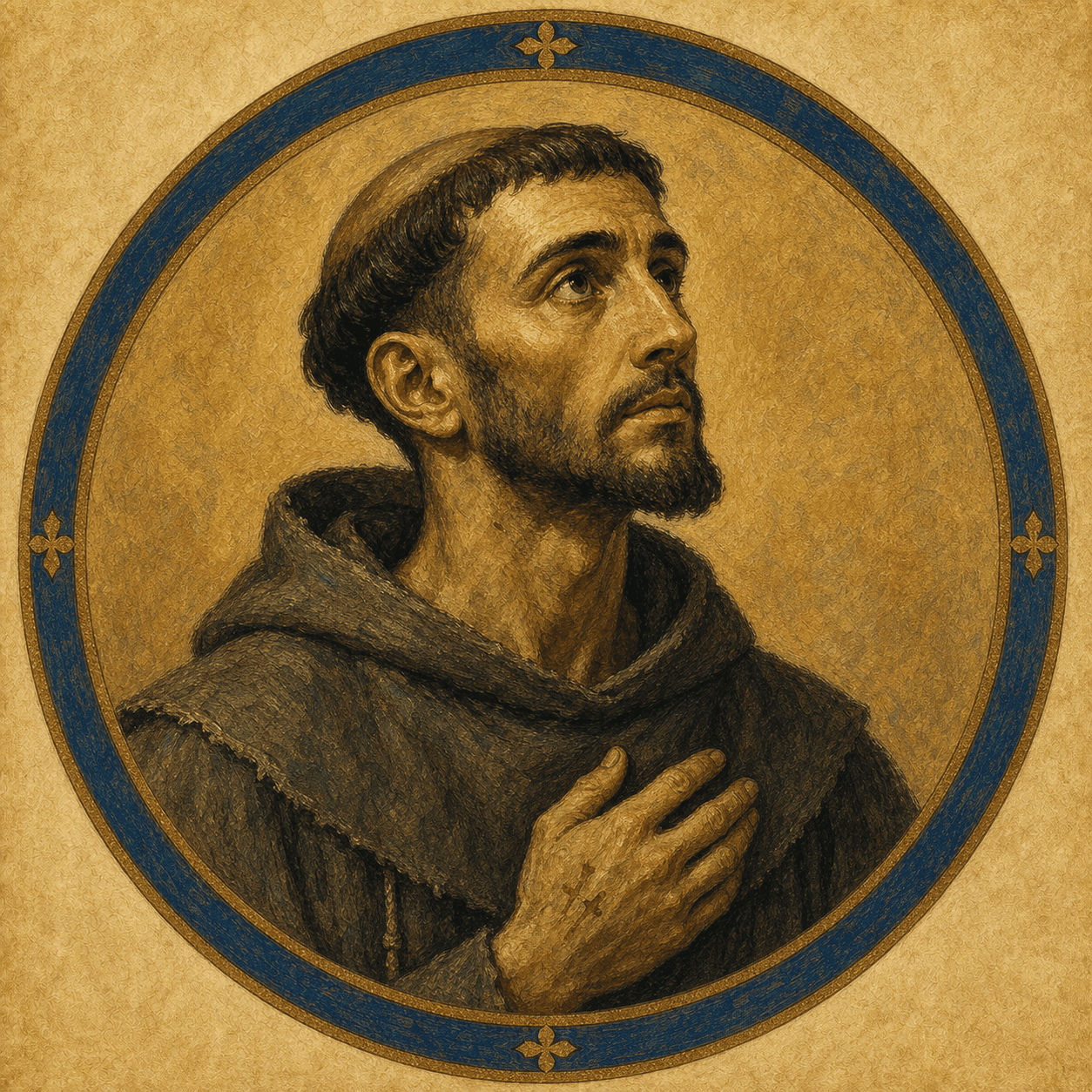
Portrait medallion of St. Francis of Assisi in a simple Franciscan habit.

St. Francis of Assisi

The founder of the Franciscan family whose Gospel literalism Kolbe carried into the twentieth century.

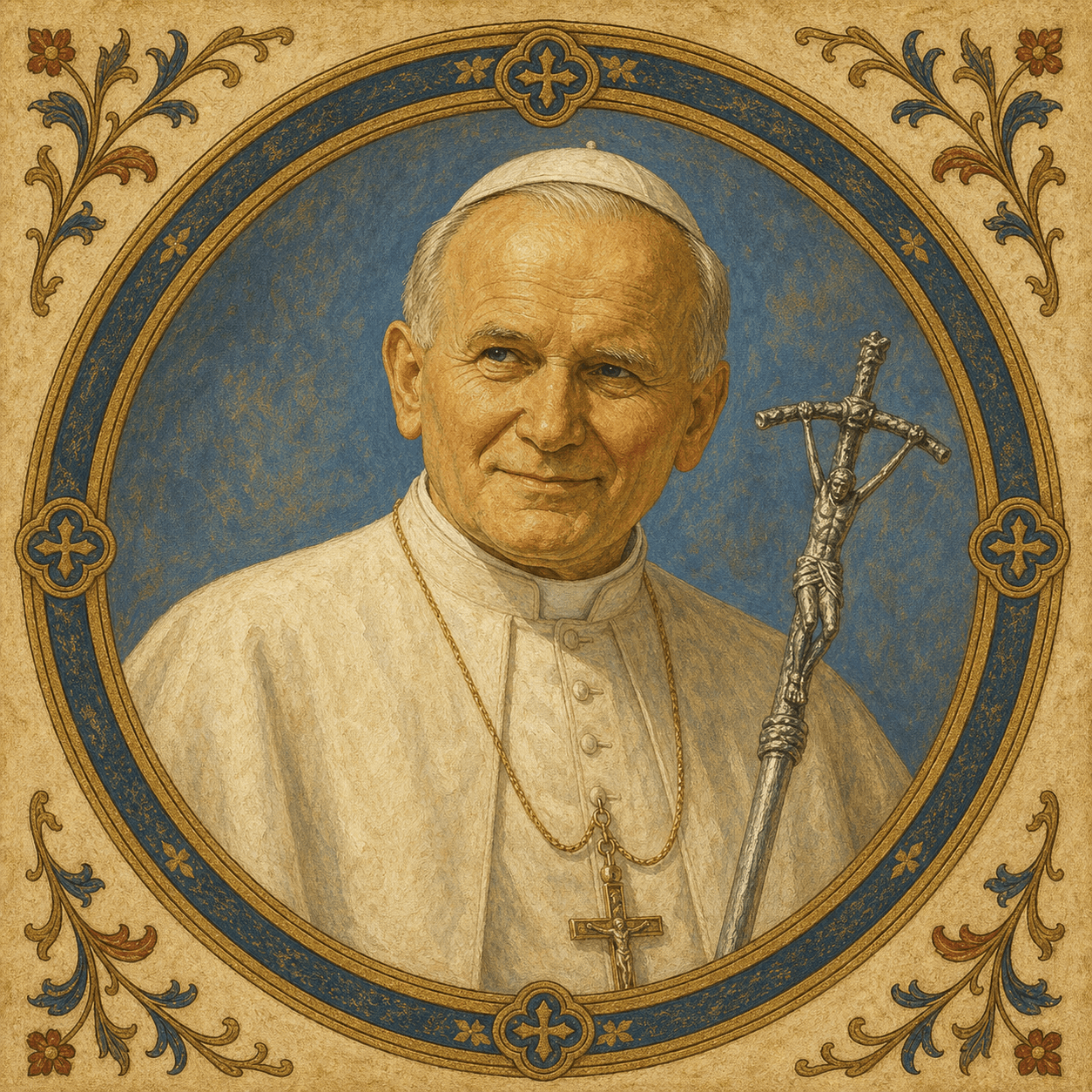
Portrait medallion of St. John Paul II in the white papal cassock.

St. John Paul II

The fellow Pole who canonized Kolbe and named him a martyr of charity.

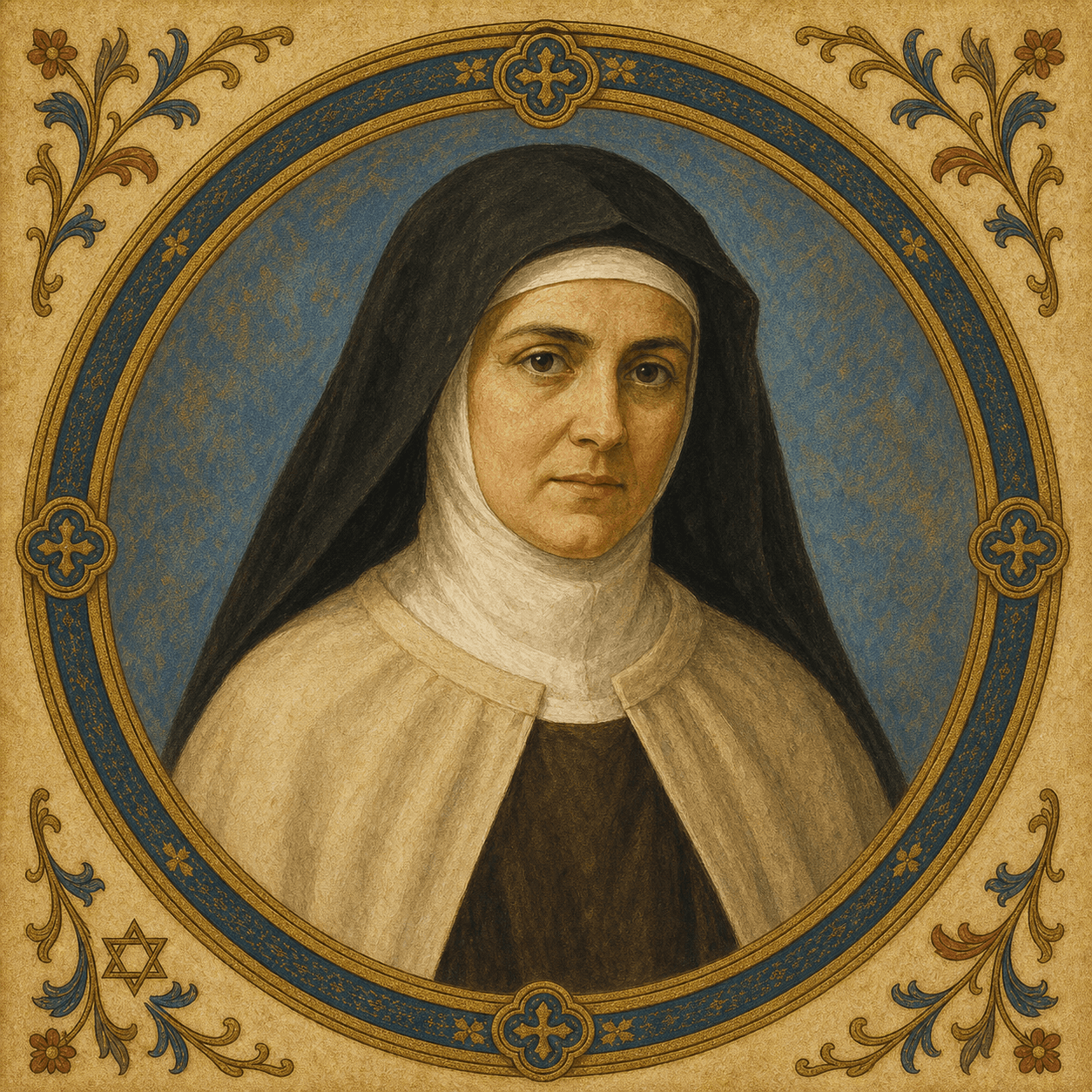
Portrait medallion of St. Teresa Benedicta of the Cross in a Carmelite habit.

St. Teresa Benedicta

Edith Stein, the Jewish-born Carmelite philosopher murdered at Auschwitz a year after Kolbe.

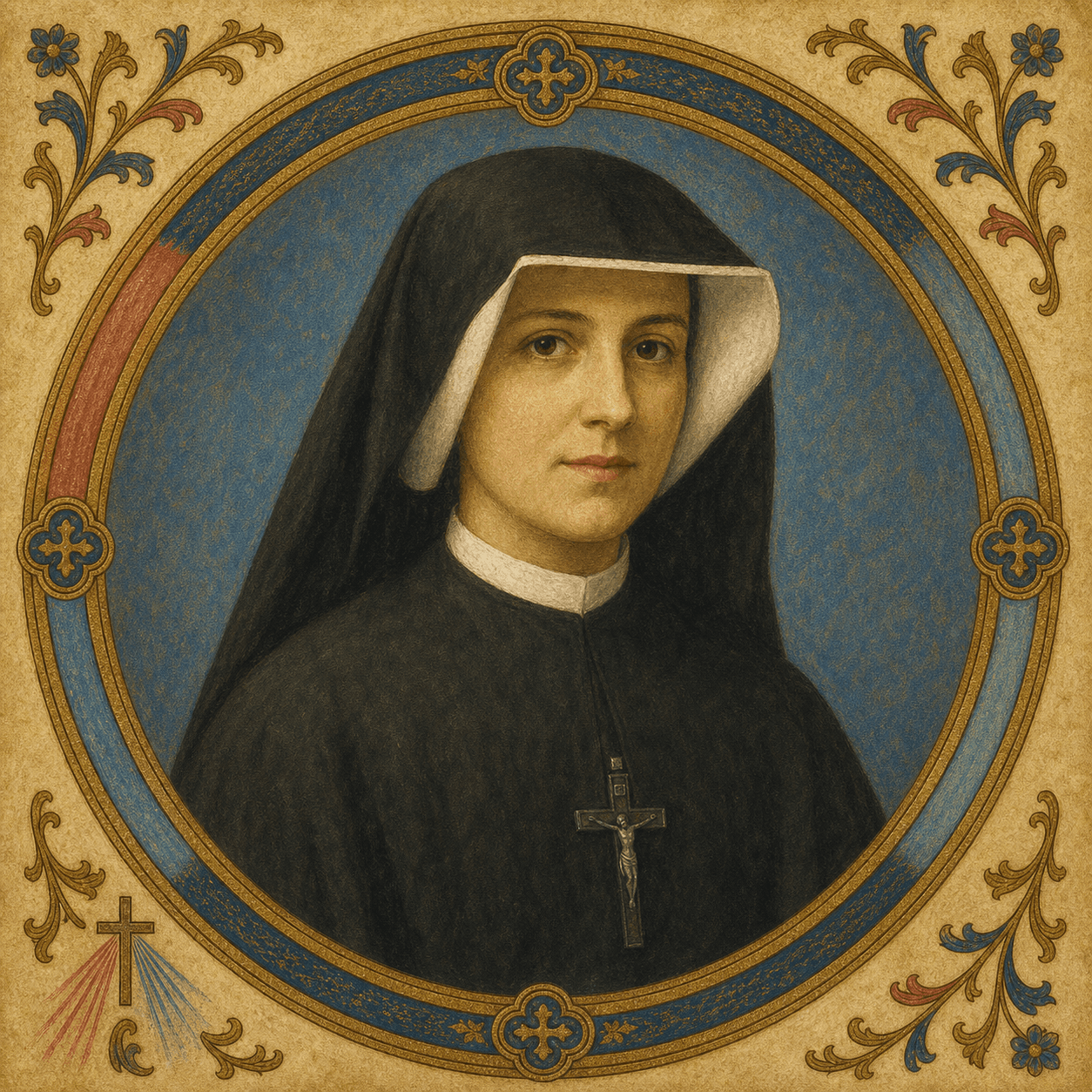
Portrait medallion of St. Faustina Kowalska in the habit of Our Lady of Mercy.

St. Faustina Kowalska

The Polish mystic of Divine Mercy, Kolbe's countrywoman and near-contemporary.

Frequently Asked

Common questions about Kolbe.

Who was St. Maximilian Kolbe?+
He was a twentieth-century Polish Conventual Franciscan friar and priest, founder of the Knights of the Immaculate and Niepokalanów, and a missionary to Japan. Arrested by the Gestapo and sent to Auschwitz, he volunteered to take the place of a condemned stranger and died in August 1941. The Church honors him as a martyr of charity.
What did Kolbe do at Auschwitz?+
After an escape from his block, the camp chose ten men to die by starvation. When Franciszek Gajowniczek cried out for his wife and children, Kolbe stepped forward and asked to take his place. He spent his last days leading the condemned men in prayer before being killed by injection on August 14, 1941.
Why is he called a martyr of charity?+
Kolbe was not executed because he refused an order to deny Christ. He freely gave his life in the supreme act of charity Christ commands. Pope John Paul II canonized him in 1982 and named him a martyr, recognizing that this act of love was itself a witness to the Gospel.
What happened to the man he saved?+
Franciszek Gajowniczek survived Auschwitz and the war, though his sons were killed. He lived until 1995 and spent the rest of his life telling the story of the priest who died for him. He was present for Kolbe's beatification and canonization.
Did Kolbe shelter Jewish refugees?+
Yes. During the occupation, Niepokalanów sheltered thousands of displaced people, including Jews. Honest history also avoids flattening the record: some historians debate elements of his pre-war publications, and that debate should be acknowledged without obscuring his documented wartime courage.
Why was Kolbe so devoted to Mary?+
His whole mission centered on Mary as the Immaculate. He founded the Knights of the Immaculate, named his friaries for her, and believed total consecration to Mary was the surest path to Christ.
Why is there no tomb of St. Maximilian Kolbe?+
His body was cremated at Auschwitz and there is no grave. The principal relics venerated by the faithful are strands of hair he had given to his friars before his final arrest.

Sources

Read beyond summaries.

Kolbe requires special restraint: eyewitness testimony, Church teaching, and responsible modern history belong together.

Primary

  • Bruno Borgowiec and other Auschwitz survivor testimony on the substitution and the starvation bunker.
  • St. Maximilian Kolbe's letters, conferences, and articles on the Immaculate and the Militia Immaculatae.
  • Auschwitz Museum materials on prisoner 16670, Block 11, and the death of Kolbe.

Magisterial

  • Pope St. John Paul II's canonization homily, October 10, 1982.
  • Pope Paul VI's 1971 beatification of Maximilian Kolbe.
  • The Gospel of John 15:13 and the Catechism's teaching on martyrdom and charity.

Historical

  • Reliable biographies treating Niepokalanów, the Nagasaki mission, and Auschwitz.
  • Franciscan and Vatican biographical accounts of Kolbe's life and witness.
  • Serious scholarship on the wartime sheltering of refugees and the debated pre-war publication record.

Last reviewed: June 7, 2026

On this page+