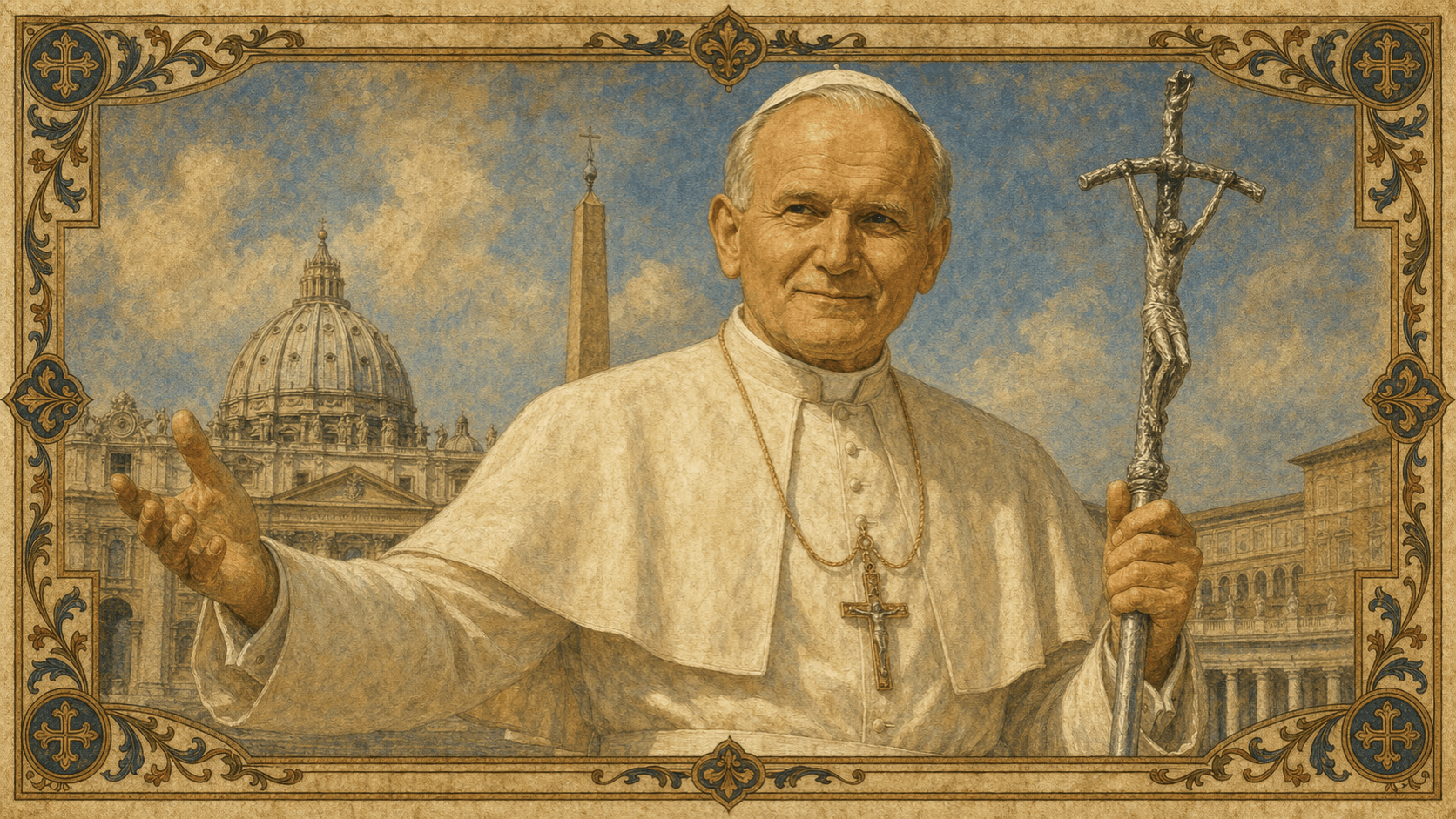
St. John Paul II in the white papal cassock, holding the bent-crucifix ferula.

Saints Library

John Paul II

Feast October 22 · Pope · 1920-2005

The Polish pope who told the world not to be afraid, forgave the man who shot him, and made even his weakness a witness to life.

The Story

He told a frightened century not to be afraid.

Karol Wojtyła knew suffering early. His mother died when he was eight, his brother when he was twelve, and his father when he was twenty. By young adulthood his whole immediate family was gone, and Nazi Germany had occupied Poland.

He worked under occupation, studied secretly for the priesthood, and was ordained in 1946 into a Poland entering Communist rule. Over the next decades he became priest, professor, bishop, archbishop, and cardinal under a regime that wanted the Church silent.

In 1978 he became the first non-Italian pope in 455 years. He spent twenty-six years proving the words of his first homily: be not afraid.
Wadowice and Kraków

He was formed in the furnace.

Wojtyła was born in 1920 in Wadowice, two years after Poland regained independence and twenty years before it would be occupied again. His home was marked by grief and prayer, especially after his mother and brother died.

During the Nazi occupation, universities were closed and Polish Catholic life was attacked directly. Wojtyła worked in a quarry and a chemical plant while studying in the clandestine seminary of Cardinal Sapieha.

That formation gave him a permanent understanding of the systems that reduce human beings to instruments, and of the only answer strong enough to resist them.

The Person

He was an actor, poet, athlete, and philosopher.

Before the cassock there was theater. Wojtyła was an actor and poet, a hiker and skier, a man of unusual warmth and vitality. He did not become holy by becoming less human.

His intellectual work defended the human person: each person as unique, free, unrepeatable, never a mere means. He had watched Nazism and Communism treat people as raw material. His philosophy and pastoral work answered that lie.

October 1978

The doors opened.

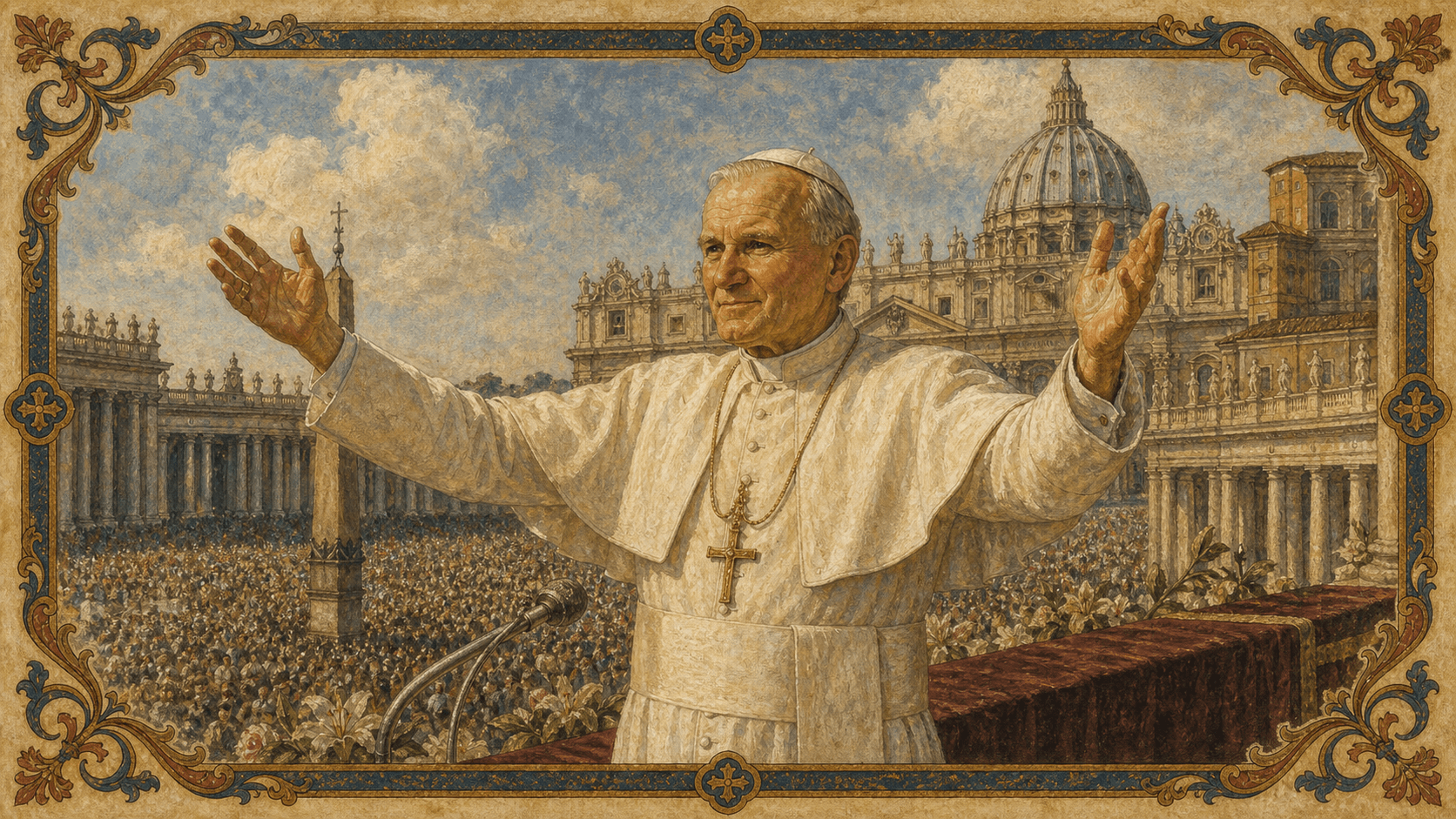
St. John Paul II preaching at the inauguration of his pontificate in 1978.
John Paul II preaches at the inauguration of his pontificate in 1978.

On October 16, 1978, the cardinals elected the fifty-eight-year-old cardinal from Communist Kraków. At his installation Mass on October 22, he gave the sentence that became the watchword of his whole pontificate: Be not afraid! Open wide the doors for Christ.

He would not wait in the Vatican for the world to come. He traveled, preached, embraced crowds, spoke to the young, and used modern media with the boldness Kolbe had brought to the printing press.

Poland

Fear began to break.

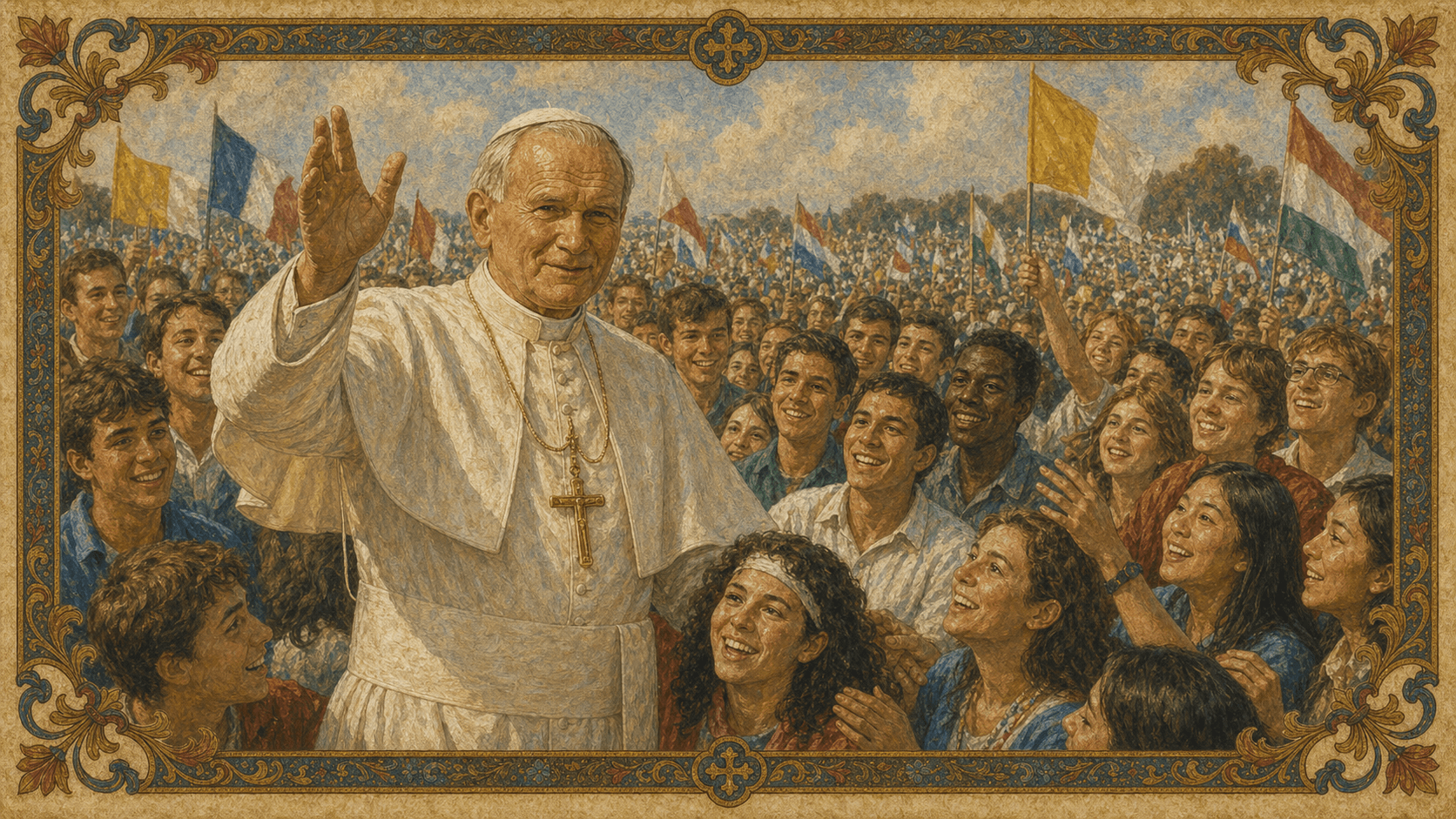
St. John Paul II among a crowd of young people at a World Youth Day style gathering.
John Paul II drew young people across the world, especially through World Youth Day.

In June 1979 he returned to Communist Poland. Millions came out to see him. He reminded them that they were not alone, that they had a faith and dignity the state could not erase, and that fear was not their master.

He did not topple Communism by himself. But historians widely recognize that his first Polish pilgrimage was one indispensable moral force in the rise of Solidarity and the collapse of the Iron Curtain.

The same confidence drew the young. World Youth Day became one of the great visible surprises of the late twentieth century: millions gathering to pray with the old man in white.

May 13, 1981

He answered violence with mercy.

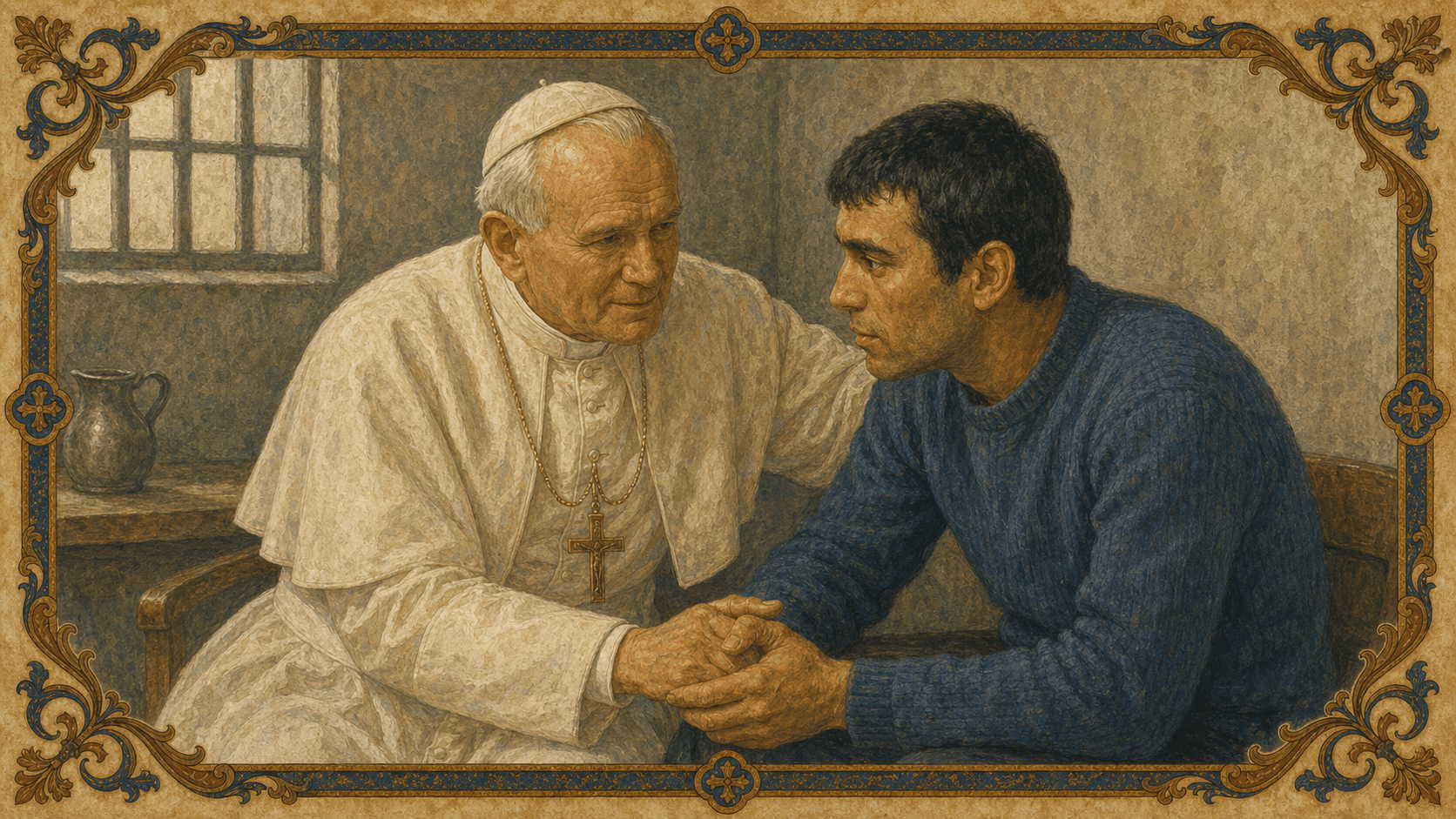
St. John Paul II forgiving Mehmet Ali Ağca in prison.
John Paul II visits Mehmet Ali Ağca in prison in 1983.

On May 13, 1981, the feast of Our Lady of Fátima, Mehmet Ali Ağca shot John Paul II at close range in St. Peter's Square. The pope nearly died.

He attributed his survival to Mary's protection and later placed one of the bullets in the crown of Our Lady's statue at Fátima. In 1983 he went to Ağca's prison cell, sat beside him, and forgave him in person.

The Long Pontificate

The papacy went out to the world.

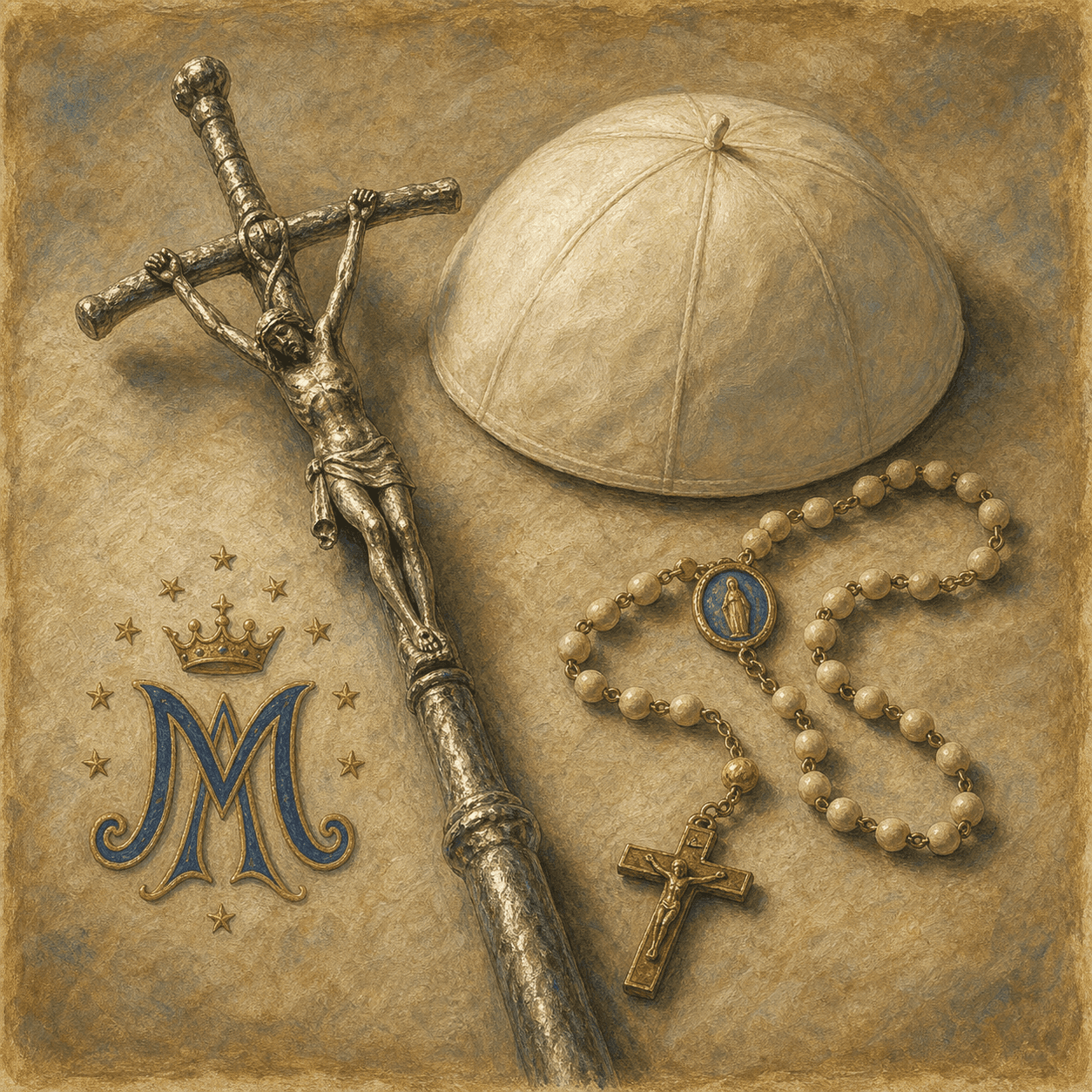
A still life for St. John Paul II with ferula, zucchetto, rosary, and Marian emblem.
The ferula, zucchetto, rosary, and Marian motto gather his public witness.

John Paul II made more than a hundred international journeys and visited well over a hundred countries. He canonized and beatified saints from across the world, gave the Church the Catechism of the Catholic Church, and taught relentlessly on life, work, truth, women, marriage, and the body.

He also reached across old wounds: Assisi, synagogue, mosque, the Jubilee confession of sins committed by Catholics, the Holy Land, and the Western Wall. The truth, he believed, had nothing to fear.

Final Years

His weakness became a final teaching.

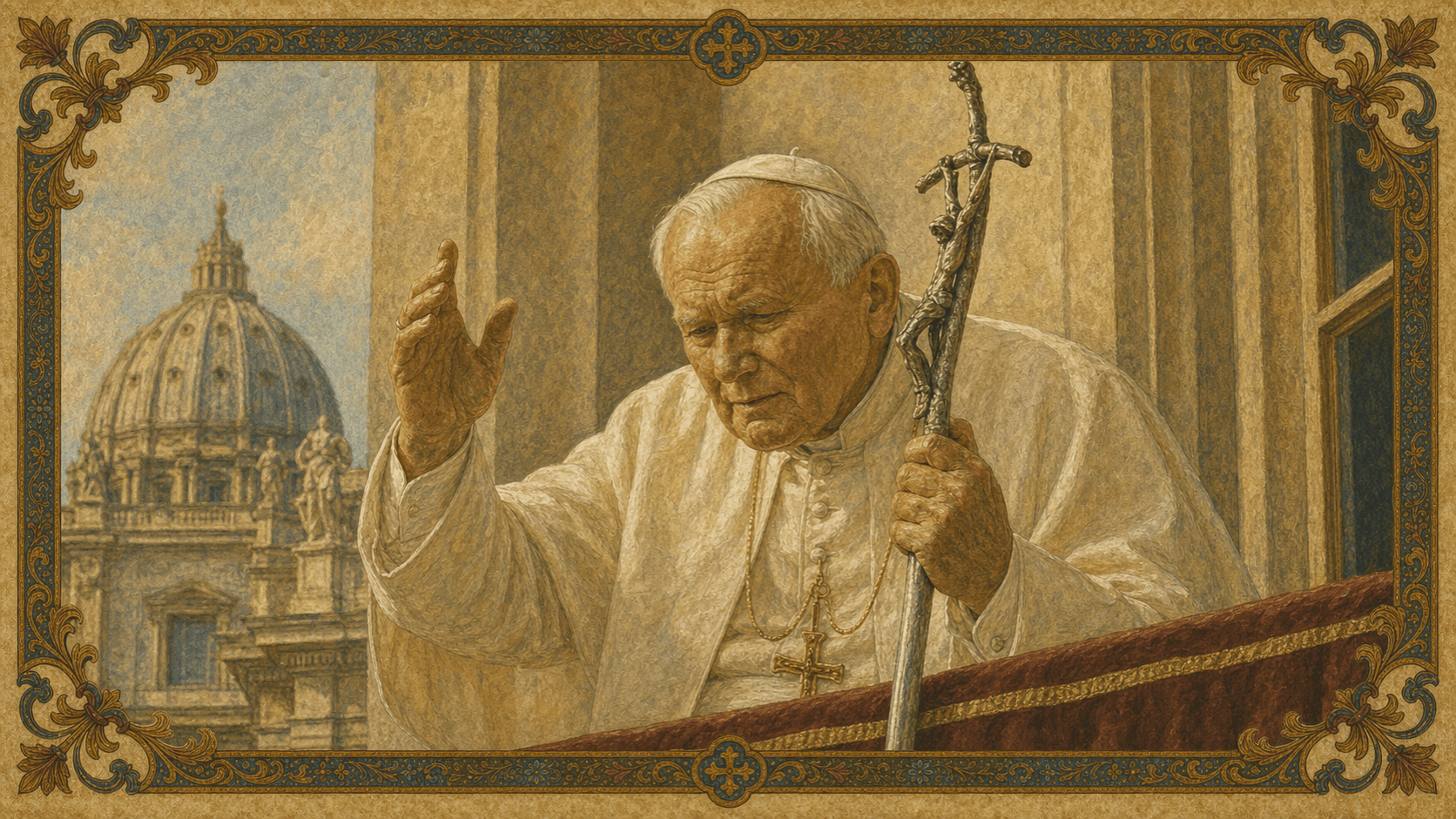
St. John Paul II in his final years, leaning on the ferula and blessing in weakness.
In his final years, John Paul II remained publicly present in weakness.

Parkinson's disease slowly took the body that had been so strong. The athlete bent, trembled, and eventually could barely speak. He did not hide.

He had taught that the weak, sick, disabled, unborn, and dying never lose their dignity. At the end he made the argument with his own body, blessing with a shaking hand and refusing shame.

Canonization

The people cried, Santo subito.

He died on April 2, 2005, the vigil of Divine Mercy Sunday. At his funeral, the crowd cried Santo subito - a saint now. The Church moved quickly: beatification in 2011, canonization in 2014, on Divine Mercy Sunday, together with John XXIII.

Why Now

He is the saint of courage for anxious people.

John Paul II matters because he answered fear with a command and then embodied it. He said be not afraid to a captive continent, to a timid Church, to young people told faith was finished, to the man who shot him, and finally to the world watching him die.

He matters because he defended the dignity of the human person against every system that makes people useful, disposable, or inconvenient. Your worth does not depend on your strength. He proved that with his own broken body.

Reading

Begin where the man is clearest.

Start with a strong biography, then read John Paul II in accessible form. Crossing the Threshold of Hope gives his voice to ordinary questions. Evangelium Vitae and Fides et Ratio show the heart of his teaching. His plays and poems reveal the artist beneath the pope.

A Word of John Paul II

He had earned the right to say it.

These were the first words he spoke to the world as pope, and they turned out to be the whole of him. He said them as a man who had buried his family, survived the Nazis, outlasted the Communists, survived an assassin's bullets, and would bear a long public dying.

He believed fear comes from keeping Christ out. So he flung the doors open himself, on every continent, for twenty-six years.

Connected Saints

A family of holiness.

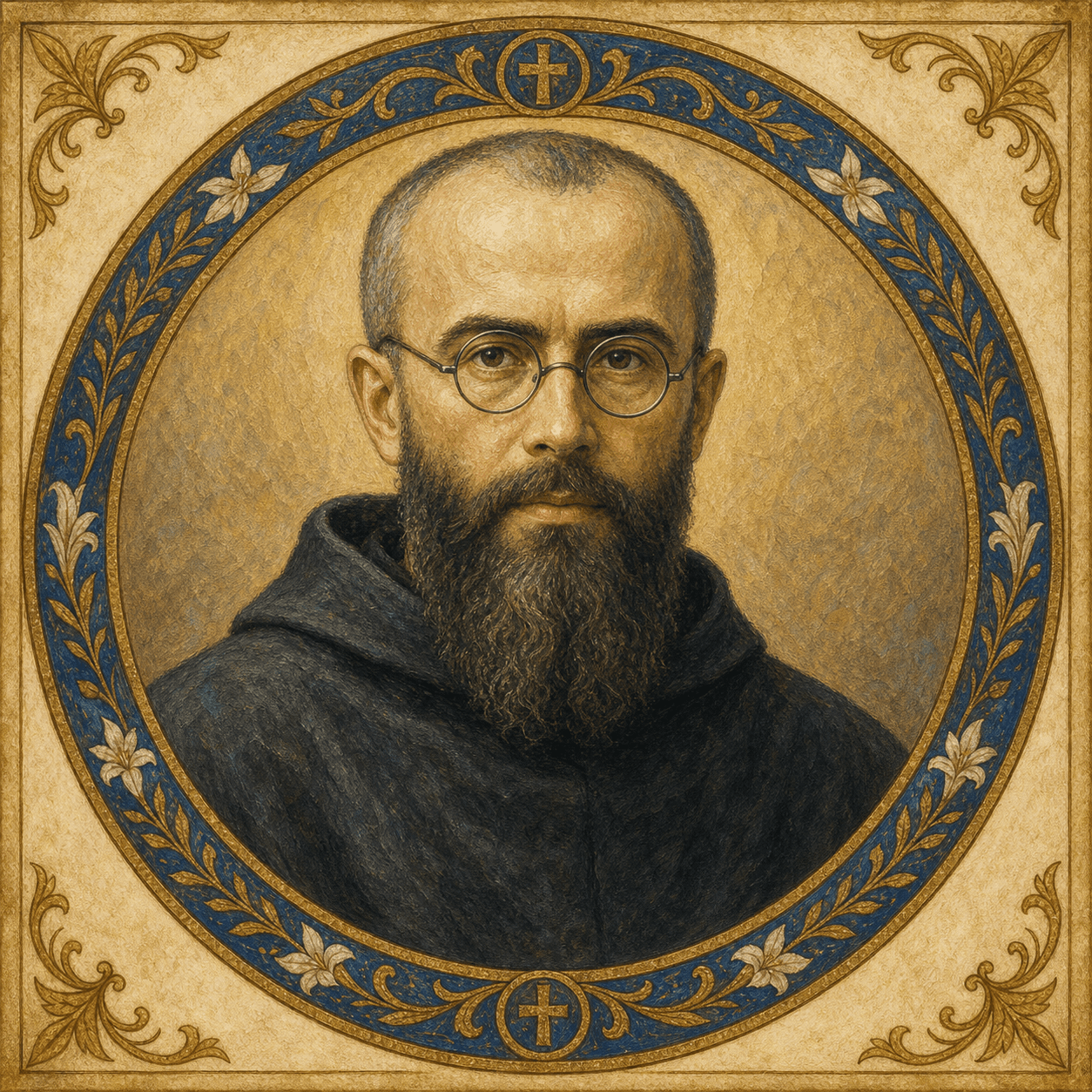
Portrait medallion of St. Maximilian Kolbe in a Conventual Franciscan habit.

St. Maximilian Kolbe

The fellow Pole and martyr of Auschwitz whom John Paul II canonized as a martyr of charity.

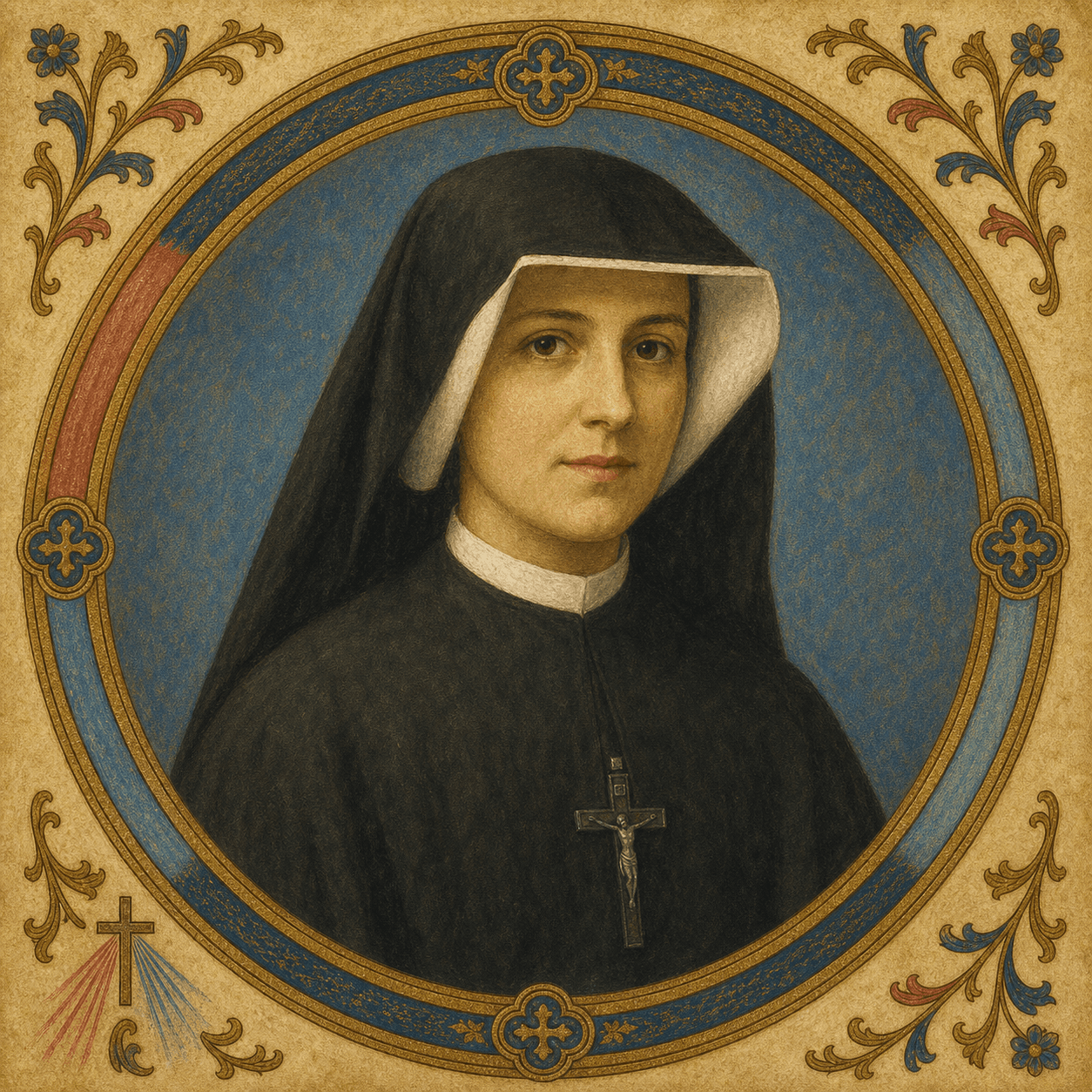
Portrait medallion of St. Faustina Kowalska in the habit of Our Lady of Mercy.

St. Faustina Kowalska

The Polish mystic of Divine Mercy whom John Paul II canonized in 2000.

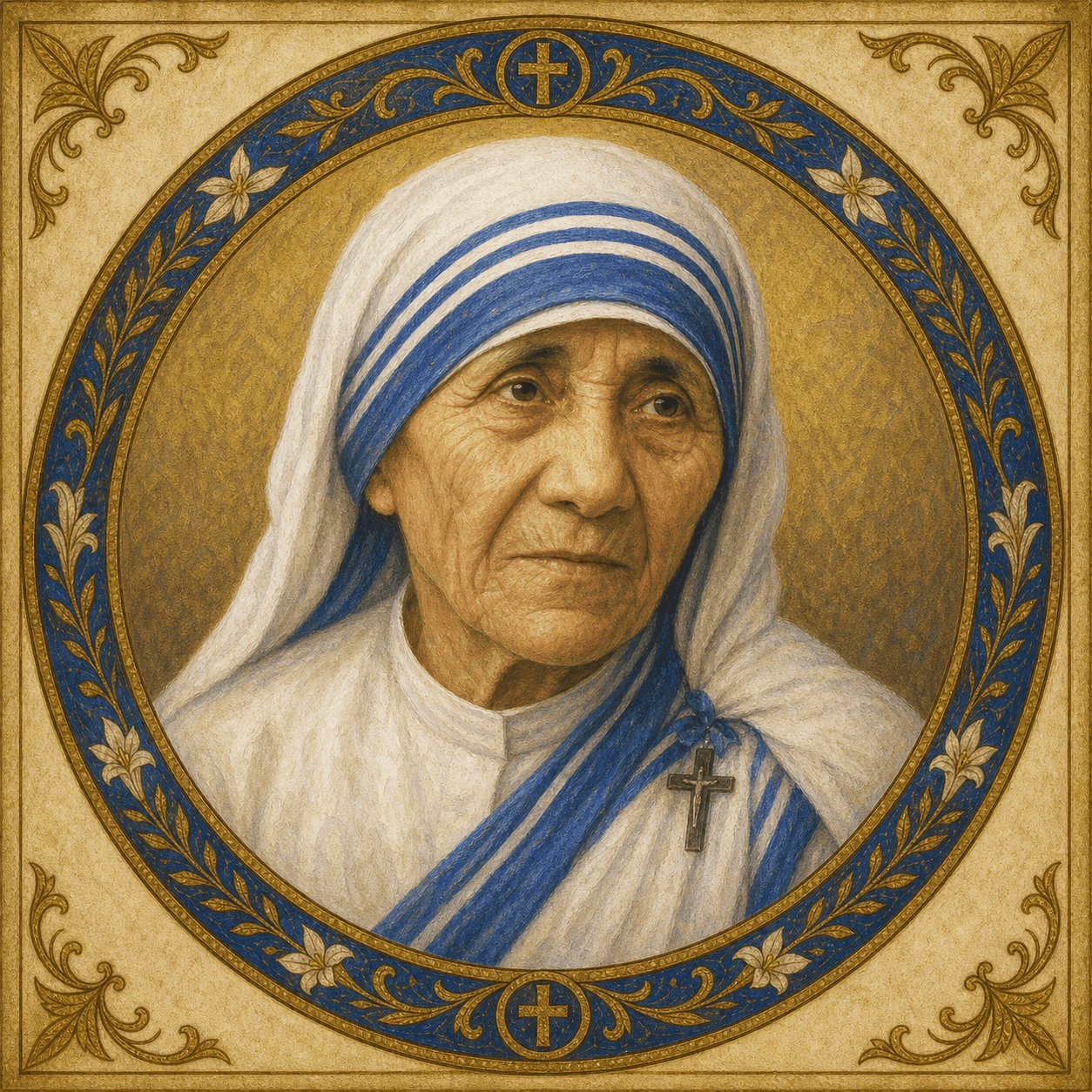
Portrait medallion of St. Teresa of Calcutta in the white sari with blue stripes.

St. Teresa of Calcutta

Mother Teresa, his friend and contemporary, whose beatification he celebrated in 2003.

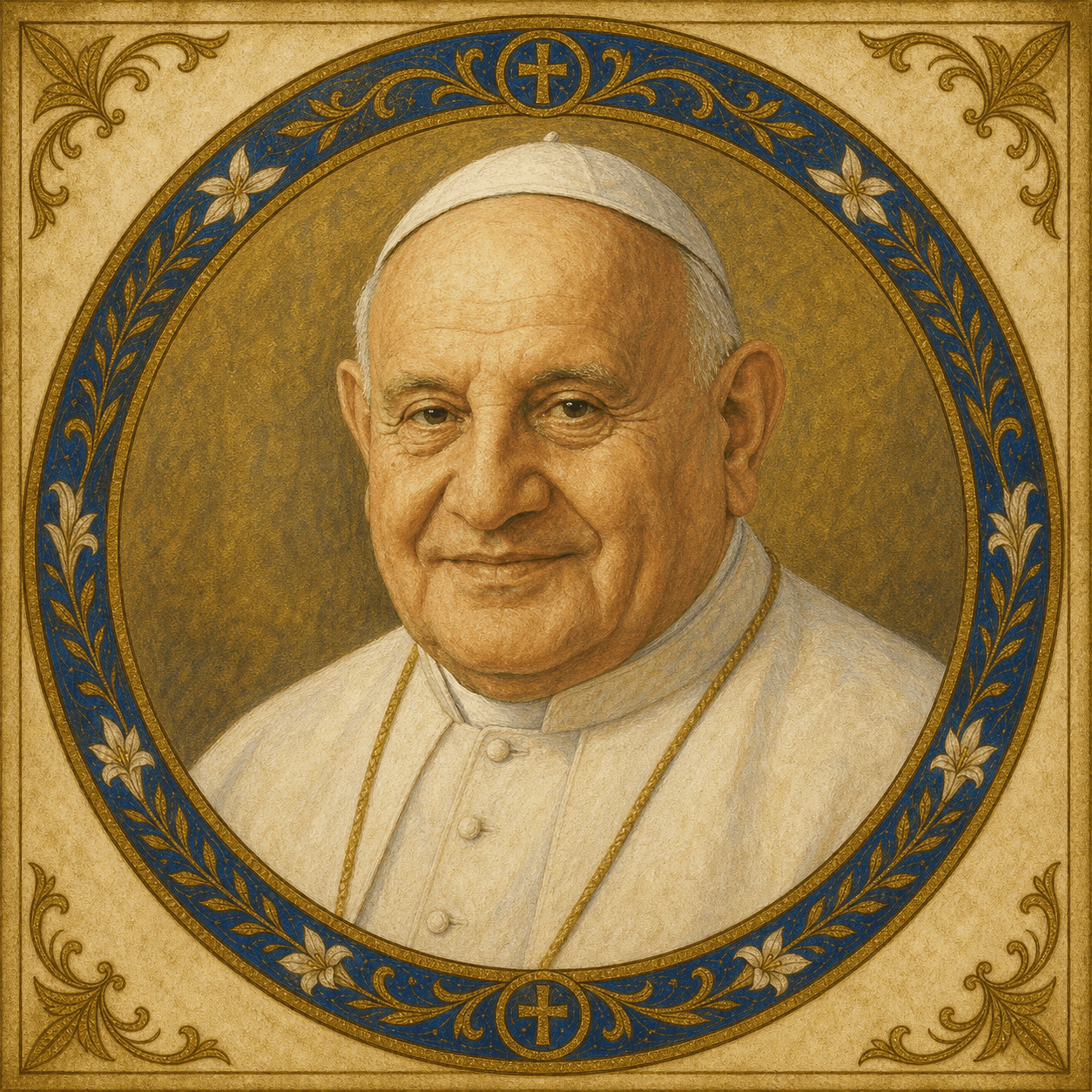
Portrait medallion of Pope St. John XXIII in the white papal cassock.

St. John XXIII

The pope who opened the Second Vatican Council, canonized with John Paul II in 2014.

Frequently Asked

Common questions about John Paul II.

Who was St. John Paul II?+
He was Karol Wojtyła, the Polish priest, philosopher, bishop, and pope who reigned from 1978 to 2005. He helped break Communist fear in Eastern Europe, founded World Youth Day, taught constantly on the dignity of the human person, forgave the man who shot him, and bore his final illness publicly as a witness to the worth of every life.
How did he help bring down Communism?+
Not by force, and not alone. His 1979 visit to Poland restored courage to millions who saw that they were not isolated before the regime. That spiritual and moral awakening helped give rise to Solidarity and became one indispensable force in the collapse of European Communism.
What happened when John Paul II was shot?+
On May 13, 1981, Mehmet Ali Ağca shot him in St. Peter's Square. John Paul II nearly died, attributed his survival to Our Lady of Fátima, and later visited Ağca in prison to forgive him in person.
Why did he remain visible while he was so sick?+
Parkinson's disease took his strength, mobility, and voice. He refused to hide because his teaching on the dignity of the weak, disabled, sick, and dying had to be lived in public. His last years became a final witness that a person does not lose worth by losing strength.
What does Totus Tuus mean?+
It means 'totally yours' or 'all yours.' John Paul II used it as his motto to express total consecration to Jesus through Mary, drawing especially on St. Louis de Montfort.
Why is his feast on October 22?+
October 22 is the day in 1978 when he began his ministry as pope and preached the homily remembered for 'Be not afraid.' The feast marks the beginning of the pontificate through which his witness was given to the whole Church.
Was he canonized quickly?+
Yes. Crowds at his 2005 funeral chanted Santo subito, 'a saint immediately.' He was beatified in 2011 and canonized in 2014, less than nine years after his death.

Sources

Read beyond summaries.

John Paul II is recent and heavily documented; the article quotes only short public phrases and paraphrases modern copyrighted works.

Primary

  • St. John Paul II's homilies, encyclicals, apostolic letters, and books, especially the 1978 inaugural homily.
  • Vatican biographical records on Karol Wojtyła's family, wartime formation, election, travels, and death.
  • The public record of the May 13, 1981 assassination attempt and the 1983 prison visit to Mehmet Ali Ağca.

Magisterial

  • The Catechism of the Catholic Church, promulgated in 1992.
  • Pope Benedict XVI's 2011 beatification homily.
  • Pope Francis's 2014 canonization of John Paul II and John XXIII.

Historical

  • George Weigel, Witness to Hope, and other major biographies.
  • Historical study of the 1979 Poland pilgrimage, Solidarity, and the collapse of Communist power in Eastern Europe.
  • Responsible treatments of his long pontificate, including both his witness and the contested governance questions beyond a saint profile's scope.

Last reviewed: June 7, 2026

On this page+