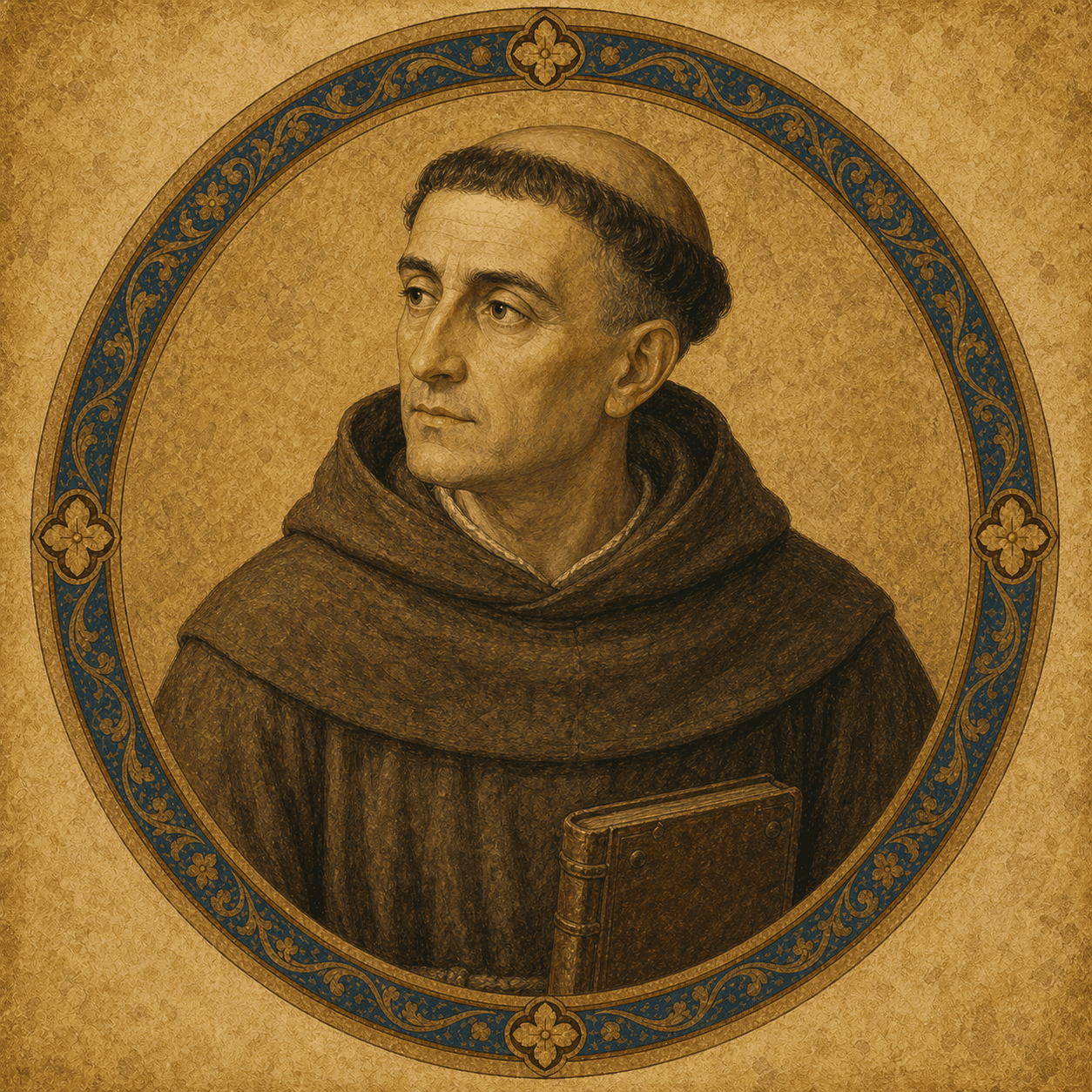
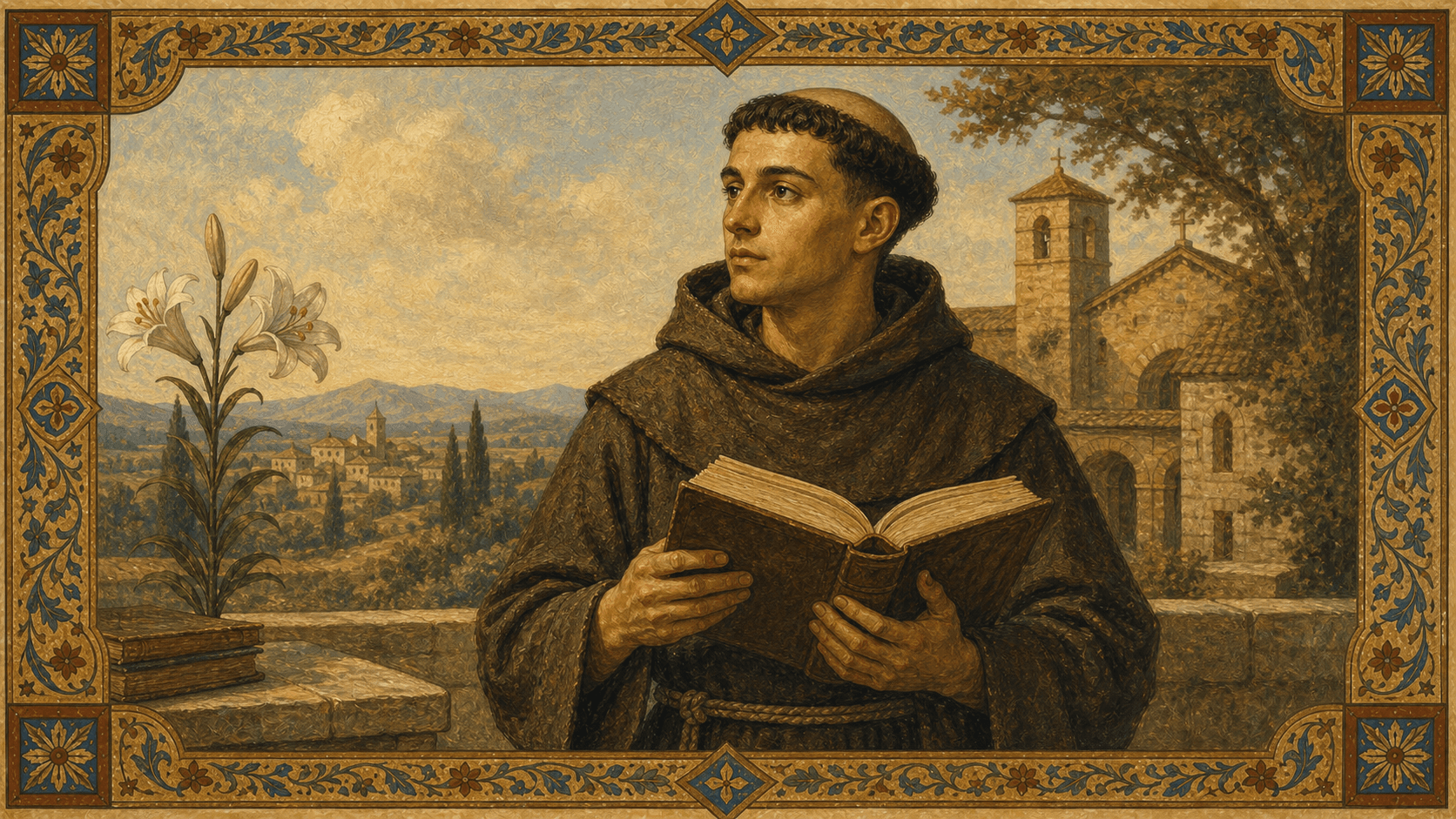
St. Anthony of Padua as a young Franciscan friar with a lily, an open book, and a sober Mediterranean face.

Saints Library

Anthony of Padua

Feast June 13 · Doctor of the Church · c. 1195-1231

The young friar who wanted to die a martyr in Morocco, was blown off course to Italy, and hid as a humble unknown until the Church discovered one of the greatest preachers in its history.

The Story

The patron of lost things was hidden first.

He was born in Lisbon and baptized Fernando, the son of a well-off family, and at fifteen he entered the Canons Regular of St. Augustine to give his life to God in study and prayer. He spent about a decade there, becoming deeply learned in Scripture — and he might have stayed a quiet scholarly canon his whole life, except for what arrived one day at his monastery: the bodies of five Franciscan friars who had been martyred preaching the Gospel in Morocco.

The sight of them set him on fire. He left the Augustinians, joined the new and radical Franciscans, took the name Anthony, and sailed for Morocco to seek his own martyrdom.

He never got it. He fell gravely ill almost as soon as he arrived, and the ship carrying him home was driven by a storm to Sicily instead of Portugal. He ended up in Italy, an unknown foreign friar that no one had any particular use for. He was assigned to a quiet hermitage to wash dishes and pray.

Then, at an ordination, the friar who was supposed to preach failed to appear, and Anthony was told to say something. He stood up and preached, and the room was stunned. The hidden scholar had been concealing one of the most powerful preaching gifts the age would produce.
Lisbon

The world he came from.

He was born around 1195 in Lisbon, the capital of the young kingdom of Portugal, into a family with some standing. He was baptized Fernando. At about fifteen he entered the Canons Regular of St. Augustine — priests living a common life under the Rule of St. Augustine — and there he received the thing that would define him: a deep, thorough formation in the Scriptures.

He was, by every account, a brilliant student. He soaked up the Bible until he seemed to have it by memory, along with the Fathers of the Church. Had nothing interrupted it, he would likely have lived out his days as a learned Augustinian canon, respected within his house and unknown outside it.

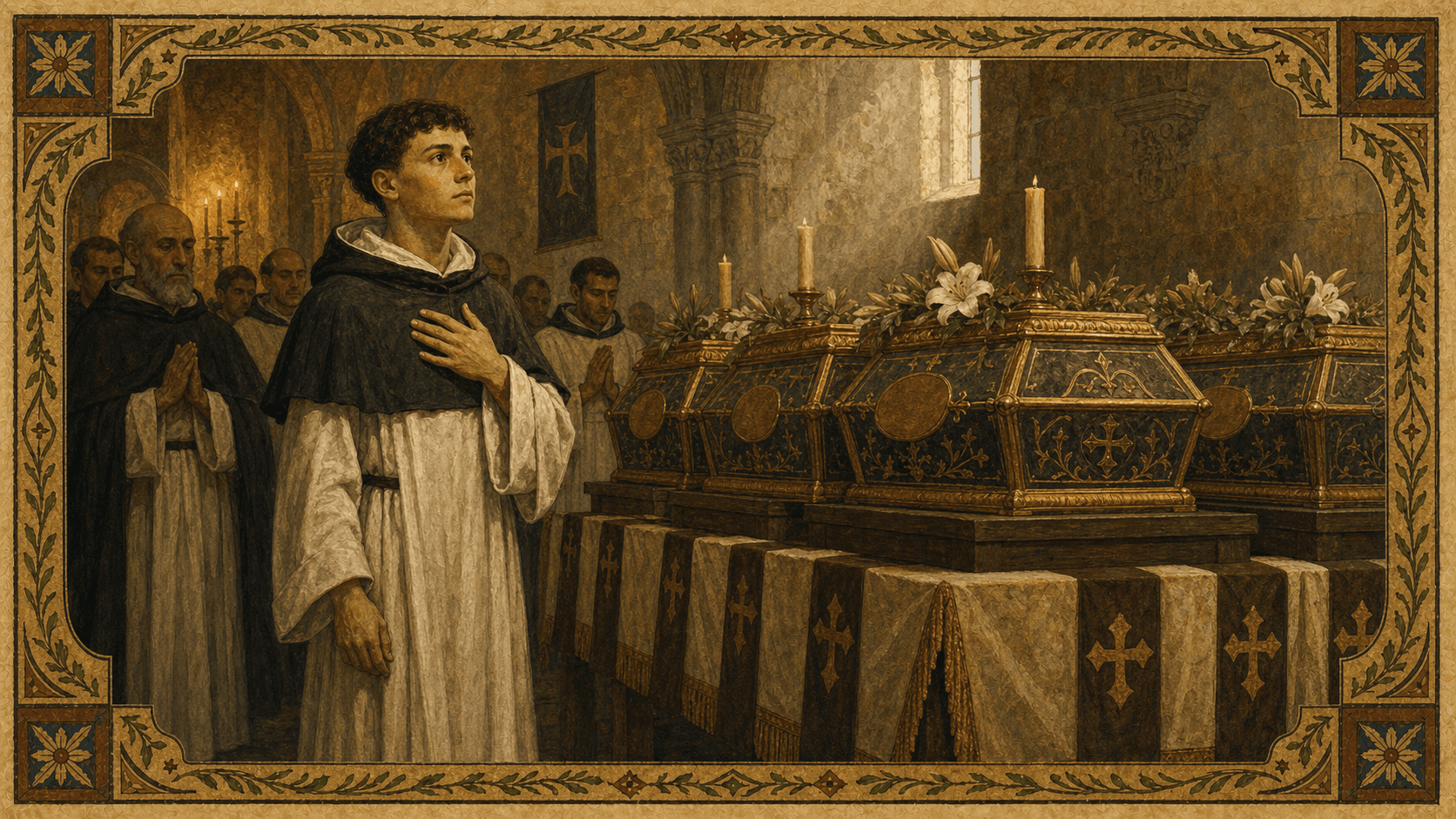
What interrupted it was martyrdom — not his own, yet. In 1220, the relics of five Franciscan friars who had gone to preach in Morocco and been killed for it were brought back. Fernando, the comfortable scholar, wanted to be one of them.

The Franciscans

The martyrdom he did not receive.

Young Fernando in Augustinian dress before the relics of the Franciscan martyrs of Morocco.
Fernando was still an Augustinian canon when the Morocco martyrs changed his life.

He went to the Franciscans — the new order of begging friars founded by Francis of Assisi, barely a decade old, radical, poor, and on fire with exactly the missionary zeal that had seized Fernando. He asked to join, took the name Anthony, and set his face toward Morocco.

It did not go as planned. He reached Morocco and was almost immediately struck down by a severe illness. Then the ship carrying him back to Portugal was caught in a storm and blown far off course, landing him in Sicily. The man who had set out to be a martyr in Africa ended up a sick, stranded, anonymous friar on the wrong side of the Mediterranean.

He made his way north to a great gathering of the Franciscans in Assisi. Eventually a kindly superior assigned him to a remote hermitage, where he could pray, do menial chores, and serve at the altar. Anthony accepted it without self-promotion. He had a theological education that would have made him valuable anywhere. He said nothing about it, and went to work in the kitchen.

Forli

The hidden preacher revealed.

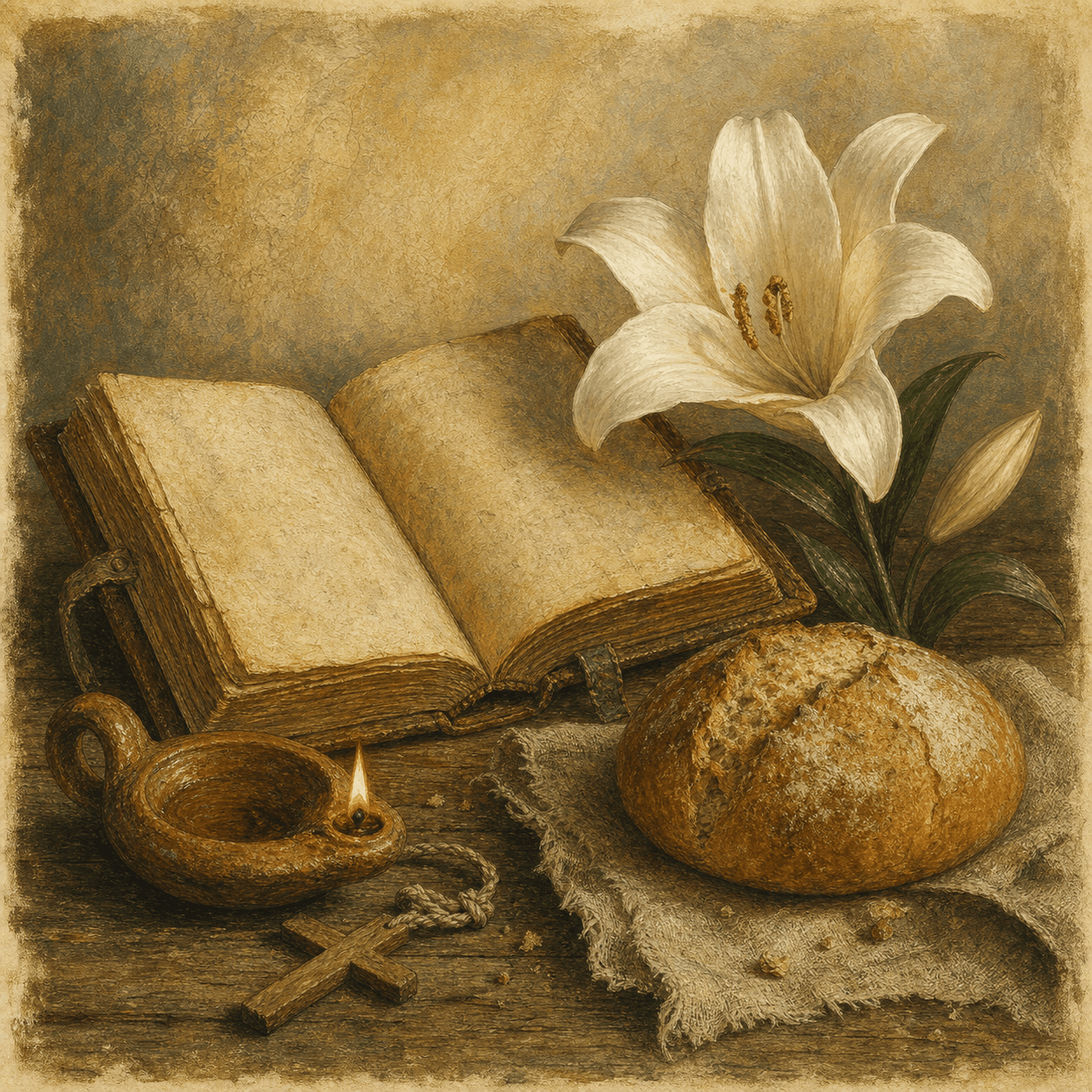
A symbolic still life for Anthony with a lily, a loaf of bread, a cord cross, and a blank book.
Lily, loaf, book, and cord.

The accident that revealed him was an ordination. A group of friars had gathered, and afterward there was to be a sermon — but through some mix-up no one had prepared to give it. In the awkwardness, the superiors turned to the unknown foreign friar from the kitchen hermitage and told Anthony to get up and say whatever the Holy Spirit gave him.

What came out astonished everyone in the room. The dishwasher from the hermitage preached with command of Scripture, depth of theology, and power of delivery. The hidden years of Augustinian study, the memorized Bible, the brilliant mind — all of it had been there the whole time, concealed under the patched habit of a nobody.

From that moment everything changed. The Franciscans realized what they had, and they put him to work. Anthony became a public preacher, and the rest of his short life was a blur of traveling, preaching, teaching, and wearing himself out for the Gospel.

Preaching

Hammer of the Heretics.

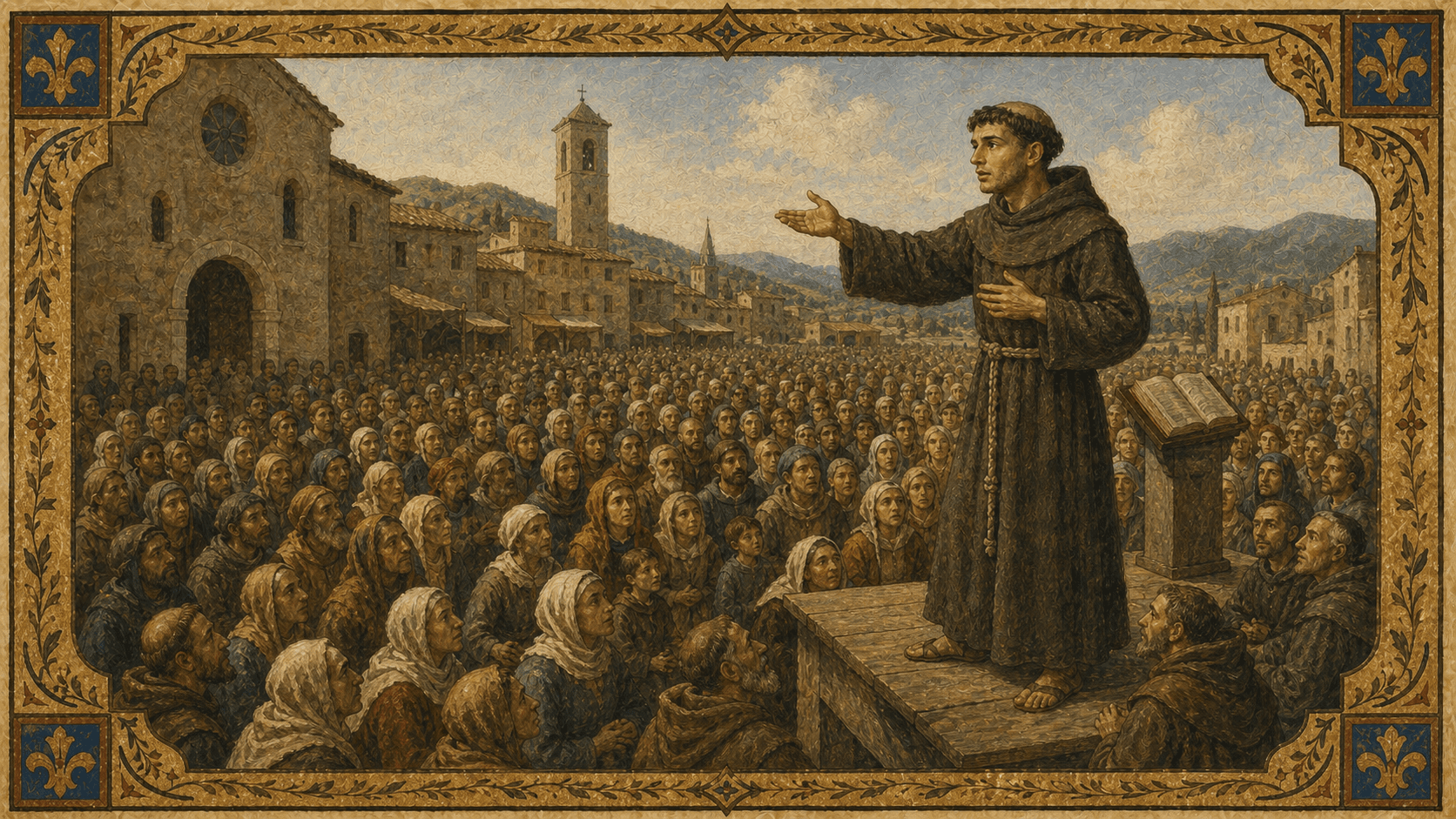
St. Anthony preaching to a large outdoor crowd in northern Italy with scriptural force.
The crowd scenes carry Anthony's public force without turning him into a statue.

Anthony preached in a time and place full of heresy. Northern Italy and southern France were riddled with Cathars and Waldensians — movements that denied core Christian truths, some teaching that the material world was evil and that the Catholic Church was corrupt beyond saving.

His weapon was Scripture and clarity. He knew the Bible so thoroughly, and could expound it so persuasively, that heretical preachers could not stand against him in argument. Crowds that had drifted away came back. The records gave him the title Malleus hereticorum, the Hammer of the Heretics.

He was not a gentle sentimental figure in his own lifetime, whatever later statues suggest. He was a force — a brilliant, relentless, tireless preacher who wore himself out hammering error and calling people back to the faith.

Study

Learning that did not extinguish prayer.

There was real tension in the early Franciscan movement about learning. Francis himself was wary of it — afraid that books and degrees would puff up his friars with pride and pull them away from the poverty and simplicity that were the heart of the order.

So it meant something when Francis trusted Anthony with theology. Recognizing both his learning and his holiness, Francis sent Anthony a short letter authorizing him to teach the brethren, provided that this study did not extinguish the spirit of prayer and devotion Letter of St. Francis to Anthony.

Anthony honored the condition. He became the first theology teacher of the Franciscan order without becoming the proud, comfortable scholar Francis feared. His learning stayed in the service of his preaching and his prayer.

Devotion

The tenderness beneath the force.

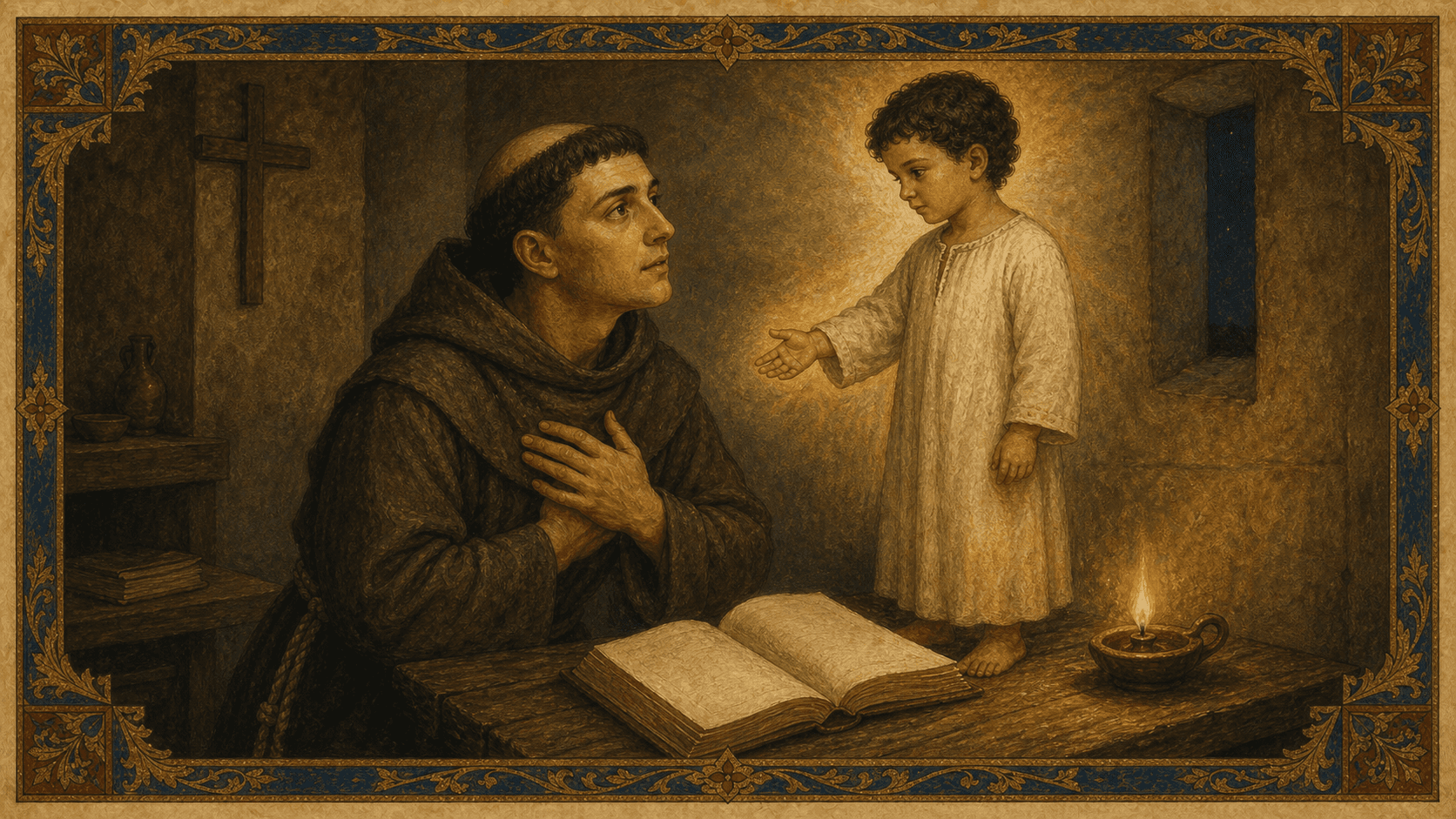
St. Anthony praying in a candlelit cell as the Christ Child appears with quiet reverence.
The apparition is treated as devotion, not documentary history.

The image most people carry of Anthony — the young friar holding the infant Jesus — comes from a tradition that grew up after his death. The story, told in several versions, is that a man once saw Anthony at prayer in his room and beheld the Christ Child appear to him, resting in his arms or standing on his open book.

The early documents do not settle even where it is supposed to have happened, and the Church has always held the apparition at the level of devotion rather than documented fact. But it caught something true about Anthony and never let go: this learned, formidable preacher was at the center of his life a man in love with the Word made flesh.

Patronage

He is good at finding what is lost.

The custom of praying to Anthony to find what you have lost is one of the most widespread devotions in the Catholic world. The traditional explanation is tied to a story from his own life: that a novice who had left the order took with him a valuable book of Anthony's psalms, Anthony prayed for its return, and the book came back.

Whatever the precise origin, the devotion fits the man in a deeper way. Anthony, the patron of the lost, was himself once lost — the overlooked foreigner washing dishes, his gifts hidden, going nowhere. His whole preaching life was spent going after the lost: the souls the Church had not yet reached, or had nearly given up on.

Padua

A short life, swiftly recognized.

He did not last long. The relentless preaching and travel, on top of a body never strong since Morocco, wore him out fast. In the spring of 1231, exhausted and ill, he withdrew to rest near Padua, and on June 13, 1231, at Arcella just outside the city, he died. He was about thirty-six years old.

The reaction was extraordinary. The people of Padua were so certain of his holiness, and the reports of miracles at his tomb so immediate and numerous, that the Church moved with a speed almost never seen. Pope Gregory IX canonized him on May 30, 1232, less than a year after his death.

Thirty years later, when his tomb was opened to move his remains, the tradition records that his body had returned to dust but his tongue was found whole. St. Bonaventure is said to have venerated it as the tongue that had praised God and taught others to bless him.

Why Now

The fear of being overlooked.

He matters now because his life is the answer to the fear of being overlooked. Almost everyone, at some point, has the experience Anthony had: of having something to offer and no one noticing; of being stuck in the kitchen, doing work beneath their gifts, wondering whether anything they are or know will ever be seen or used.

Anthony lived that, with a first-class education and a brilliant mind, as an anonymous dishwasher whom no one had any plans for. He did not push, did not promote himself, did not resent it. He stayed faithful where he was put, and God revealed him in God's own time.

He matters, too, because of the balance he struck. He was both: the formidable scholar and the lover of the Christ Child, the Hammer of the Heretics and the tender adorer of the infant God. He refused the false choice between rigor and devotion.

Reading

Where to read him.

Anthony's enduring work is his sermons, written to help other preachers. Start with the Office of Readings for his feast on June 13, where the Church gives a short passage from his sermons on bearing witness to Christ by the way you live.

Then read selections from the Sermones, his Sunday and feast-day sermons. They are dense, scriptural, and practical. After that, read a careful modern biography that separates the documented friar from the later legends. The early sources are thin, and the popular stories accumulated over centuries.

A Word of Anthony

The sermon behind the sermon.

It is the conviction of a man whose whole life was preaching, and who knew that the most powerful sermon is not the one in the pulpit but the one in the life. Anthony preached with overwhelming force from the lectern — and he insisted, in the same breath, that the words mean nothing unless the life behind them is saying the same thing.

He had earned the right to say it. Before anyone heard him preach a word, he had spent years being a sermon no one was listening to: faithful, hidden, and saying with his life exactly what he would later say with his voice.

Connected Saints

A family of holiness.

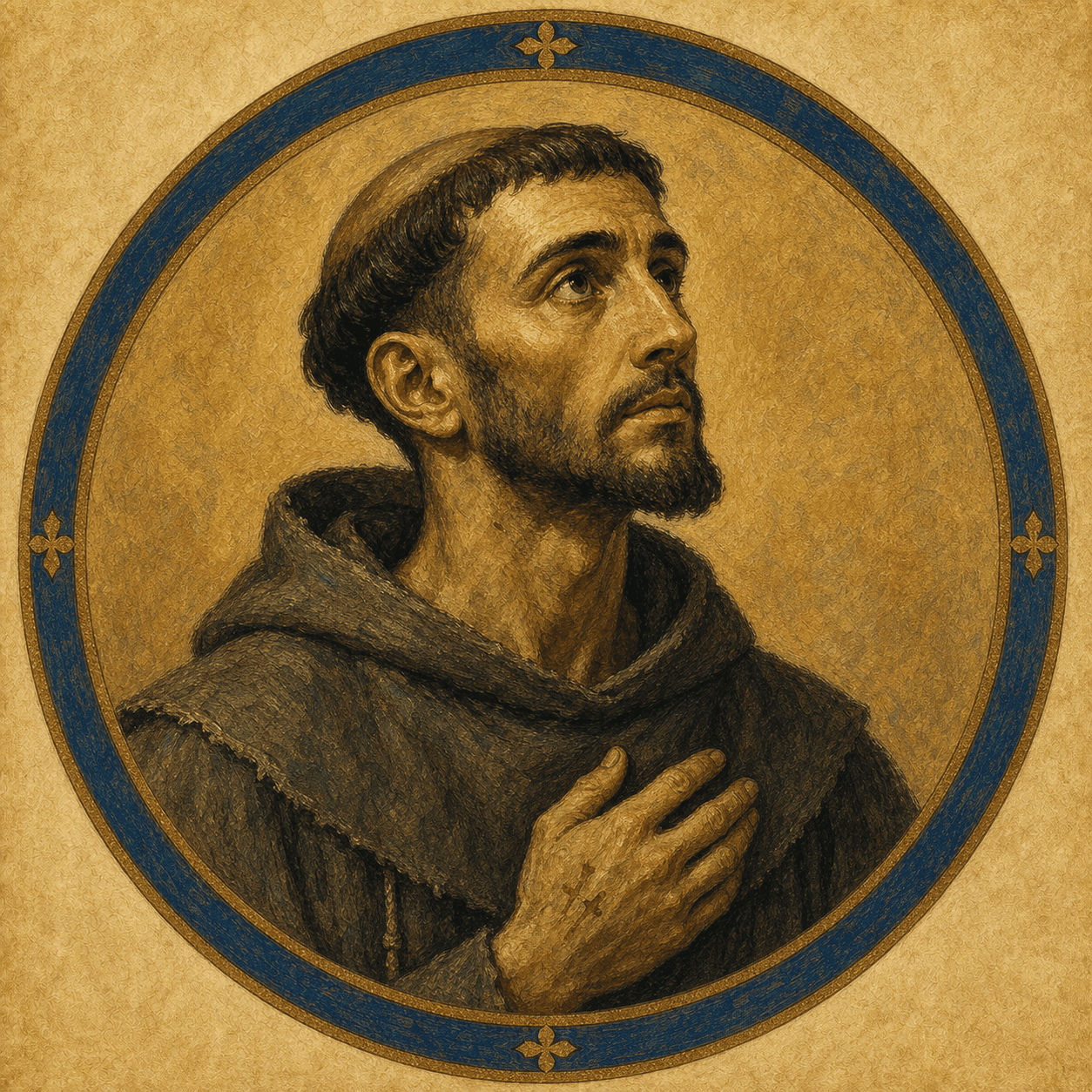
Portrait medallion of St. Francis of Assisi matching the Francis hero portrait.

St. Francis of Assisi

The founder of Anthony's order, who trusted him to teach theology without extinguishing prayer.

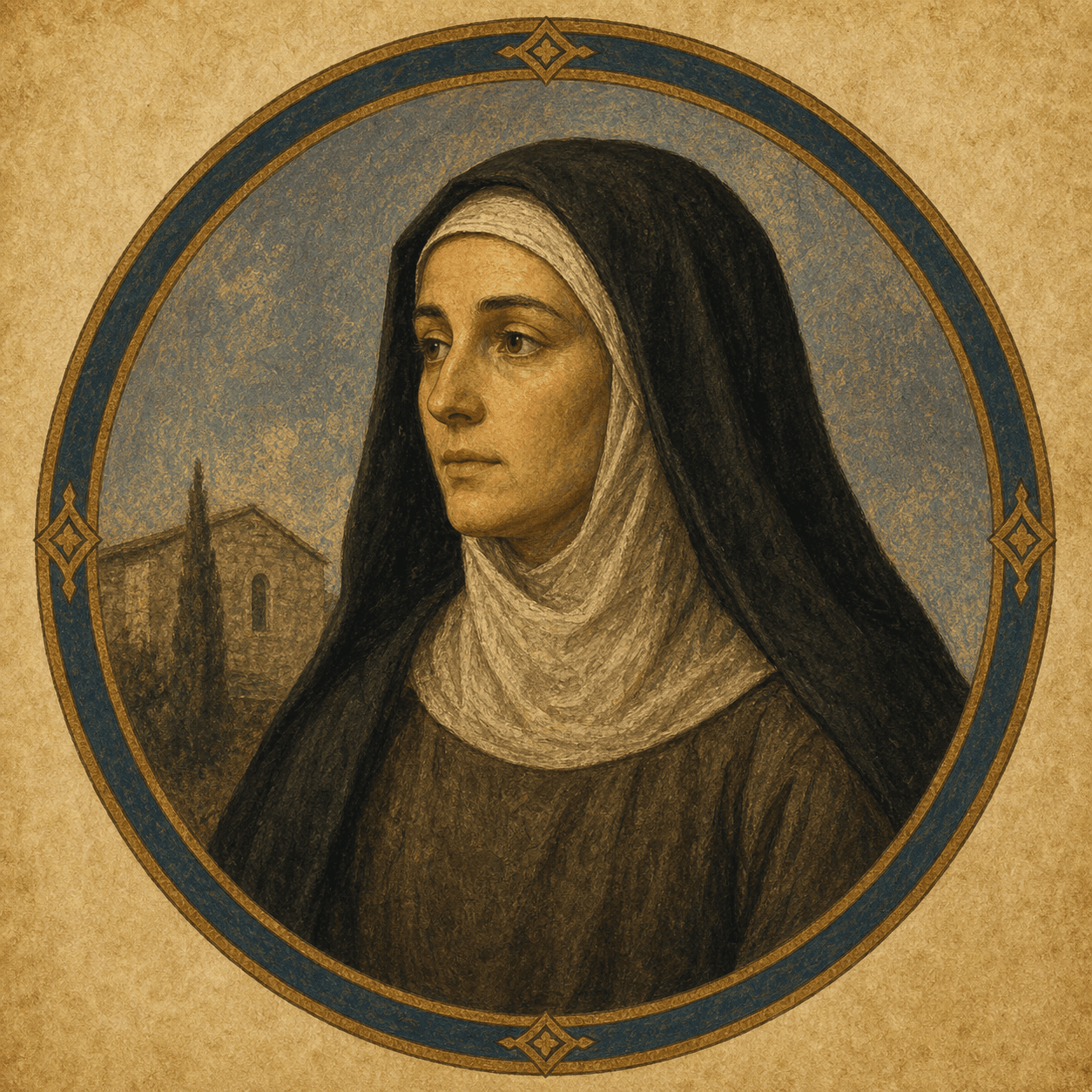
Portrait medallion of St. Clare of Assisi in a Poor Clare habit.

St. Clare of Assisi

The other great early Franciscan saint, co-founder of the movement's contemplative poverty.

Portrait medallion of St. Bonaventure, Franciscan Doctor of the Church.

St. Bonaventure

The Franciscan Doctor who, by tradition, venerated Anthony's incorrupt tongue.

Portrait medallion of St. Augustine of Hippo, whose Rule shaped Anthony's first religious life.

St. Augustine of Hippo

The Doctor whose Rule shaped Anthony's first decade of religious life.

Frequently Asked

Questions that keep Anthony clear.

Who was St. Anthony of Padua?+
He was a thirteenth-century Franciscan friar, born in Lisbon and originally named Fernando, who became one of the greatest preachers in the history of the Church. After a hidden start as an overlooked friar, his preaching gift was discovered by accident, and he spent his short life preaching against heresy across Italy and France, teaching theology to the Franciscans, and drawing enormous crowds. He died at thirty-six, was canonized within a year, and is a Doctor of the Church. His feast is June 13.
Why is St. Anthony the patron saint of lost things?+
By long tradition, the devotion is tied to a story that a novice who left the order took a valuable book of Anthony's, which was returned after Anthony's prayer; from this grew the famous responsory about lost things restored. It also fits him more deeply: he himself was once hidden and overlooked, and his preaching life was spent going after the lost and bringing them home.
Why is St. Anthony shown holding the Baby Jesus?+
It comes from a devotional tradition that the Christ Child once appeared to Anthony as he prayed, resting in his arms or on his book. The early documents do not settle the details, and the Church holds it as devotion rather than documented history. But it captures something true: beneath the formidable preacher was a man in love with the Word made flesh.
Why was St. Anthony canonized so quickly?+
He was canonized on May 30, 1232, less than a year after his death on June 13, 1231. The people of Padua were overwhelmingly convinced of his holiness, reports of miracles at his tomb were immediate and numerous, and Pope Gregory IX, who had heard him preach, moved with rare speed.
Is it true that St. Anthony's tongue is incorrupt?+
When his tomb was opened about thirty years after his death to move his remains, the tradition records that his body had decayed but his tongue was found whole, fresh, and red. The relic of the tongue is kept and venerated in the Basilica of St. Anthony in Padua. This page presents the account as tradition, not as a modern anatomical report.
Why is St. Anthony a Doctor of the Church?+
Pope Pius XII declared him a Doctor of the Church in 1946, with the title Doctor Evangelicus, the Evangelical Doctor, in recognition of the richness of his preaching and sermons, which are saturated with Scripture. He is honored for showing that profound learning and Franciscan simplicity belong together.
Where did St. Anthony actually live and die?+
He was born in Lisbon, Portugal, lived and preached across Italy and France, and spent his final years associated with Padua, where he is buried and from which he takes his name. He died nearby, at Arcella, just outside Padua, in 1231. Because his early life was in Lisbon, he is also honored in Portugal as St. Anthony of Lisbon.

Sources

Read beyond summaries.

This page distinguishes Anthony's documented life from later devotional traditions around the Christ Child, lost things, and the relic of his tongue; the sermon pull quote is rendered by the project rather than copied from the modern Office of Readings translation.

Primary

  • St. Anthony of Padua, the Sermones — his Sunday and feast-day sermons, written as resources for preachers.
  • St. Francis of Assisi, the short letter authorizing Anthony to teach theology, with the condition that study not extinguish prayer and devotion.
  • The early medieval Lives of Anthony, including the Assidua, used cautiously where the sources are thin.

Historical

  • The Catholic Encyclopedia entry on St. Anthony of Padua for the life chronology, preaching record, Franciscan turn, and relic traditions.
  • The Christ Child apparition, lost-things patronage, and incorrupt tongue are presented as tradition and devotion, not as documentary claims of equal weight.
  • The page keeps the sermon quotation attributed to Anthony's sermons; the pull quote is a project rendering rather than the modern Office of Readings translation.

Magisterial

  • Pope Pius XII, declaration of Anthony as Doctor of the Church in 1946, with the title Doctor Evangelicus.
  • Pope Gregory IX, canonization of Anthony on May 30, 1232.
  • The Catechism of the Catholic Church on preaching, the communion of saints, and the handing on of the Gospel.

Last reviewed: June 4, 2026

On this page+