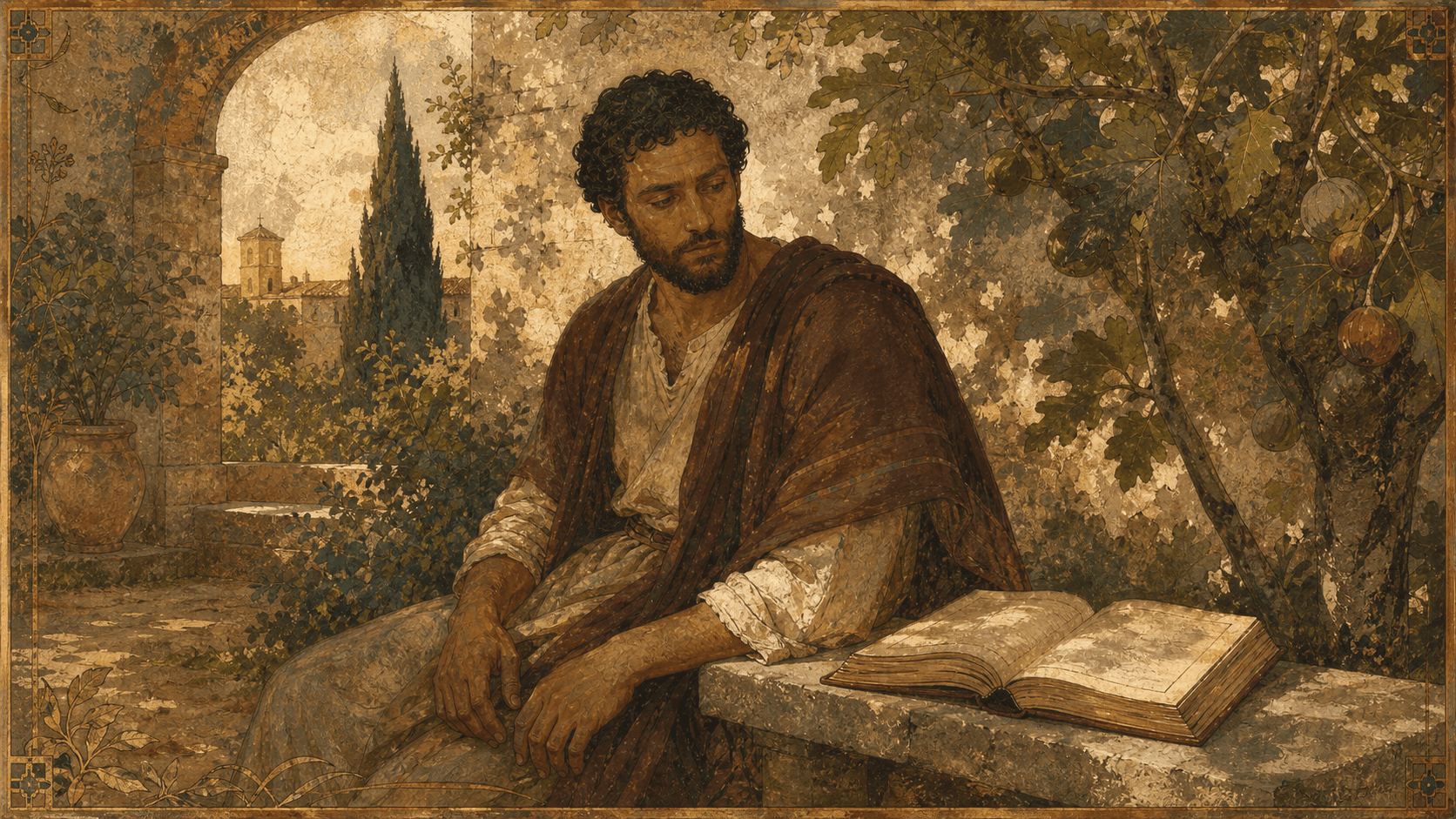
Augustine of Hippo at the moment of his conversion in a Milanese garden, with an open codex of St. Paul beside him.

Saints Library

Augustine of Hippo

Feast August 28 · Doctor of the Church · 354-430

A bishop, philosopher, and writer whose Confessions reshaped Western literature and whose theology became one of the foundations for how Catholics understand sin, grace, time, and love.

The Story

A restless heart, brought home late.

Augustine of Hippo found his way to Christ through every door he should have stayed away from. Ambition. A long relationship outside marriage with a woman whose name he never wrote down. A heresy that told him evil was a substance he could blame instead of a choice he had to own.

His mother Monica prayed for his conversion through many years. She followed him across the Mediterranean to do it. When a bishop she had worn out with her pleading finally told her that the son of those tears could not perish, she took it as a promise and was right. Confessions 3.12.21

He was thirty-one when he heard a child in a garden chanting tolle lege — take and read. He opened St. Paul, read Romans 13, and the intellectual machinery he had spent a decade building against the Church collapsed in a single afternoon.
North Africa

The world he came from.

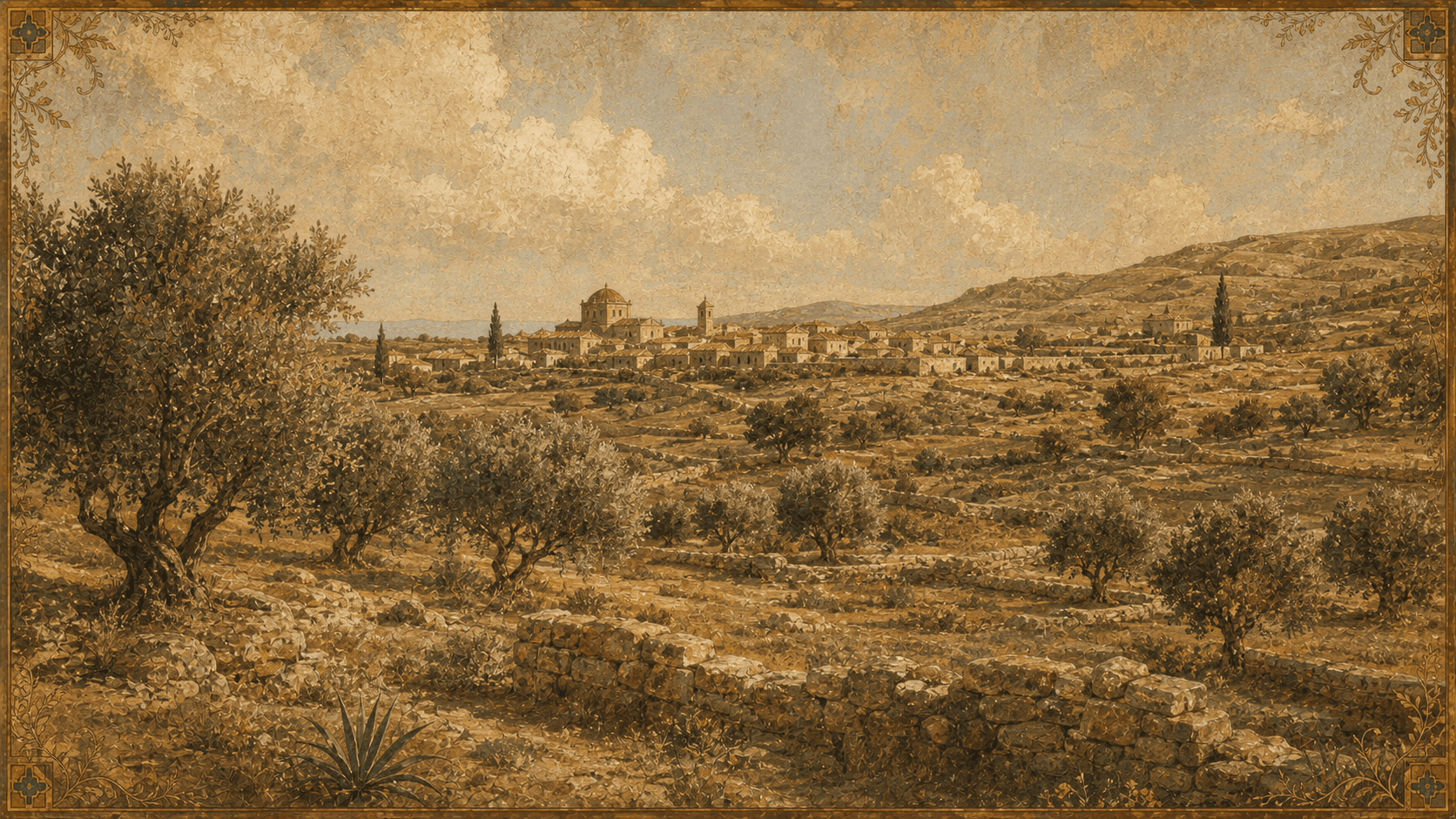
The Roman province of Numidia in the fourth century, the landscape of Augustine's childhood.
Thagaste and Numidia

He was born in Thagaste, a small Roman town in the province of Numidia — what is now eastern Algeria. North Africa in his lifetime was Latin-speaking, agriculturally rich, and full of the olive groves and wheat fields that fed Rome itself.

His father Patricius was a minor Roman official, a pagan, and by his son's account not a kind man. He converted only on his deathbed. His mother Monica was a devout Christian, raised in the faith, and she never wavered in it.

A young reader should picture it this way: a clever, ambitious boy from a small town moves to the great cities of his world, leaves his mother behind, and becomes the kind of man who can win arguments but cannot yet ask the right questions.

Monica

The mother who would not stop praying.

She is a saint in her own right. Her feast is the day before his — August 27. She is the patron saint of mothers, of difficult marriages, of conversion, and of anyone who is praying for someone they love.

Monica was, by every account including her son's, relentless. When Augustine left Carthage for Rome by ship at twenty-eight, he lied to her about the departure time so she would not try to follow. She found out and followed him anyway, all the way to Milan.

When Augustine was baptized at Easter 387, Monica was there. A few months later, on the journey home to North Africa, she fell ill at the port of Ostia outside Rome. She died nine days later. She was fifty-six.

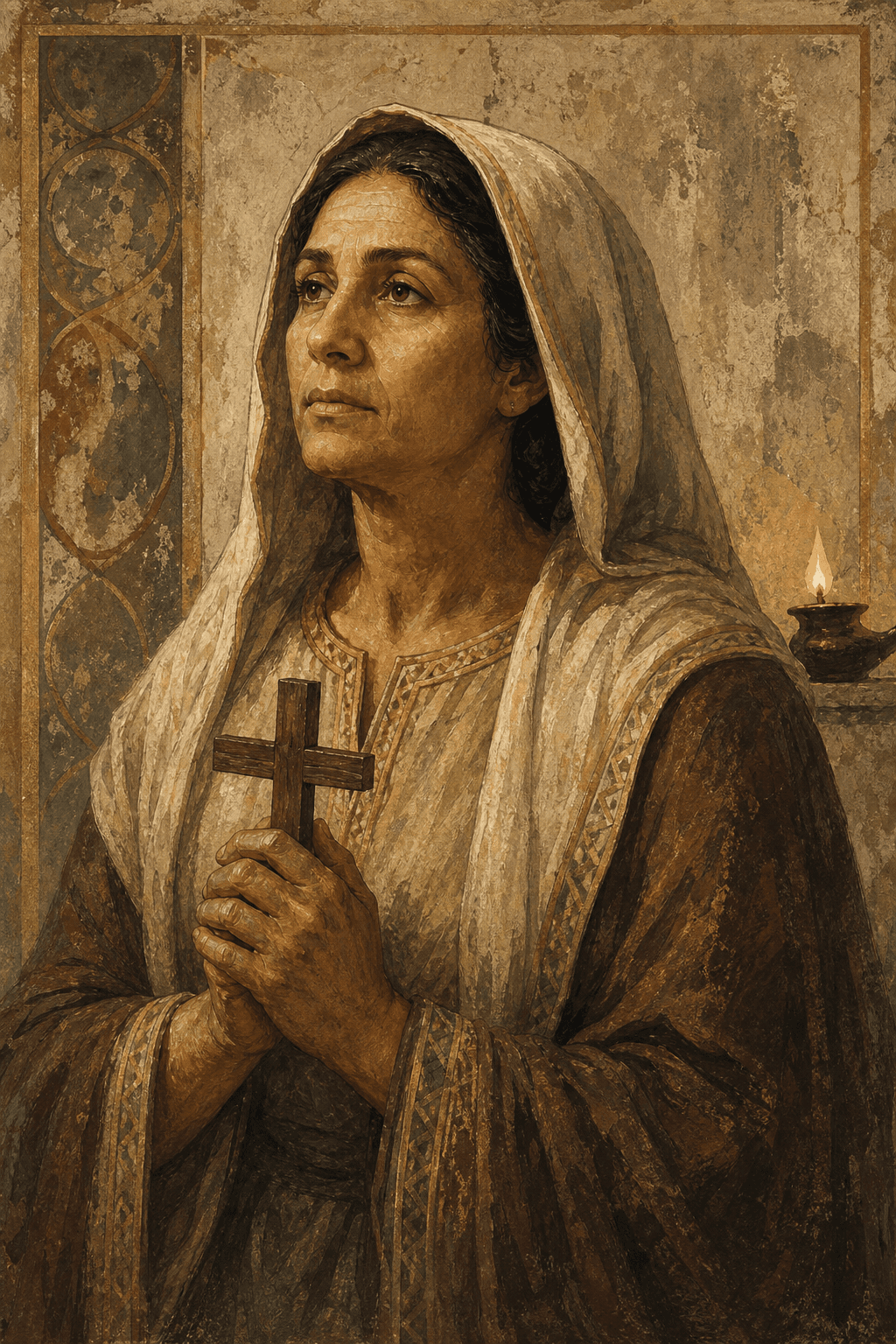
St. Monica in prayer, mother of Augustine, painted in the editorial style of the Saints Library.

The Pear Theft

A small sin he never forgot.

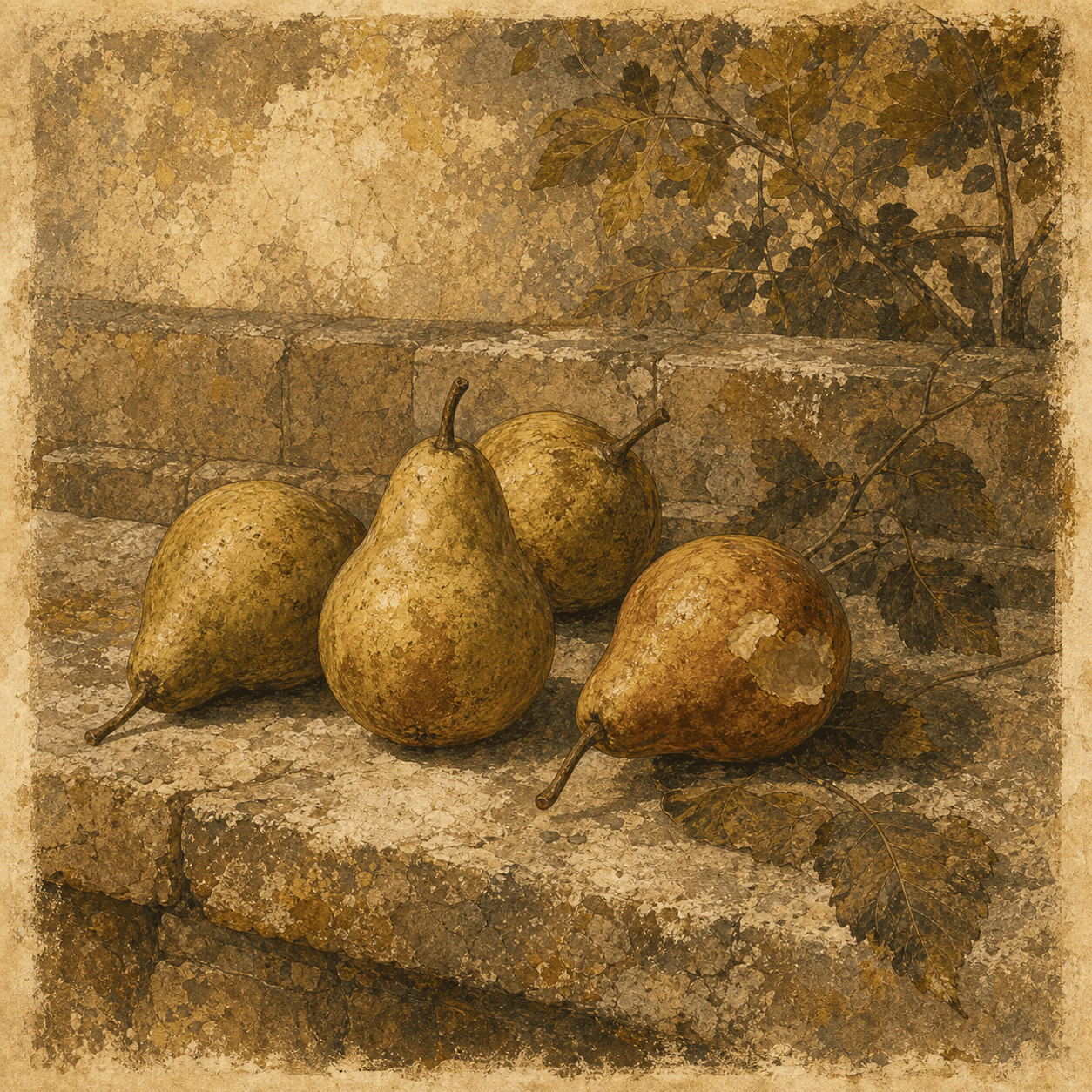
Pears on a stone wall, a visual reference to the orchard theft Augustine describes in the Confessions.

He was sixteen when he stole pears from a neighbor's orchard with a gang of friends. They threw the pears to pigs. He could not stop writing about it.

The theft itself was nothing — a teenager's prank, the kind of small evil that fills any honest confession. But it haunted him because he could not find a motive for it. He was not hungry. The pears were sour. He did not even want them.

Decades later, sitting at a writing desk as Bishop of Hippo, he came back to that orchard for an entire chapter of the Confessions. He had concluded by then that human beings are capable of choosing evil for no reason except that it is evil. Confessions 2.4-2.10

False Certainty

The Manichean years.

He spent nine years as a Manichean. The Manichees were a religious movement out of Persia that taught the universe was a battleground between two equal powers: Light and Darkness. Evil was a substance. The body was a prison. Salvation came through secret knowledge.

The appeal was not only intellectual. The Manichees told Augustine he was not really responsible for his sins, because evil came from outside him. He could keep his mistress, keep his ambition, keep his pride, and have a cosmology that excused all of it.

When the great Manichean bishop Faustus finally came to Carthage and proved eloquent but intellectually empty, Augustine's confidence in the system broke. It would take years to walk all the way out. But the door had cracked.

Milan

Ambrose, rhetoric, and the first real answer.

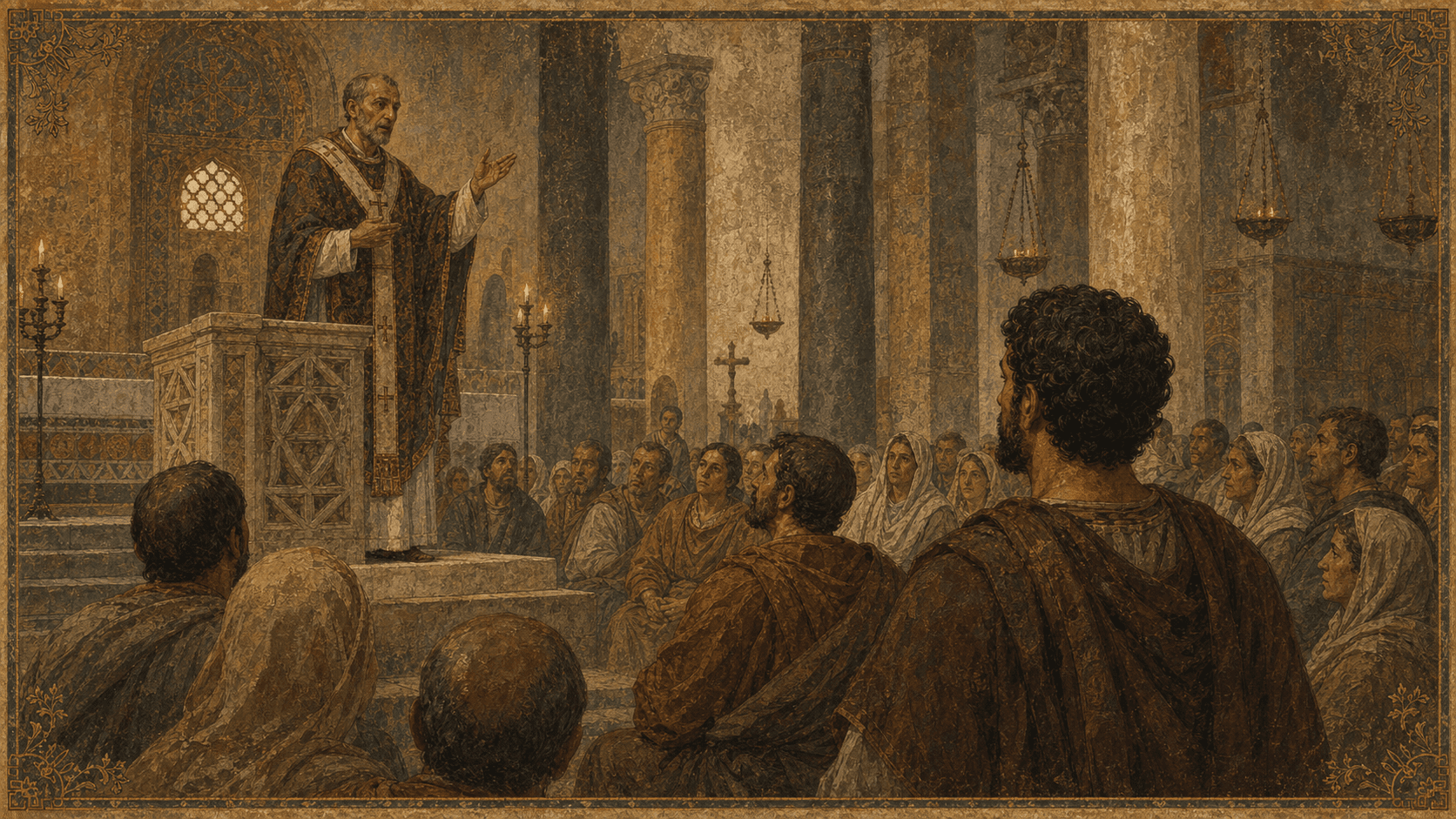
St. Ambrose of Milan preaching in his cathedral, where Augustine first heard him.
Ambrose preaching in Milan

In 384, at thirty, Augustine took a chair of rhetoric in Milan. The job came with prestige and proximity to the imperial court. It was the most important professional moment of his life so far.

He went to hear Ambrose preach at first out of professional interest, to study a famous orator's technique. He stayed because Ambrose was the first Catholic teacher he had ever met whose intellect he could not condescend to.

Around the same time, Augustine encountered the writings of the Neoplatonists. They helped him see that God is not a body or a force inside the material world. That opened the door out of Manicheism and toward the Catholic faith Ambrose was preaching.

The Garden

Take and read.

It was August 386. He was thirty-one, and had been wrestling for months with the decision to convert — not because he doubted the Church's teaching, but because he could not let go of the life he had built around its absence.

He was sitting in a small garden behind the house he was renting in Milan, with his friend Alypius nearby. He had just been reading the life of St. Antony of the Desert and had been undone by it. He went to the far end of the garden alone, threw himself under a fig tree, and wept.

Then he heard, from a neighboring house, a child's voice chanting tolle lege, tolle lege — take up and read, take up and read. He opened St. Paul and read Romans 13:13-14. He did not need to read further. The decision was made in him before he finished the sentence. Confessions 8.12.29

Easter 387

Baptism, and Monica at Ostia.

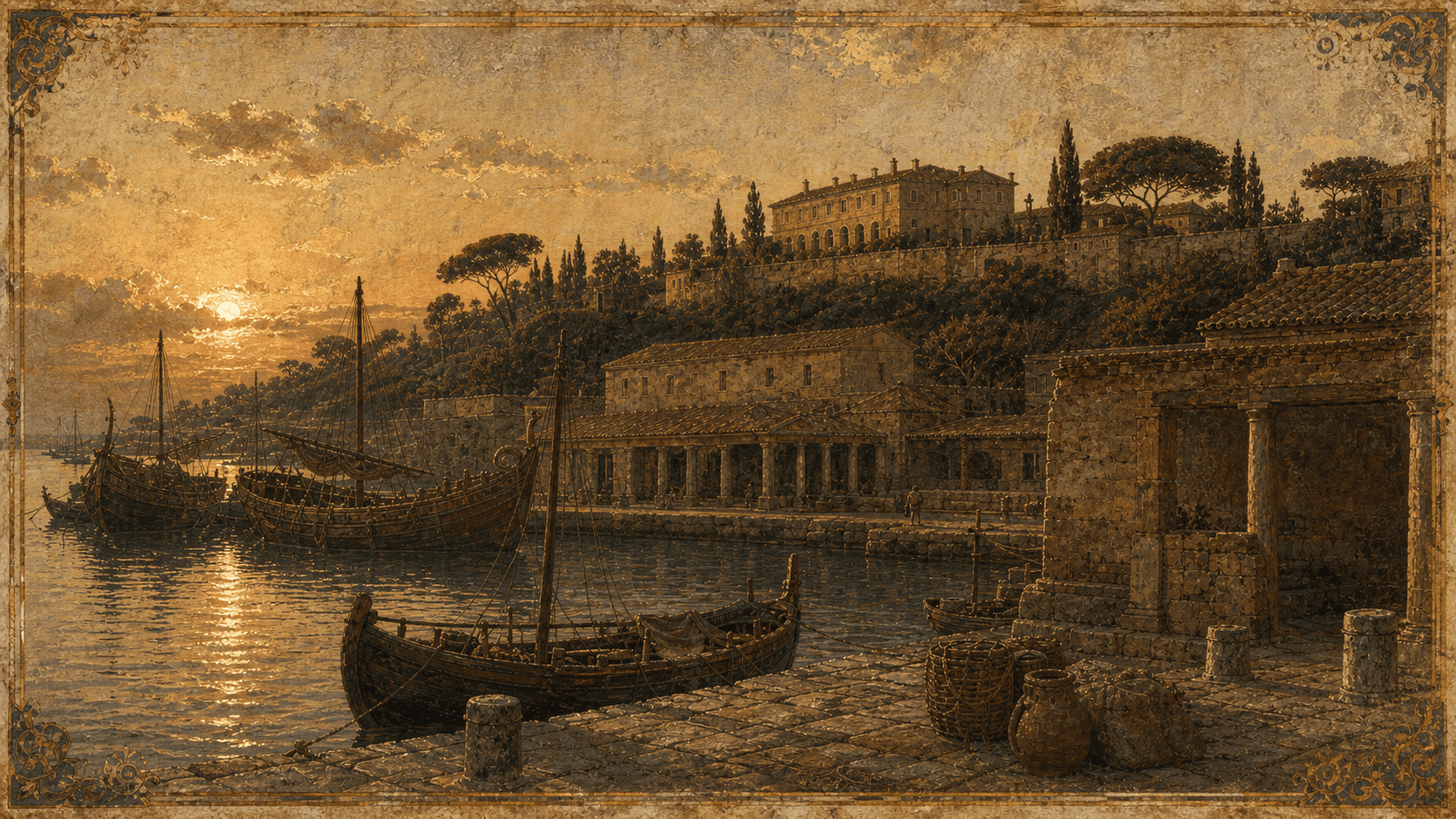
The harbor of Ostia at dusk, where St. Monica died on the journey home to North Africa in 387.
Ostia at dusk

At the Easter Vigil on April 24, 387, Ambrose baptized Augustine in the cathedral at Milan. With him was baptized his son Adeodatus, about fifteen years old, gifted, and born from Augustine's long relationship outside marriage.

They began the journey home to North Africa later that year. At Ostia, the port of Rome, Augustine and Monica stood at a window overlooking a garden and talked about what eternal life with God would be like. He wrote later that for one instant, with "the whole effort of our heart," they touched it. Confessions 9.10.24

She fell ill within days. She died in that house, far from the North African home she had longed to see again. He buried her at Ostia and went home without her.

Hippo

The bishop who wanted quiet.

Augustine had wanted to live the rest of his life in a small community of friends, reading and writing. The Church had other plans.

He went to Hippo Regius on a visit, and a crowd in the church recognized him and acclaimed him for ordination on the spot, against his protests. He was made a priest in 391. Four years later, in 395, he was consecrated bishop of Hippo.

He spent the next thirty-five years there. He preached daily to a North African congregation. He arbitrated lawsuits. He wrote letters, treatises, sermons, and replies into the early hours of the morning.

The Book

The Confessions.

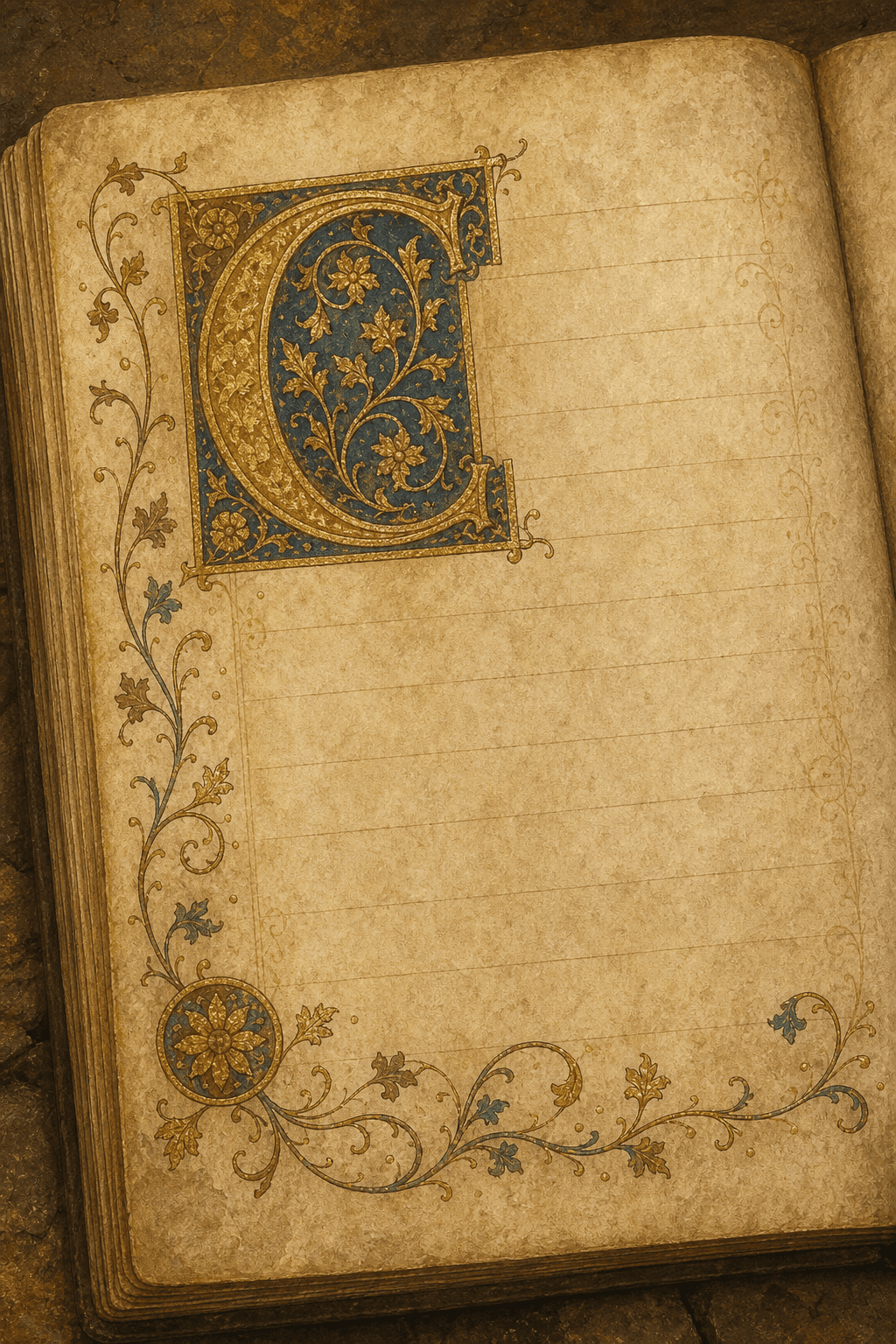
A blank illuminated manuscript page representing Augustine's Confessions.
The book as a prayer

He started writing the Confessions around 397, when he had been bishop for two years. It was not what anyone in the ancient world meant by an autobiography. It was a prayer.

The whole book is written as a direct address to God. Augustine tells God his own life story, asking God to teach him what it meant. Then, in the final three books, he turns to time, memory, and the meaning of Genesis.

It is the first book of its kind. Nothing like it had been written before. It is also, on the page, beautiful: Latin prose so dense and rhythmic that readers have not put it down for sixteen hundred years.

City of God

Rome fell. Augustine answered.

A visual rendering of Augustine's two cities: the earthly city and the City of God.
The earthly city and the City of God

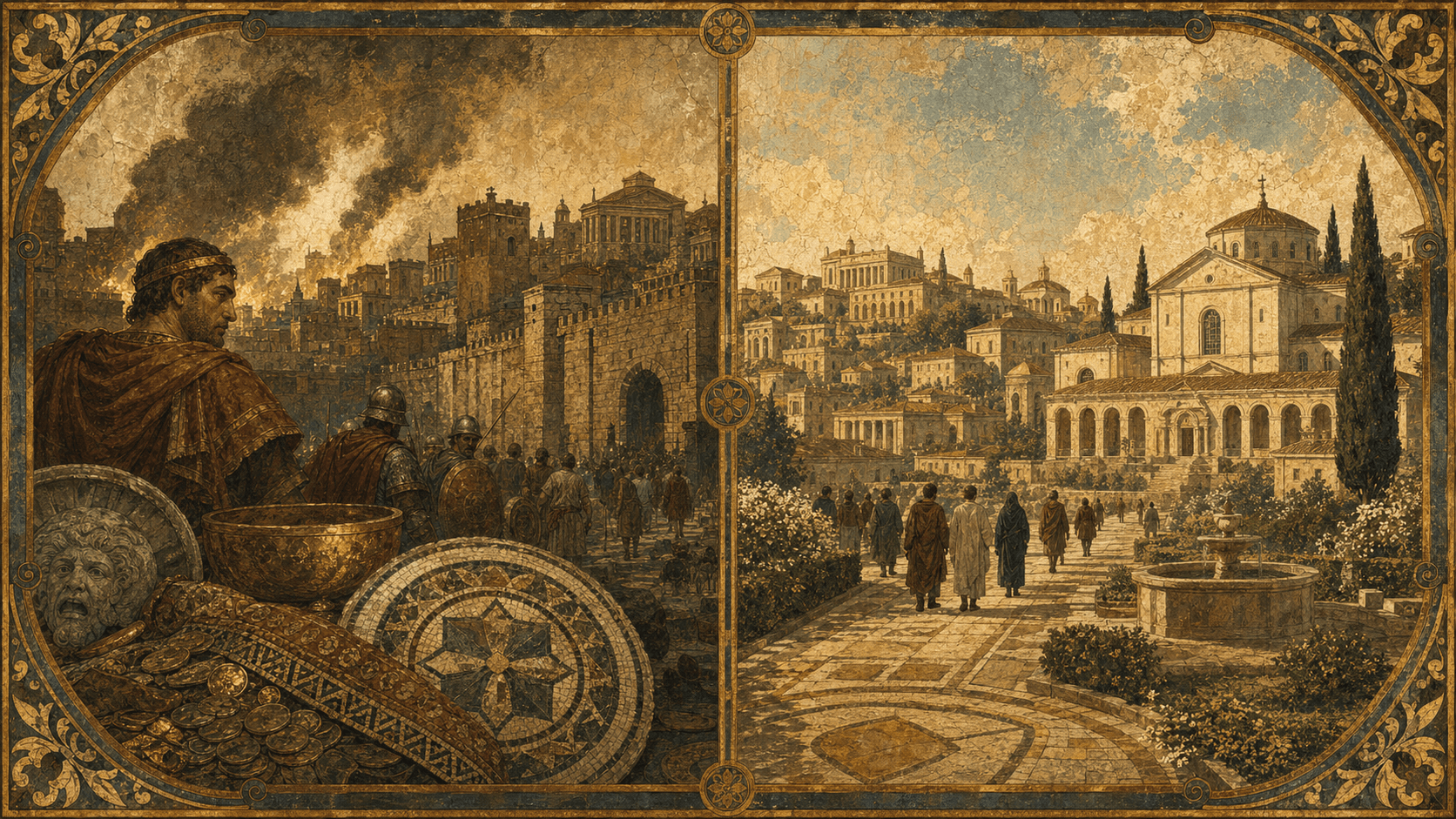
In August of 410, the Visigoths under Alaric sacked the city of Rome. The Empire did not fall that day, but the shock was immense: Rome had not been taken by an enemy for roughly eight hundred years.

The pagans blamed the Christians. The Empire had become Christian, the old gods had been abandoned, and now Rome had fallen. Augustine took the argument seriously.

He spent the next thirteen years writing the answer. The City of God, completed in twenty-two books, proposes that two cities run through all of human time. The earthly city is built on the love of self to the contempt of God. The City of God is built on the love of God to the contempt of self. Empires rise and fall. The City of God will not.

Controversies

The fights the Church still remembers.

The Donatists believed that the sacraments of unworthy priests were invalid. Augustine answered that the sacraments belong to Christ, not to the priest. Their grace does not depend on his holiness. CCC 1127-1128, 1584

The Pelagians taught that human beings could achieve salvation by their own moral effort, without grace. Augustine answered that original sin is real, grace is necessary, and Christ saves us because we cannot save ourselves. CCC 396-412

The Manichees, his old teachers, kept arguing with him his whole life. His refutations helped establish the Catholic position that evil is not a substance, but a privation of the good. CCC 309-314

The Siege

The end came at Hippo.

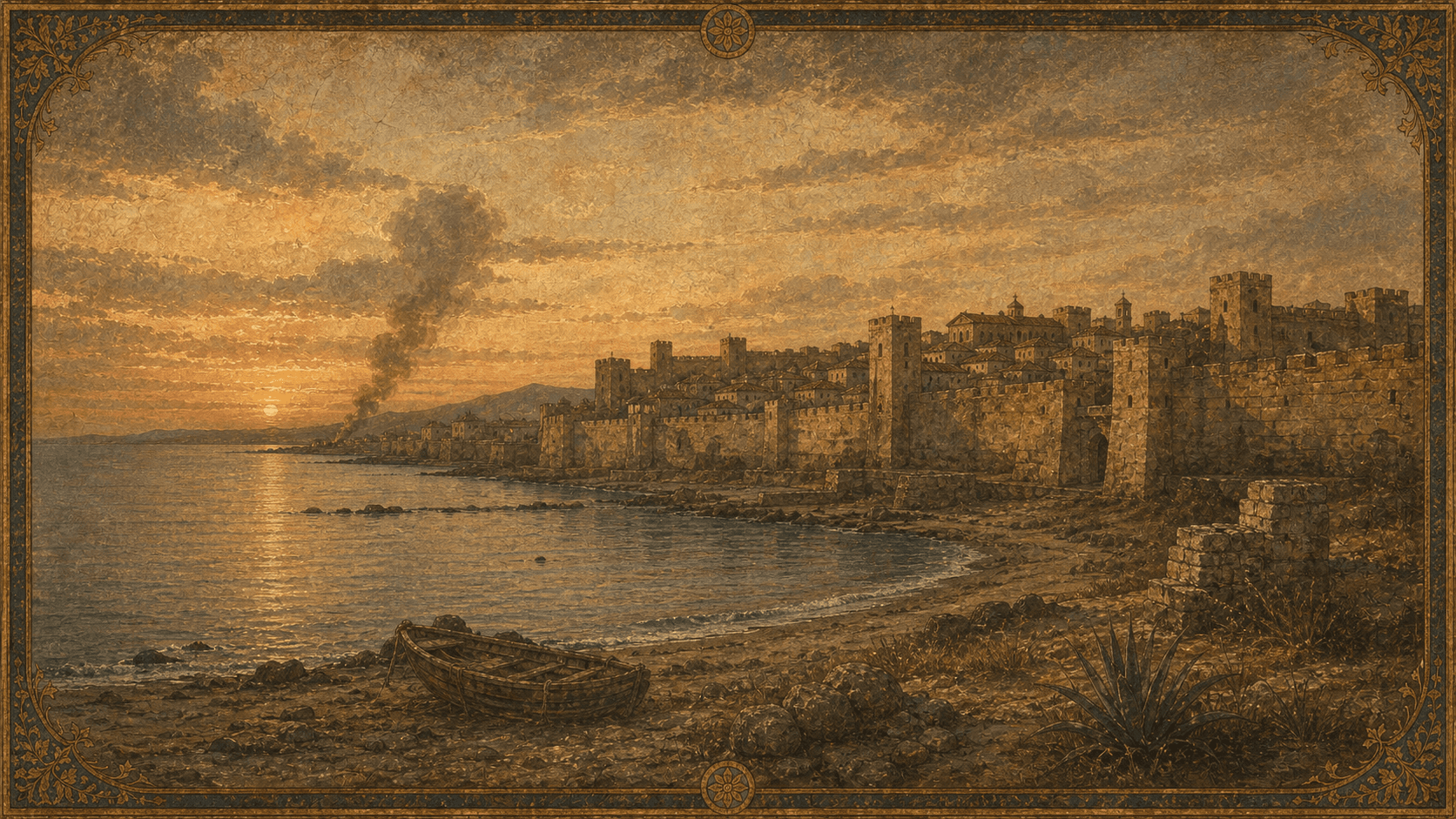
The coast near Hippo Regius during the Vandal siege of 430, in the final summer of Augustine's life.
Hippo during the Vandal siege

In 429, the Vandals crossed from Spain into North Africa. By the summer of 430, they were at the walls of Hippo. Augustine was seventy-five and dying.

He spent the last months of his life sick in bed, reading the Penitential Psalms, which he had asked to be copied out and pinned to the wall where he could read them lying down.

He died on August 28, 430, three months into the siege. Possidius, his disciple, was nearby and later wrote the account of his death. Augustine's library and his relics survived the ruin of Roman Hippo.

Theology

What the Church draws from him.

  • Original sin and grace. Human beings cannot save themselves. We are wounded, not merely uneducated. CCC 396-412
  • The Trinity as love. On the Trinity remains one of the most influential Latin works on Trinitarian theology.
  • Time as creation. Augustine argued that time itself was made by God; there was no before creation.
  • The sacraments belong to Christ. Their effectiveness does not depend on the worthiness of the minister. CCC 1127-1128
  • Just war reasoning. Augustine's teaching became one root of the tradition the Catechism still calls the just war doctrine. CCC 2309
  • Memory and the interior life. Augustine treats the human soul as a vast inner country with its own geography.

Why Now

Why he matters now.

He matters now because the questions he answered in fourth-century North Africa are the questions every twenty-first-century reader still brings to the Church: How do I know what is true? Why do I want what I should not want? Can I be forgiven for what I have already done?

Augustine did not write theology to win arguments. He wrote it because he was trying to figure out how to live.

He is the saint for anyone who came to Christ late. For anyone who spent a decade in the wrong religion, the wrong relationship, the wrong career, the wrong story about themselves. For anyone whose mother prayed for them when they did not deserve it.

Reading Path

Where to read him.

  1. Confessions. Start here. Begin with Book 1 and read through Book 9. Chadwick is the recommended modern English translation.
  2. On Christian Doctrine. Short, accessible, foundational for how Catholics read Scripture.
  3. Selected Sermons. Augustine the pastor, talking to ordinary people.
  4. The City of God. Long. Worth it. Read Books 1, 14, and 19 first.
  5. The Enchiridion. Augustine's own short summary of Christian belief.

Prayer

Late have I loved Thee.

Augustine's most famous prayer comes not from a tidy life but from a recovered one. He speaks to the God who had been within him while he was looking everywhere else.

Connected Saints

A family of holiness.

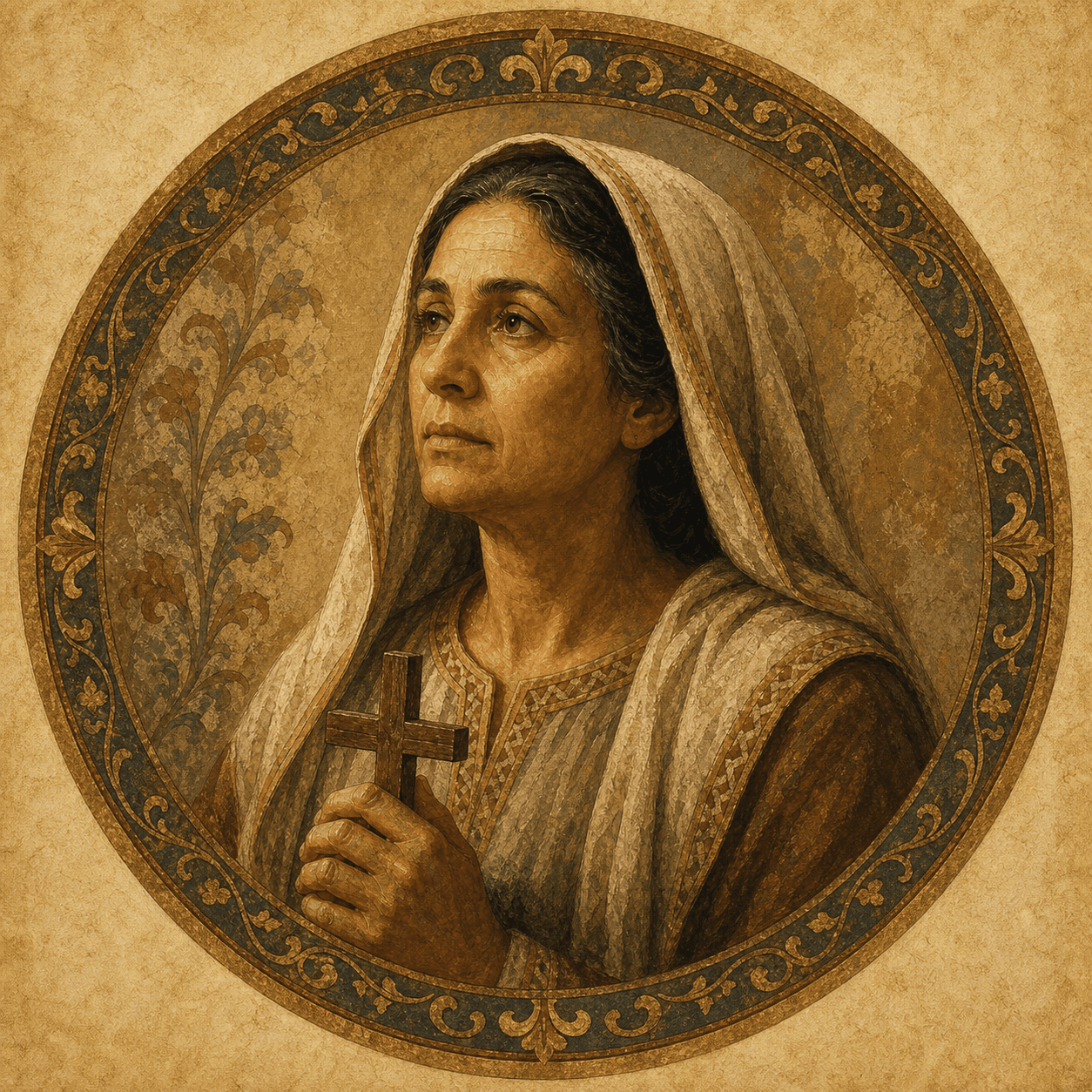
Portrait medallion of St. Monica.

St. Monica

His mother. Feast August 27. The saint of every parent praying for a wayward child.

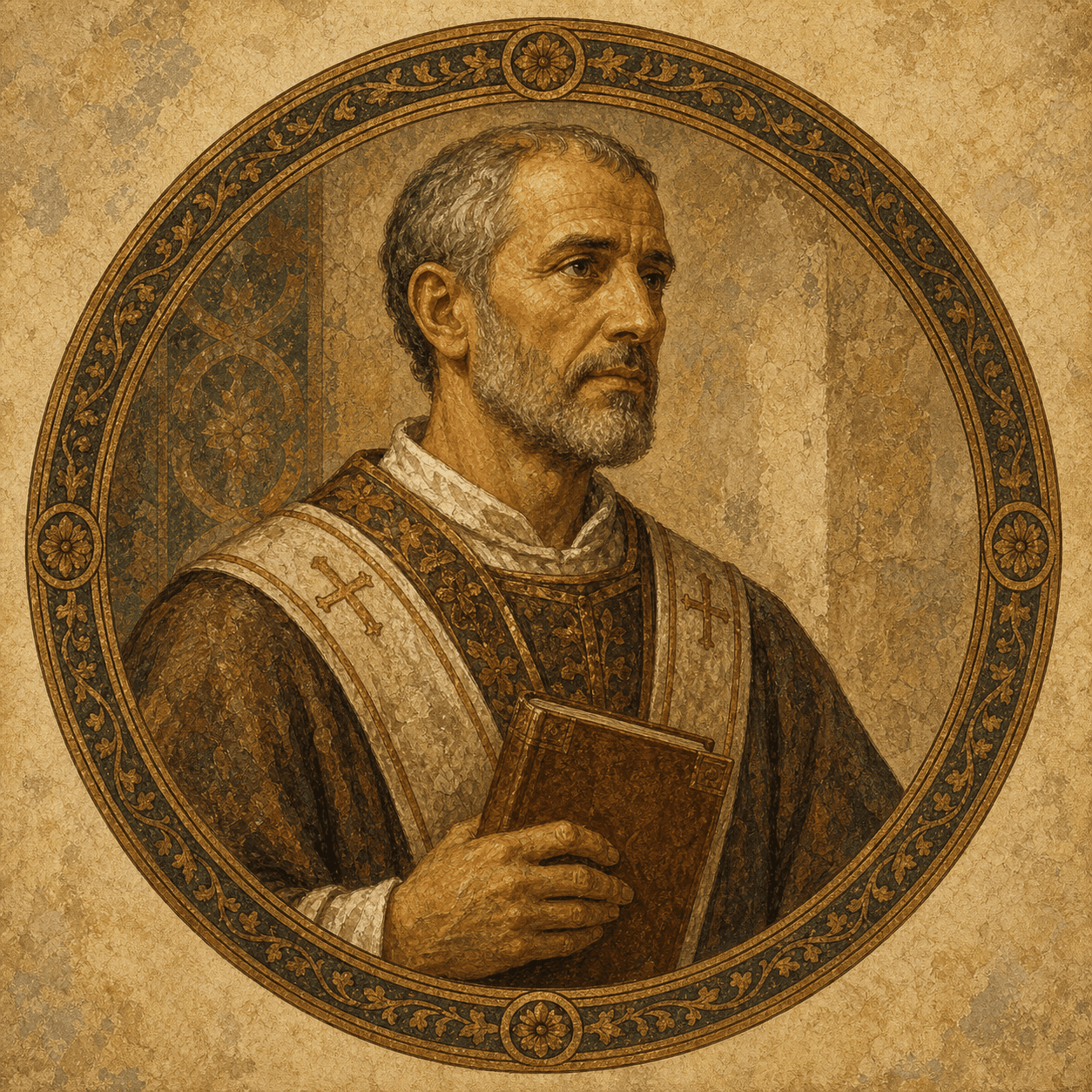
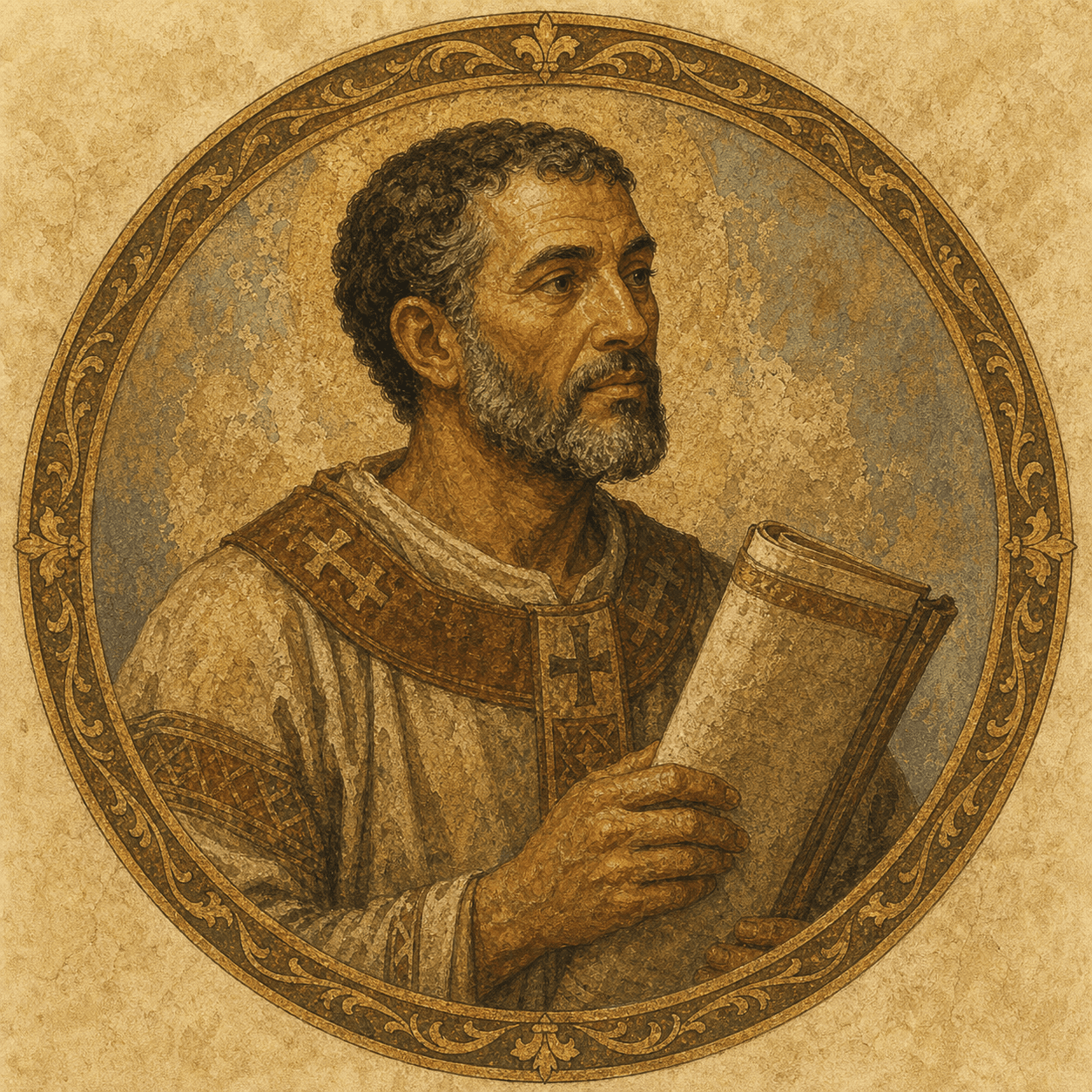
Portrait medallion of St. Ambrose of Milan.

St. Ambrose

Doctor of the Church. The bishop whose intellect Augustine could not condescend to.

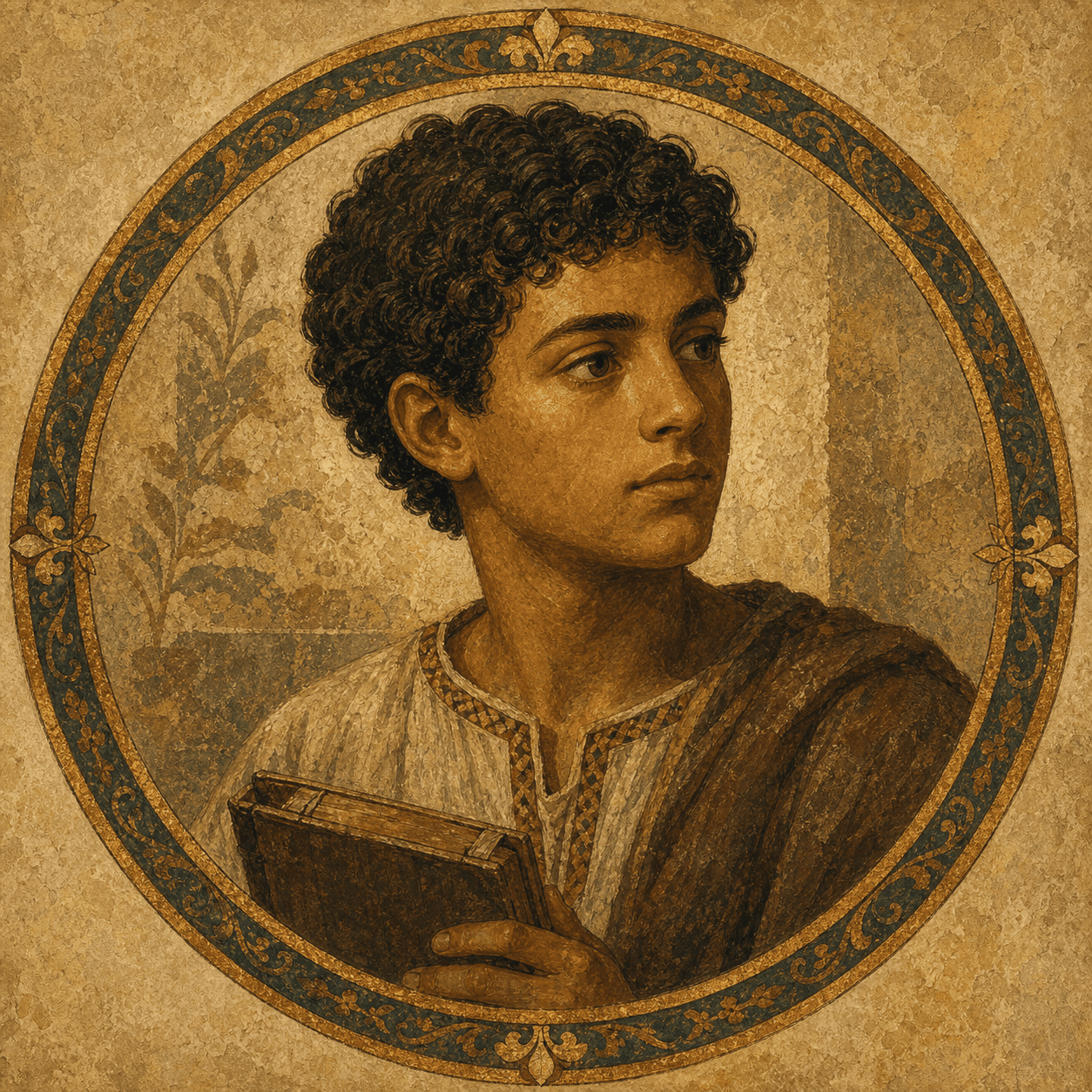
Portrait medallion of Adeodatus, Augustine's son.

Adeodatus

Augustine's son, baptized with him at Easter 387. Gifted, beloved, and dead in youth.

Portrait medallion of St. Possidius of Calama.

St. Possidius

Augustine's disciple, friend, and first biographer.

Frequently Asked

Common questions about Augustine.

Why is Augustine called a Doctor of the Church?+
He is one of the four original Latin Doctors of the Church, named together with Ambrose, Jerome, and Gregory the Great near the end of the thirteenth century. The title recognizes both the holiness of his life and the lasting importance of his teaching for the universal Church.
Why are pears important in Augustine's story?+
At sixteen, Augustine stole pears from a neighbor's orchard with friends, not because he wanted them, but because the wrongness of the act was its own attraction. He returned to the incident in the Confessions because it forced him to face a hard truth about the human heart.
Who was Monica, and why is she a saint too?+
St. Monica was Augustine's mother, a devout Christian who prayed for his conversion through many years and followed him across the Mediterranean to keep doing it. Her holiness, persistence, and witness made her a saint in her own right.
Did Augustine and Monica reconcile before her death?+
Yes. Their final days together at Ostia are among the most moving passages in the Confessions. Mother and son stood at a window overlooking a garden and spoke about eternal life with God. Monica died nine days later.
Did Augustine teach predestination?+
Yes, in a serious and developed form, especially in his later anti-Pelagian writings. Catholic teaching affirms predestination, but also insists that this does not remove human free will or make our cooperation with grace meaningless. CCC 600, 1037, 2008-2012
What is the best way to start reading Augustine?+
Begin with the Confessions. Read Book 1 through Book 9 first. If you want the deeper philosophical material, continue through Books 10 through 13; if not, come back to them later.
Where is Augustine buried?+
His relics were eventually translated from Hippo to Cagliari in Sardinia, and from there to Pavia, Italy, where they remain today in the Basilica of San Pietro in Ciel d'Oro.

Sources

Read beyond summaries.

Augustine deserves source trails: his own works, the Church's teaching, and serious historical scholarship.

Scholarship

  • Direct quotations use the public-domain Schaff/New Advent English text for rights clarity.
  • Henry Chadwick, Confessions (Oxford World's Classics) is the recommended modern reading translation.
  • Peter Brown, Augustine of Hippo: A Biography
  • Henry Chadwick, Augustine of Hippo: A Life
  • Robin Lane Fox, Augustine: Conversions to Confessions

Last reviewed: May 26, 2026

On this page+