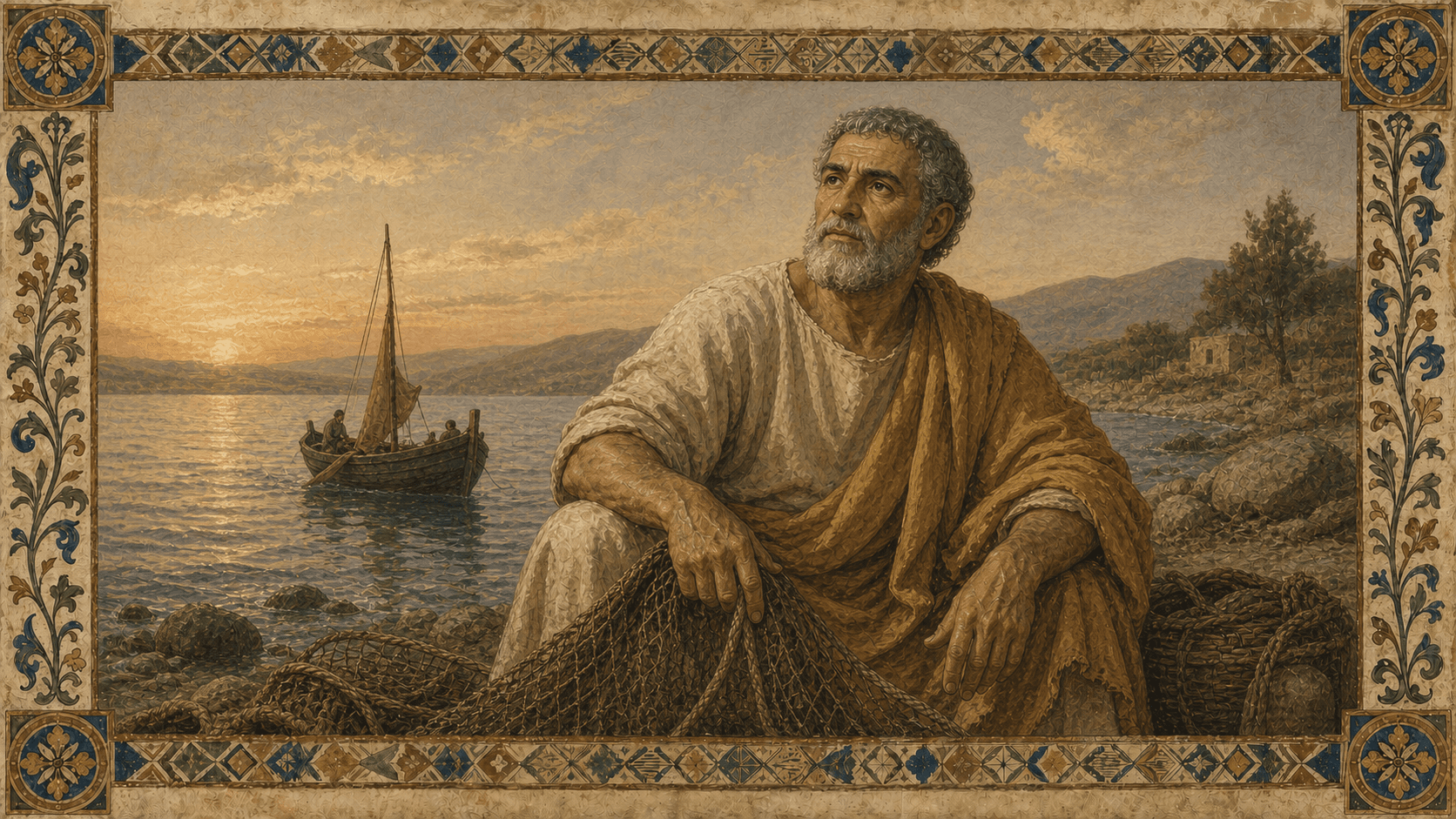
St. Peter as a weathered Galilean fisherman and apostle, with net and ochre mantle, rendered in the Saints Library fresco-editorial style.

Saints Library

Peter the Apostle

Feast June 29 · First among the Apostles · First Bishop of Rome

The Galilean fisherman who walked on water and then sank, who swore he would die for Christ and then denied him three times before dawn, and whom Christ made, in spite of all of it, the rock the Church is built on.

The Story

The man who failed and was restored.

Simon was a married fisherman on the Sea of Galilee, working his brother Andrew's trade and his own, when a preacher walked up to his boat and told him to leave it and follow. He did. Within three years he had become the leader of the men around that preacher, had declared him to be the Son of God, had been given a new name and the keys of the kingdom — and had also told him to his face that he was wrong, drawn a sword in a garden, and denied three times in a single night that he had ever known him.

Peter is the most human of the apostles because the Gospels hide none of it. He is impulsive, loud, brave, and unreliable in exactly the way real people are. He says the most important true thing anyone says in the Gospels — Thou art the Christ, the Son of the living God — and a few verses later Jesus has to call him Satan for refusing to accept that the Christ would suffer. He swears he will follow Jesus to death and then swears, hours later, to a servant girl, that he never met him.

And then Jesus, risen from the dead, finds him on the same lakeshore where it started, and asks him three times whether he loves him — once for each denial — and three times tells him to feed his sheep. He does not replace Peter. He restores him. The man who failed most publicly is made the foundation.

Peter spent the rest of his life proving the second chance was real. He preached the first Christian sermon, led the apostles, opened the Church to the whole world, went to Rome, and died there on a cross — by his own request, the tradition says, hung head-downward, because he did not think himself worthy to die as his Lord had died.
Galilee

The world he came from.

He was born in Bethsaida, a fishing town on the Sea of Galilee, and settled in Capernaum, where he owned a house and a boat and lived with his wife and his mother-in-law. He was a working man in an occupied province — Galilee under Rome, taxed and watched, far from Jerusalem and farther from power.

He fished for a living, in partnership with his brother Andrew and with the brothers James and John. It was hard, physical, weather-dependent work, done mostly at night. Peter was good at it and knew nothing else. He was not learned; later, in Jerusalem, the authorities would note with surprise that he and John were unlettered men. He was the kind of person the world does not expect anything from.

He was married — the Gospels record Jesus healing his mother-in-law of a fever in Peter's own house — and an early tradition holds that he had children. He was, in every external way, an ordinary man with an ordinary life, until the day his brother Andrew came and told him they had found the Messiah.

Cephas

The call and the new name.

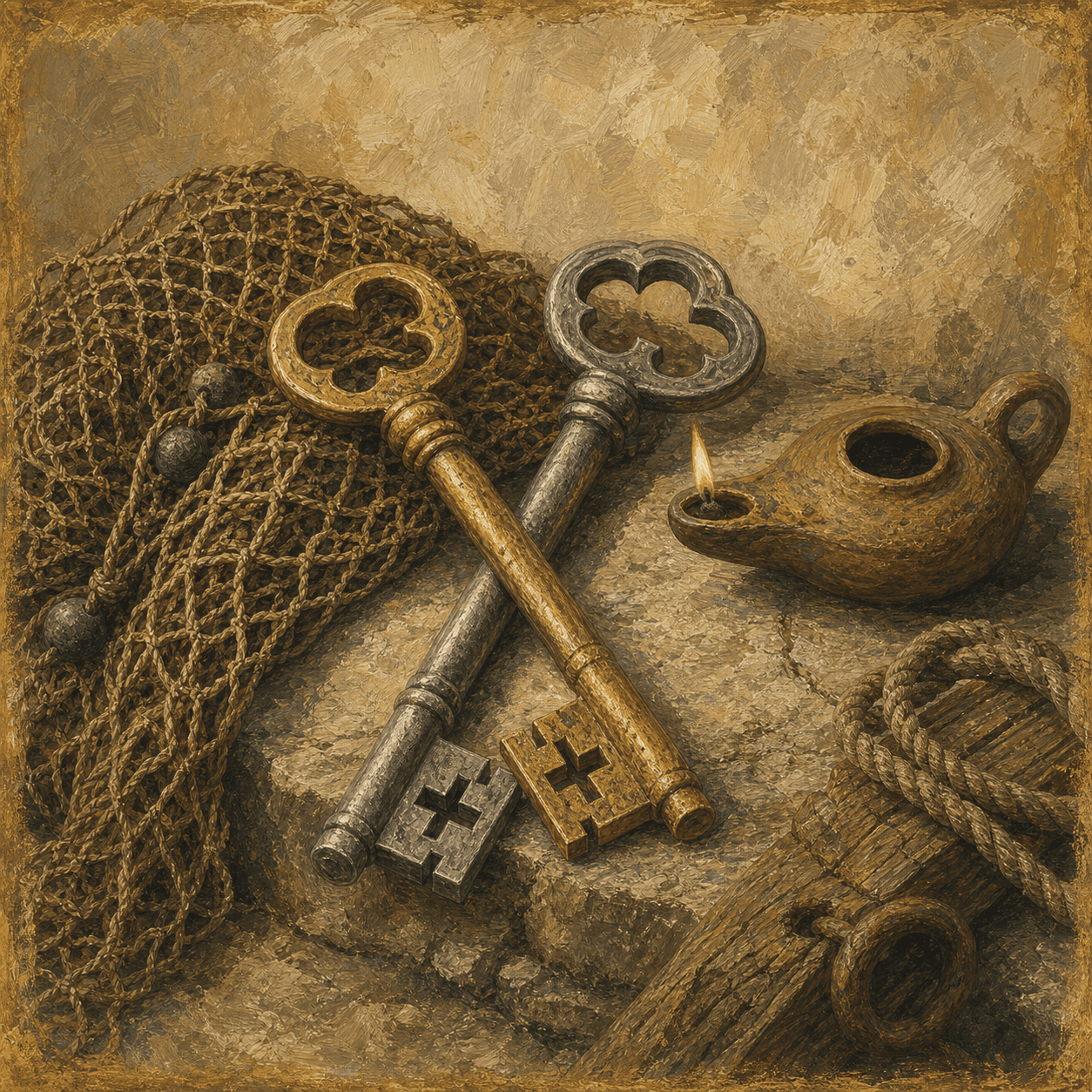
A symbolic still life for Peter with crossed keys, fishing net, lamp, and parchment.
Keys, net, lamp.

Andrew brought him to Jesus. It was Andrew, not Peter, who came to Christ first — a detail the Church has never forgotten. And at that first meeting Jesus looked at the fisherman and renamed him: Simon, son of Jonah, would be called Cephas, which means rock.

It was a strange name for the man he was then. Simon was many things — eager, warm, impulsive — but stable was not the obvious one. The name was a promise about what he would become, not a description of what he was.

Some time later, by the lake, Jesus told Simon to put out into deep water and let down the nets, after a whole night of catching nothing. Peter objected, then obeyed, and the catch nearly sank the boat. He fell down and told Jesus to leave him, for he was a sinful man. Jesus told him not to be afraid: from now on he would catch men. Peter left the boats on the shore and followed, and did not go back to fishing for a living again.

Matthew 16

The confession and the keys.

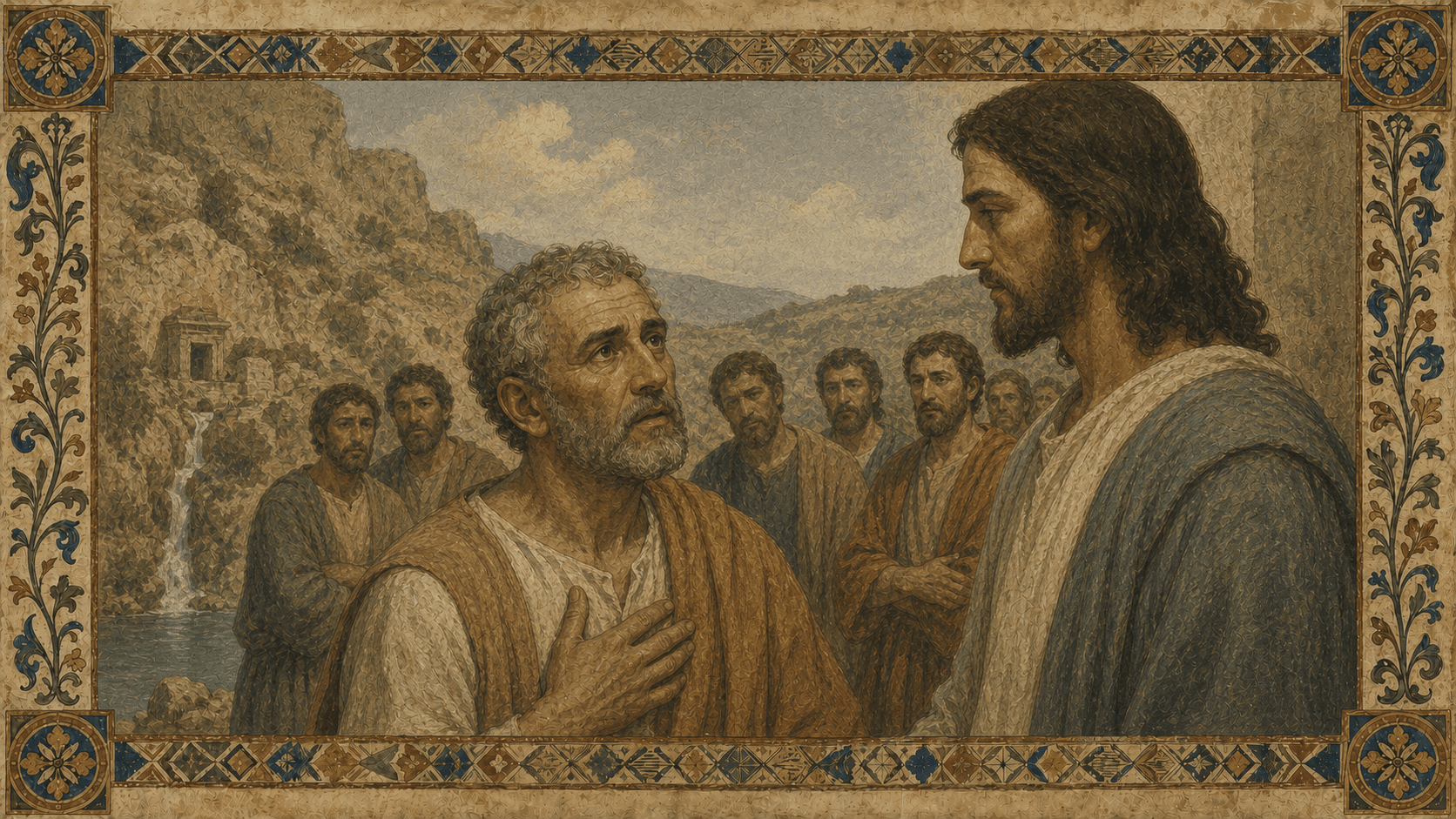
Peter confessing Christ at Caesarea Philippi while the other apostles look on.
At Caesarea Philippi, Peter says the sentence the Church confesses.

The hinge of Peter's life came at Caesarea Philippi, in the far north of the country. Jesus asked the Twelve who people said he was, and then who they said he was. Peter answered for all of them, and got it exactly right:

"Thou art the Christ, the Son of the living God." Matthew 16:16, KJV

It is the central confession of the Christian faith, and Peter is the one who made it. Jesus told him that flesh and blood had not revealed this to him, but the Father in heaven — and then gave him the name's full meaning: upon this rock he would build his Church, and the gates of hell would not prevail against it; to Peter he would give the keys of the kingdom of heaven.

This is the foundation, in Scripture, of the office Peter holds. The Catholic Church understands these words to mean what they say: that Christ built his Church on Peter and gave Peter a unique authority — the keys, the power to bind and loose — and that this office did not die with Peter but continues in his successors, the bishops of Rome. The pope is the Bishop of Rome because Peter was, and holds Peter's office because Christ gave it to Peter first.

And then, almost immediately, Peter proved how human the rock still was. When Jesus said he would have to suffer and die, Peter took him aside and rebuked him, and Jesus turned and said, Get thee behind me, Satan. The same man, in the same conversation, is called the rock and then called Satan. The Gospel does not tidy this up. Peter would have to learn that being the foundation did not mean being right about everything; it meant being faithful, in the end, after everything.

The Passion

The denial.

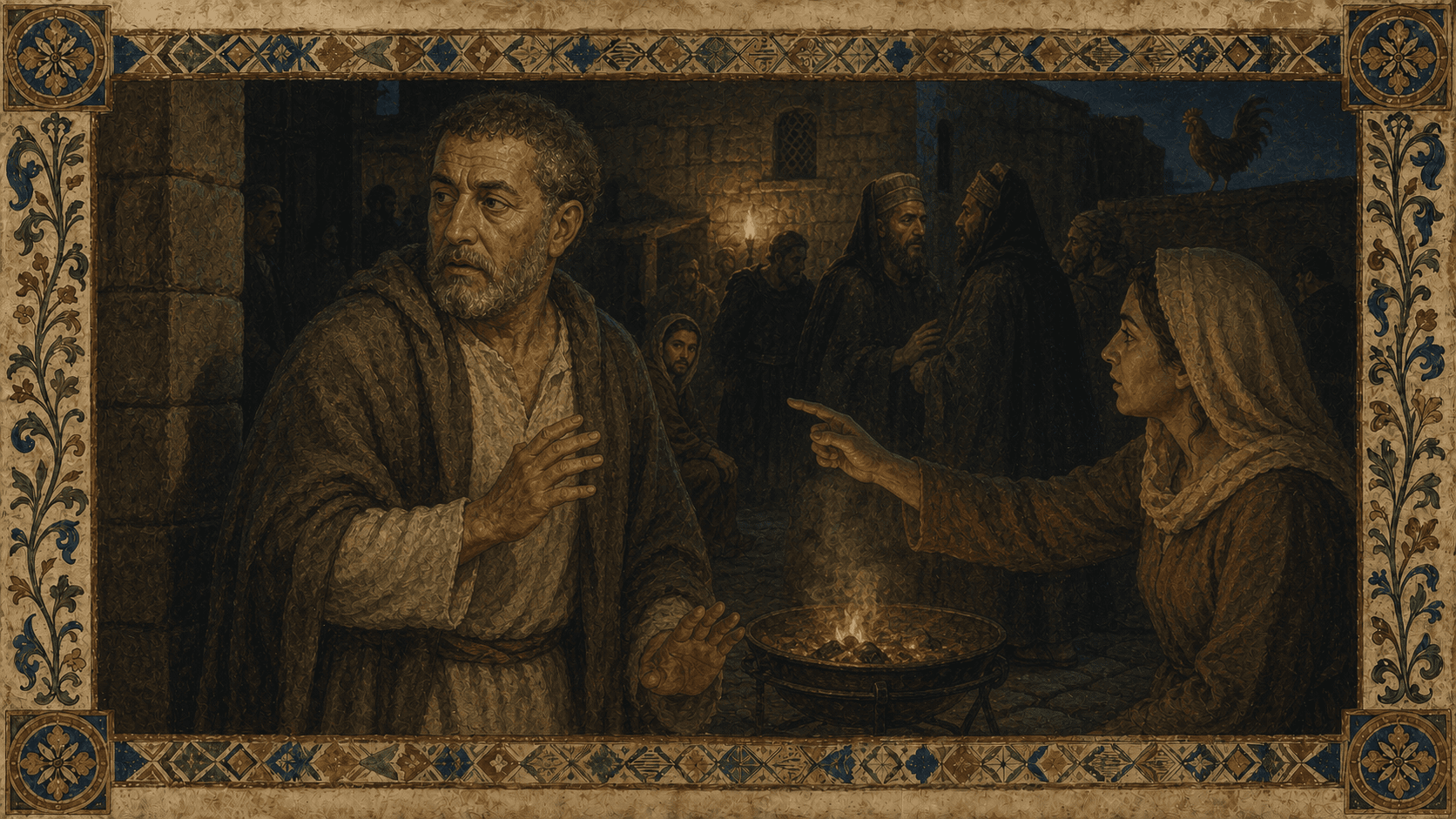
Peter at the charcoal fire during the denial, with a servant girl and the cockcrow implied in the distance.
A charcoal fire, a servant's question, and the cockcrow.

On the last night, Peter swore he would never fall away even if everyone else did. Jesus told him that before the cock crowed, he would deny him three times. Peter swore harder that he would die first.

Hours later it happened exactly as Jesus said. After the arrest, Peter followed at a distance into the courtyard of the high priest, and there, three times, ordinary people — a servant girl, a bystander — said that he had been with Jesus, and three times Peter said he had not. The third time he cursed and swore that he did not know the man. And the cock crowed.

Luke records the detail that breaks the scene open: at that moment, Jesus, being led away, turned and looked at Peter. And Peter remembered, and went out, and wept bitterly.

This is the lowest point in the life of any of the apostles, and the Gospels put it in all four accounts. The man Christ named the rock denied him to a servant girl out of fear. The Church has never hidden it, because the whole point of what comes next depends on it. Peter is not the foundation because he was strong. He is the foundation because he was forgiven.

John 21

The restoration.

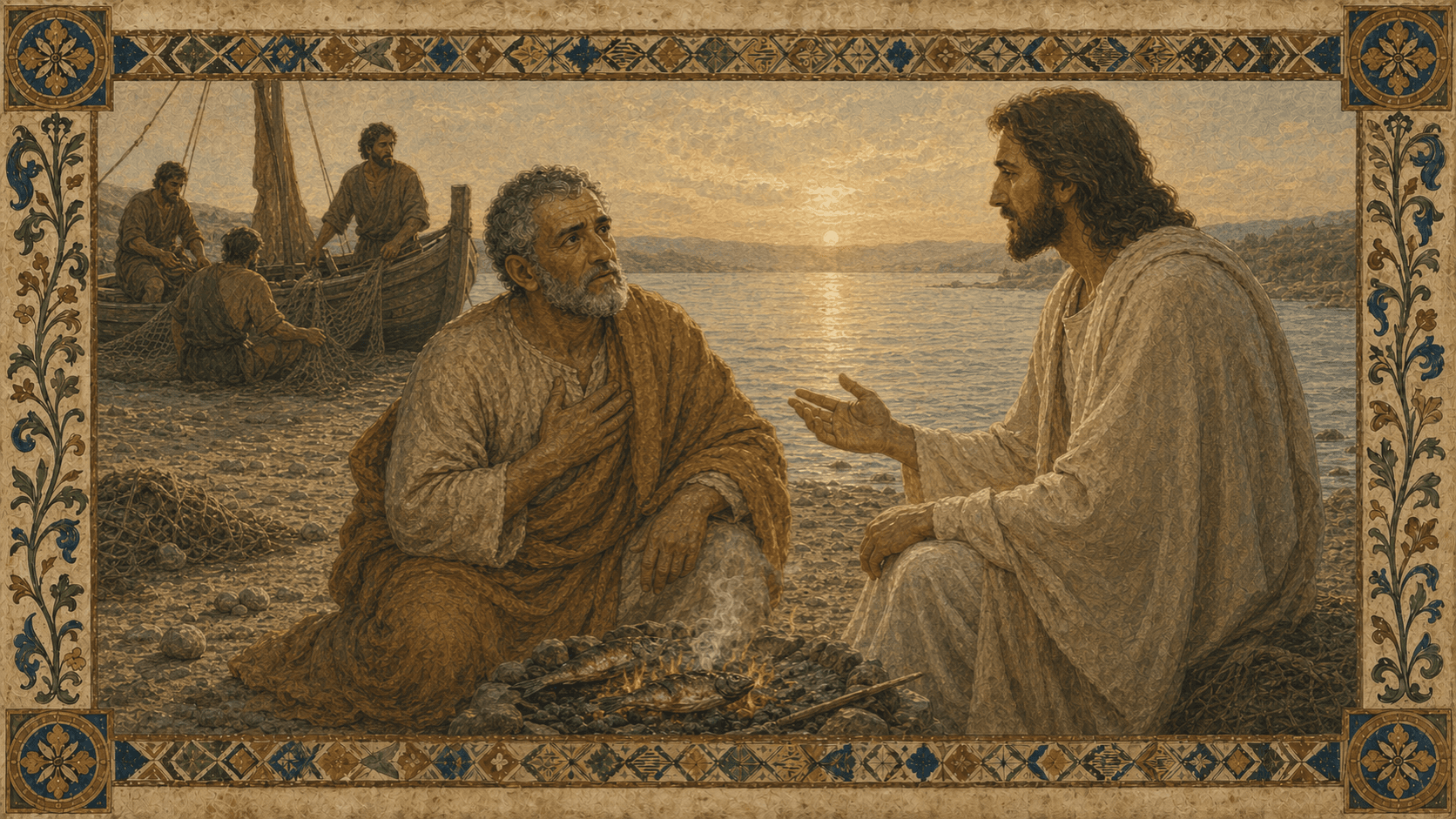
The risen Christ restoring Peter by the Sea of Galilee beside a dawn charcoal fire.
Three questions for three denials, and the flock given back.

After the resurrection, Peter went back to Galilee, and back to fishing — back, it seems, to the life he had before, not knowing what else to do. Jesus came to the lakeshore at dawn while the disciples were in the boat, and told them where to cast the net, and the catch was so large they knew at once who it was. Peter threw himself into the water and swam to shore.

There was a charcoal fire on the beach — the same kind of fire he had warmed himself at in the courtyard while he denied. And there, Jesus asked him, three times, whether he loved him. Three times Peter said yes. Three times Jesus told him: feed my lambs, tend my sheep, feed my sheep.

Three questions for three denials. Three commissions to cancel three betrayals. Jesus did not bring up the courtyard, did not extract an apology, did not lower Peter's office as punishment. He gave it back to him, in full, and added the weight that would define the rest of his life: the care of the whole flock. Then he told Peter, in plain words, how he would die — stretching out his hands, led where he did not want to go — and said, again, the first words he had ever said to him: follow me.

This time Peter followed all the way.

Acts

The rock of the Church.

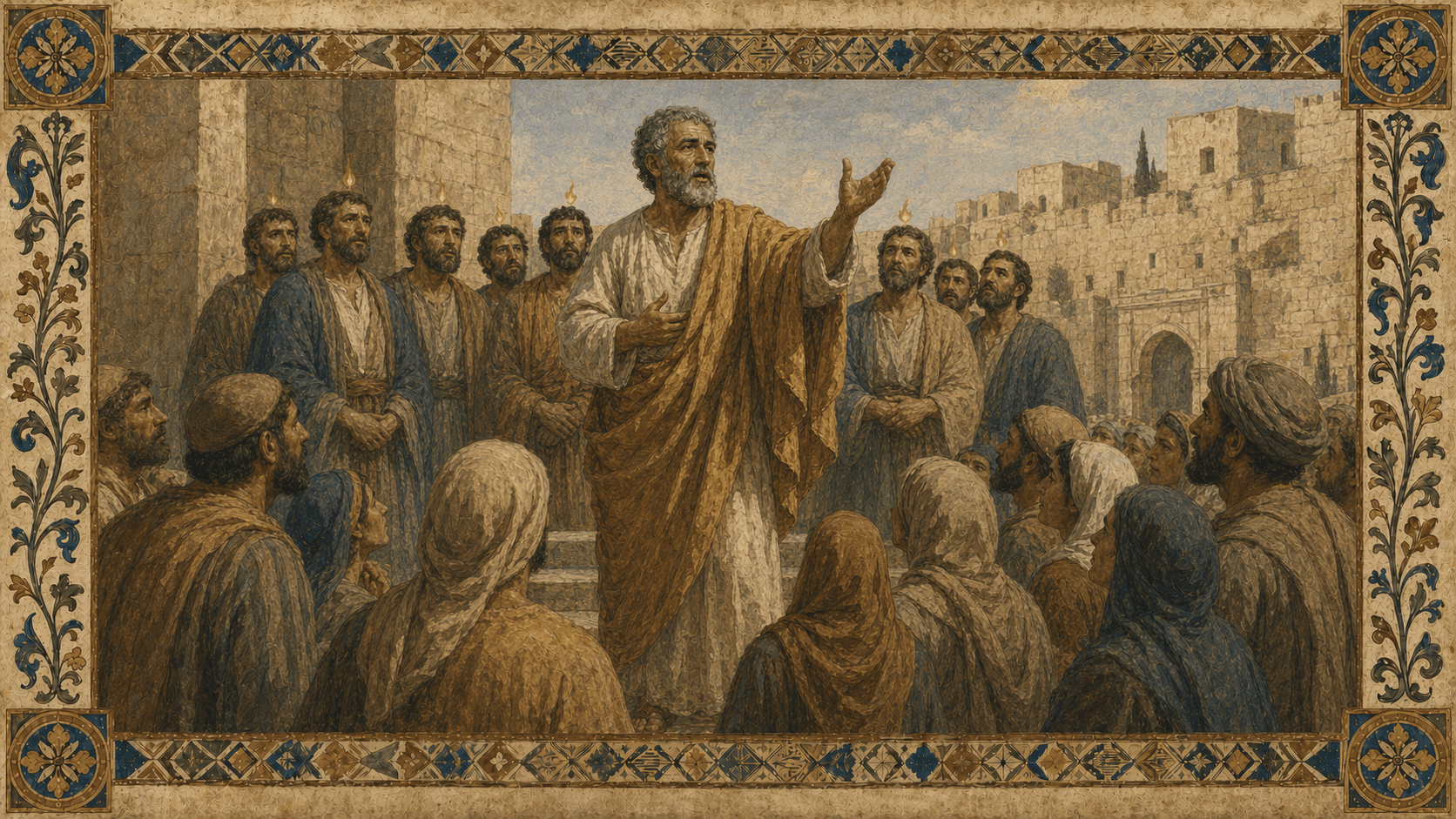
Peter preaching at Pentecost in first-century Jerusalem with restrained flame marks over the apostolic group.
Peter preaches at Pentecost, and the Church steps into public view.

After the Ascension, Peter steps into the center of the Acts of the Apostles and does not leave it. He proposes the replacement for Judas. On the day of Pentecost, filled with the Holy Spirit, he stands up and preaches the first Christian sermon, and three thousand are baptized. He works the first miracle in the Church's name, healing a man lame from birth at the Temple gate. He is arrested, tried, and beaten, and keeps preaching. He is the one who first opens the door of the Church to the Gentiles, baptizing the Roman centurion Cornelius after a vision teaches him that the Gospel is for everyone. At the Council of Jerusalem, it is Peter's judgment that settles the first great question the Church ever faced.

He is, plainly, the leader. Not the most eloquent — that was Paul. Not the most beloved disciple — that was John. But the one the others look to, the one who speaks first and decides, the one Christ had named. The Church would later call this the Petrine ministry: the office of unity and pastoral judgment that holds the whole body together. It started here, with a fisherman preaching in Jerusalem.

In time he went to Rome — the capital of the world, the heart of the empire that had crucified his Lord — and led the Church there. By the unbroken tradition of the Church, he was its first bishop, and every pope since has held the office he held.

Rome

Rome and martyrdom.

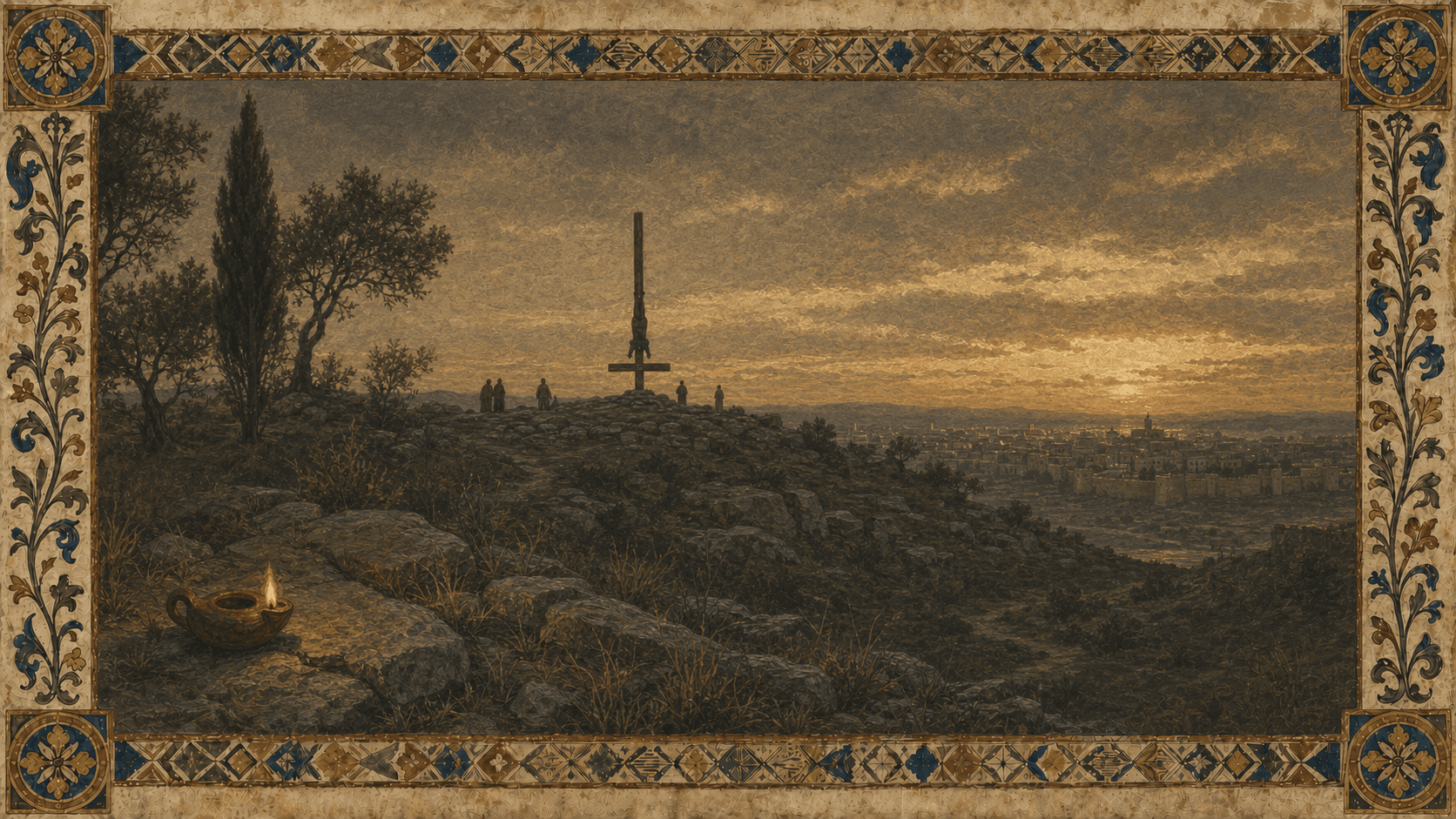
A distant restrained scene of Peter's martyrdom in Rome, with an inverted cross silhouetted at dusk on the Vatican hill.
The tradition of Peter's inverted cross, held at a distance and without spectacle.

Peter died in Rome during the persecution under the Emperor Nero, sometime between about A.D. 64 and 67. The earliest sources are clear that he was martyred there; the manner is reported by the Christian writers of the next generations.

According to a tradition recorded by Origen and passed down through the historian Eusebius, Peter was crucified and asked to be crucified head-downward, because he did not consider himself worthy to die in the same manner as his Lord. It is the detail that has defined his image in Christian art ever since: the inverted cross, the apostle who would not claim even his death as an equal to Christ.

There is one more story, beloved and old, that the Church has always kept at the level of tradition rather than fact. The apocryphal Acts of Peter tells that as the persecution closed in, Peter was persuaded to flee Rome, and on the road out he met Christ walking toward the city. Peter asked him, Domine, quo vadis? — Lord, where are you going? — and Christ answered that he was going to Rome to be crucified again. Peter understood, turned around, and went back to the city to meet his own death. The story is not in Scripture and not history in the strict sense, but it has been told for nearly two thousand years because it says something true about who Peter finally became: the man who, this time, did not run.

He was buried on the Vatican hill, near the place of his death. A shrine was raised over the grave within a century or two; Constantine built a basilica over it in the fourth century; and the great basilica that stands there now is built over the same spot. Peter's tomb is beneath its high altar. The whole of St. Peter's — the largest church in Christendom — is, in the end, a marker over the grave of a Galilean fisherman.

The Papacy

The office that remains.

Peter died, but the office Christ gave him did not. This is the heart of what the Catholic Church believes about the papacy.

When Jesus told Peter that he was the rock on which Christ would build his Church, and gave him the keys, and told him to feed the whole flock, the Church understands that he was not establishing something that would last only as long as one fisherman's life. The Church is built to last until the end of the world; the foundation Christ laid for it lasts as long as the Church does. Peter's office — the ministry of unity, of strengthening the brethren, and of binding and loosing in service of the faith — passed to the bishops of Rome who succeeded him, and continues in the pope today.

This is why Catholics look to Rome. Not because of the city, and not because the men who have held the office were all holy — many were not. But because Christ gave Peter a job that outlasts any one man, and the Church has kept that office unbroken from the fisherman to the present. The keys are still being held. The sheep are still being fed. The rock is still where Christ laid it.

For Today

Why he matters now.

He matters now because he is the patron saint of everyone who has failed the person they most wanted to be faithful to.

Peter is not held up as an example of strength. He is held up as the proof that failure is not the end of the story. He boasted and then collapsed. He drew a sword and then ran. He swore his loyalty and then denied, with curses, to a servant girl, that he had ever known the man he loved. And then he wept, and then he was forgiven, and then he was given more responsibility than any man in the Church has ever held. The gap between who Peter was and who he was called to be is the widest in the New Testament, and Christ closed it — not by finding a better man, but by restoring the one he had chosen.

Anyone who has ever betrayed something they believed in, lost their nerve at the moment it counted, said the cowardly thing and hated themselves for it — Peter is their apostle. He shows that the question is never whether you have failed. It is whether, when Christ turns and looks at you, you will weep and come back, or walk away. Peter came back. He came back so completely that he died on a cross rather than deny again.

And he matters because of the office. In a world where every authority is provisional and every institution feels like it might dissolve, the Catholic Church holds that Christ founded something that would not fail — and built it on a forgiven coward, and kept it standing for two thousand years on that foundation. The endurance of the thing is part of the witness. The rock has held.

Reading Trail

Where to read him.

Peter is everywhere in the New Testament. Start with the places he speaks and acts, then read his own two letters.

  1. The call and the confession — Matthew 16:13-23, the rock and the keys, and the rebuke that follows immediately. The whole man in one passage.
  2. The denial and the restoration — read them together: the denial in Luke 22:54-62, with Jesus turning to look at Peter, and the restoration in John 21:1-19.
  3. Acts 1-12 — Peter at the center of the early Church: Pentecost, the healing at the Temple, the opening to the Gentiles.
  4. The First Letter of Peter — his own words, written to suffering Christians, full of the hard-won steadiness of a man who learned courage the slow way.
  5. The Second Letter of Peter — his last testament, written near the end of his life.

A Word of Peter

The confession.

It is the most important sentence anyone says in the Gospels, and an unlettered fisherman is the one who says it. Jesus told him that he had not figured it out on his own — that the Father had revealed it to him — and then built the Church on the man who said it. Matthew 16:16-18

Everything else about Peter, the boasting and the sinking and the denying and the weeping, sits under this one true sentence. He got the most important thing right. He spent the rest of his life, and his death, learning to live up to it.

Connected Saints

A family of holiness.

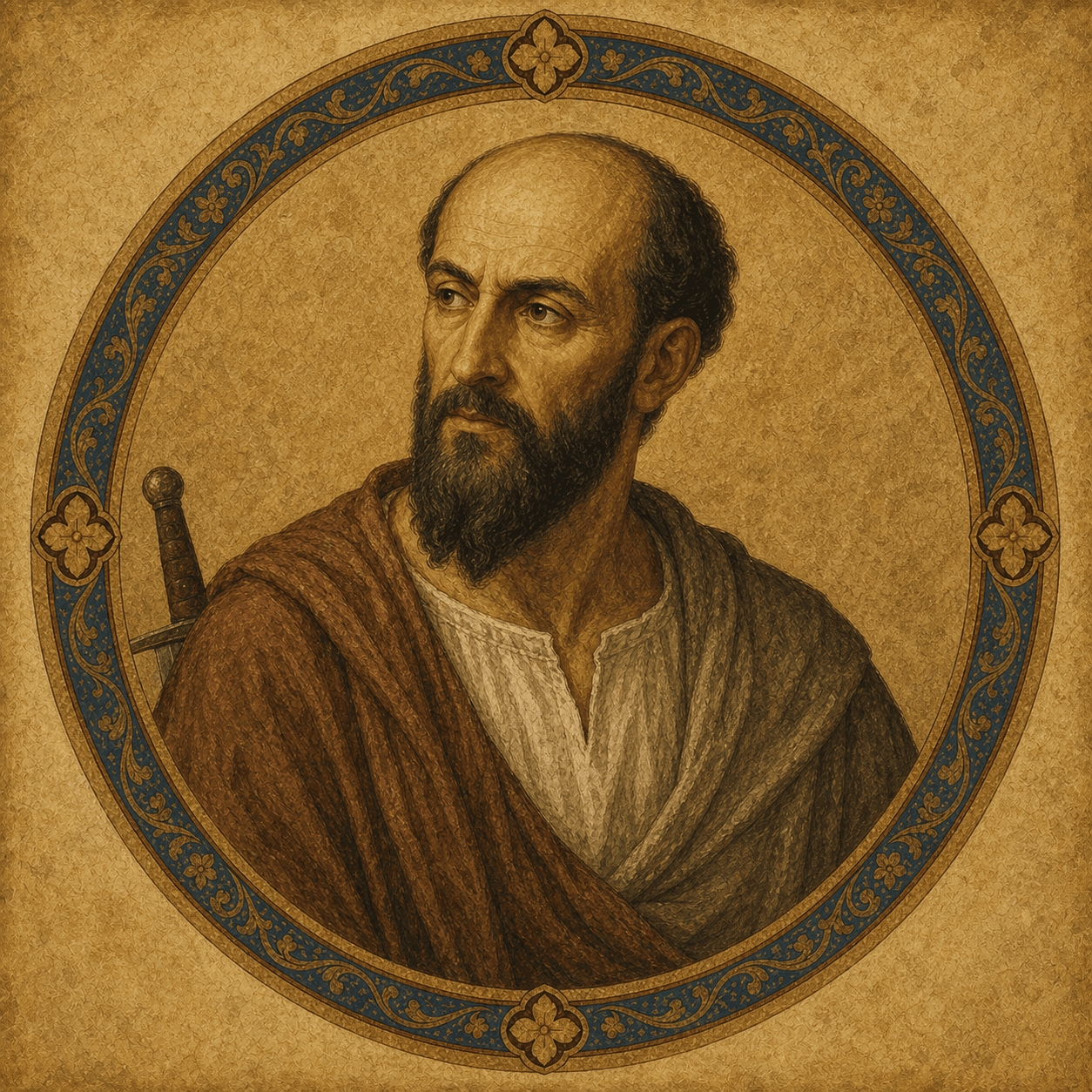
Portrait medallion of St. Paul the Apostle with a dark beard and subtle sword attribute.

St. Paul

The other great apostle of Rome. Peter and Paul are honored together on June 29 as the two pillars of the Roman Church.

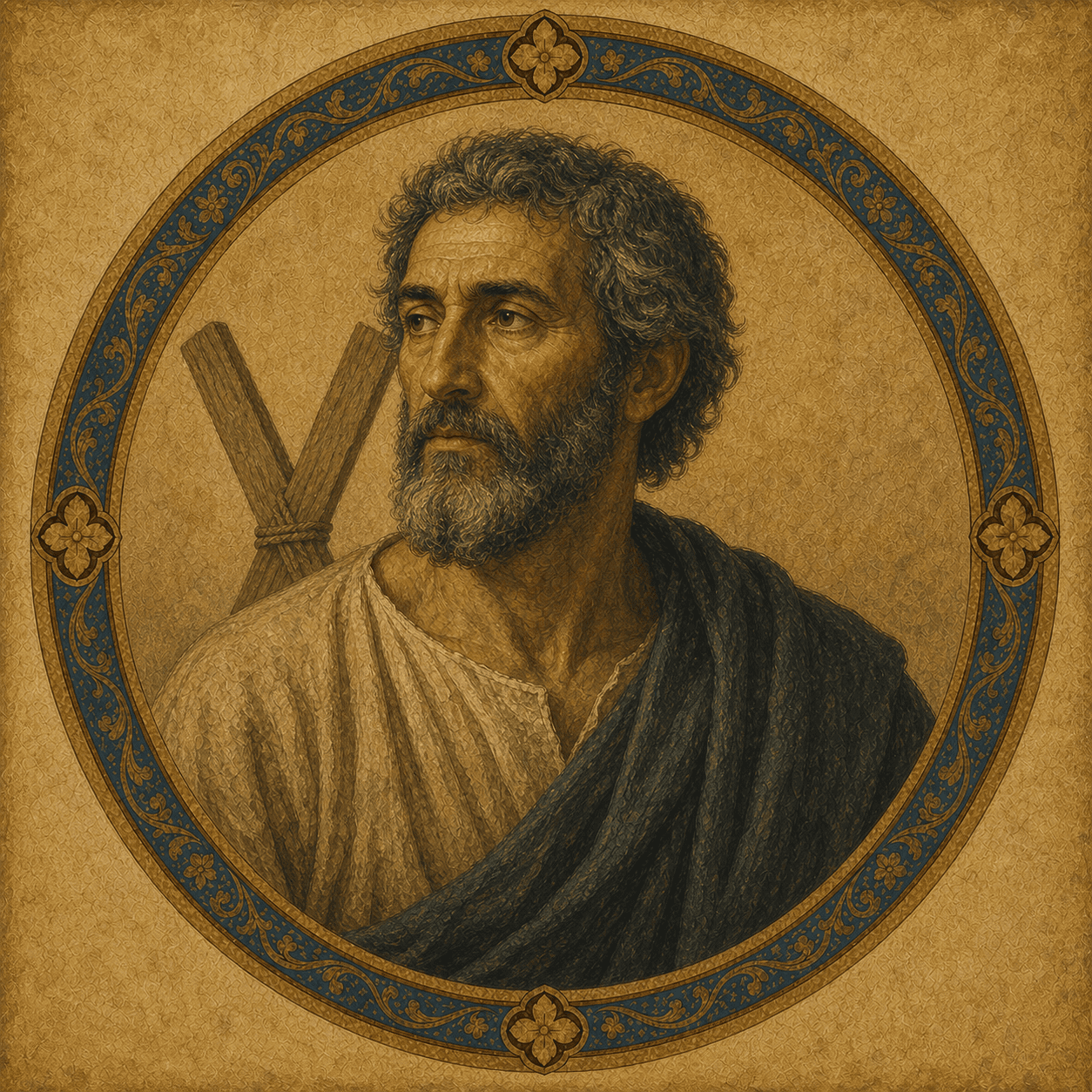
Portrait medallion of St. Andrew the Apostle, Peter's brother, with a restrained saltire attribute.

St. Andrew

Peter's brother, the one who came to Christ first and then went to bring Simon to him.

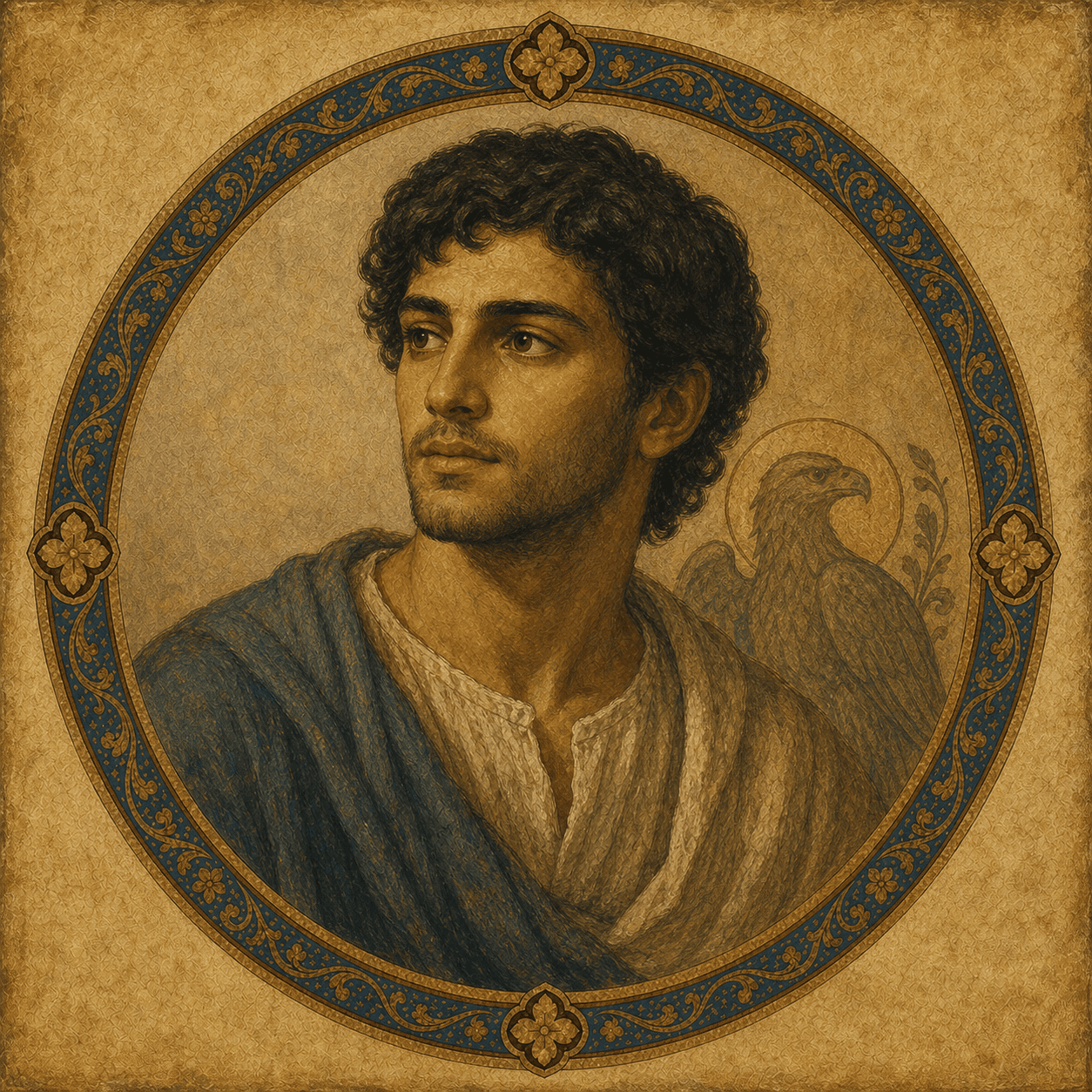
Portrait medallion of St. John the Apostle as a young contemplative disciple with a subtle eagle motif.

St. John the Apostle

The beloved disciple and Peter's close companion in the empty-tomb race, the Temple healing, and the early Church.

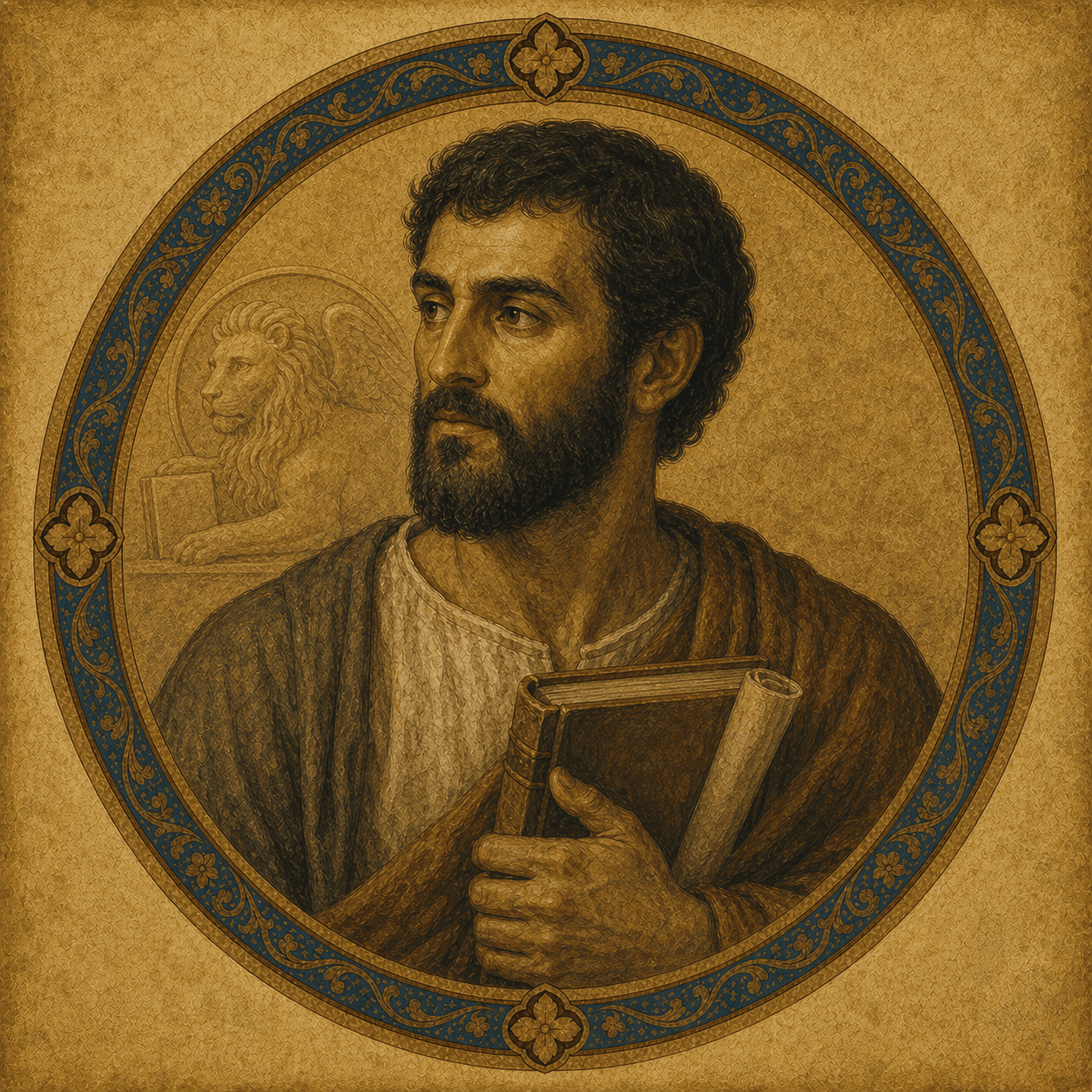
Portrait medallion of St. Mark the Evangelist with a codex and subtle winged lion motif.

St. Mark the Evangelist

By ancient tradition Peter's interpreter in Rome; Mark's Gospel is held to preserve Peter's preaching.

Frequently Asked

Peter, plainly.

Who was St. Peter?+
He was a Galilean fisherman named Simon whom Jesus called to be the first of his twelve apostles, renamed Cephas — rock — and made the leader of the Church. He confessed Jesus as the Christ, was given the keys of the kingdom, denied Jesus three times on the night of the arrest, was forgiven and restored by the risen Christ, led the early Church, became the first Bishop of Rome, and was martyred there under Nero. Catholics honor him as the first Pope. His feast is June 29.
Why is Peter considered the first Pope?+
Because Christ gave him a unique office. In Matthew 16, Jesus renames Simon rock, says upon this rock I will build my Church, and gives him the keys of the kingdom of heaven with the power to bind and loose. In John 21 the risen Christ commissions him to feed his sheep. The Catholic Church understands this office to be permanent, passed to Peter's successors as bishops of Rome, so that the pope today holds the office Christ first gave to Peter.
Did Peter really deny Jesus?+
Yes. He denied Jesus three times on the night Jesus was arrested, as recorded in all four Gospels. After boasting that he would die before falling away, Peter denied even knowing Jesus to a servant girl and bystanders in the high priest's courtyard, then heard the cock crow, remembered Jesus's prediction, and wept bitterly. The denial is followed, after the resurrection, by a threefold restoration in which Jesus asks Peter three times if he loves him.
How did St. Peter die?+
He was martyred in Rome under the Emperor Nero, between about A.D. 64 and 67. According to a tradition recorded by Origen and handed down by the historian Eusebius, he was crucified head-downward at his own request, because he did not consider himself worthy to die in the same way as Christ. He was buried on the Vatican hill.
What is the Quo vadis story?+
It comes from the apocryphal Acts of Peter, not from Scripture, and the Church keeps it as tradition rather than history. As Nero's persecution closed in, Peter was urged to flee Rome; on the road out he met Christ walking toward the city and asked, Lord, where are you going? Christ replied that he was going to Rome to be crucified again. Peter understood, turned back, and accepted his own martyrdom.
Is St. Peter really buried under St. Peter's Basilica?+
By ancient and continuous tradition, yes. Peter was buried on the Vatican hill near the place of his martyrdom; a shrine was raised over the grave, Constantine built a basilica over it in the fourth century, and the present basilica stands over the same site, with Peter's tomb beneath the high altar. Twentieth-century excavations beneath the basilica uncovered a first-century grave and shrine at the traditional spot.
What is St. Peter the patron saint of?+
He is the patron of the popes and the papacy and of the Church of Rome, and, fittingly for a man who left his nets to follow Christ, of fishermen and net-makers. His traditional symbol is the pair of keys Christ gave him, which appears on the coat of arms of the papacy itself.

Sources

Read beyond summaries.

Peter's page is grounded first in Scripture. Roman martyrdom and burial traditions are sourced to early Christian witnesses, and the Quo vadis story is named as apocryphal tradition.

Scripture

  • The Gospels: Matthew 16; Mark 1 and 14; Luke 5 and 22; John 1, 18, 20, and 21 — the call, confession, denial, and restoration.
  • The Acts of the Apostles, especially Acts 1-15 — Peter at Pentecost, the Temple healing, Cornelius, and the Council of Jerusalem.
  • The First and Second Letters of Peter, received by the Church as canonical Petrine letters.
  • Direct Scripture quotations on this page use the public-domain King James Version register.

Early Witness

  • Eusebius of Caesarea, Ecclesiastical History, preserving Origen's testimony on Peter's crucifixion head-downward and early witness to his Roman martyrdom.
  • The Catholic Encyclopedia entry on St. Peter for chronology, Roman tradition, martyrdom witnesses, and the Vatican tomb tradition.
  • The apocryphal Acts of Peter is named only as the source of the Quo vadis tradition, not as Scripture or strict history.

Magisterial

  • Catechism of the Catholic Church, especially 552-553 and 880-882, on Peter, the keys, apostolic foundation, and the Petrine ministry.
  • First Vatican Council, Pastor Aeternus (1870), on the primacy of Peter and his successors.
  • The feast of Saints Peter and Paul on June 29 and the Chair of Saint Peter on February 22 are treated according to the Roman calendar.

Last reviewed: June 3, 2026

On this page+