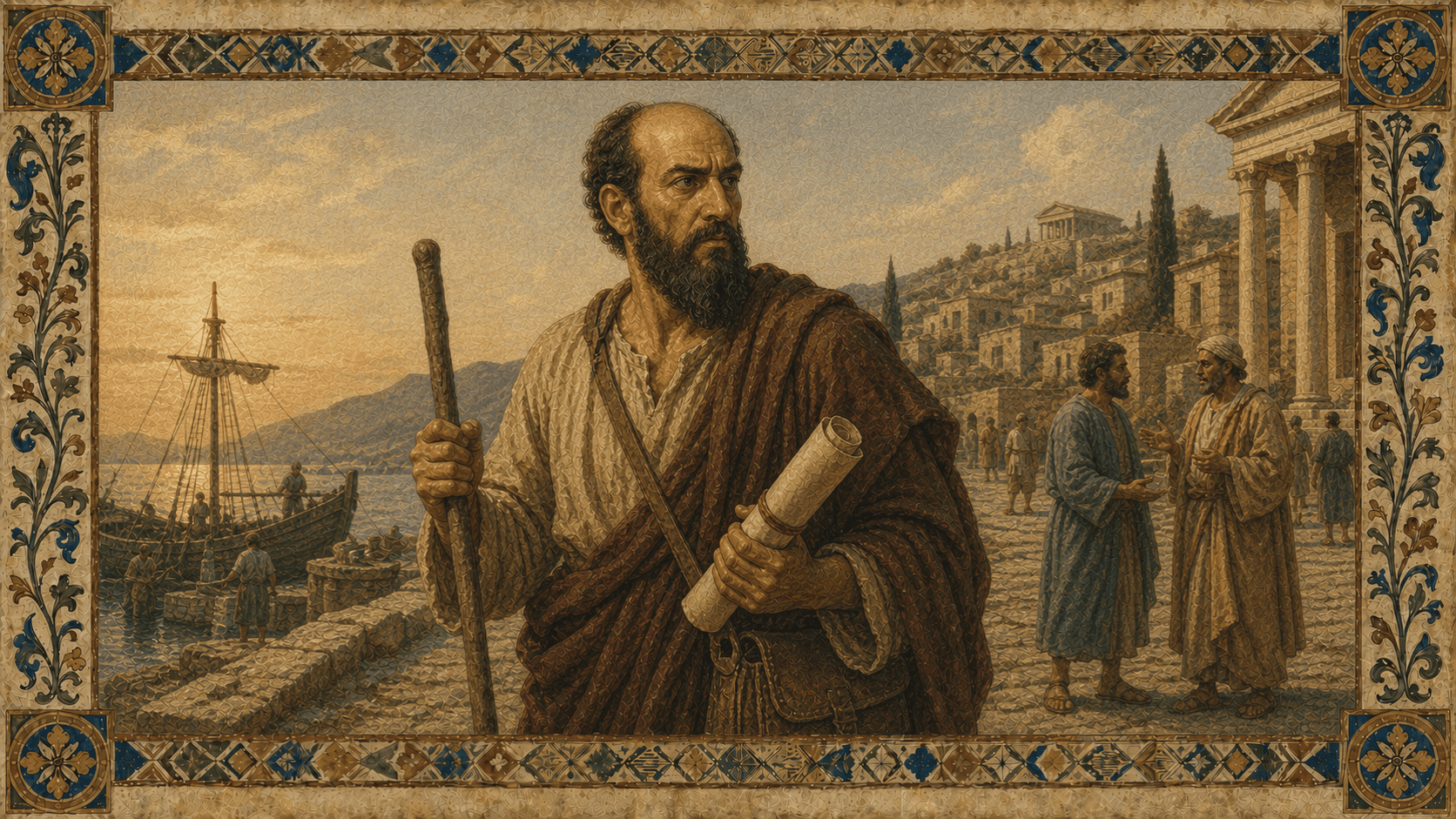
St. Paul the Apostle as a wiry apostolic traveler with scroll, staff, oxblood mantle, and the approved Paul face.

Saints Library

Paul the Apostle

Feast June 29 · Apostle to the Gentiles · c. 5-c. 67

The man who hunted the first Christians to their deaths, was knocked to the ground by the risen Christ on a road he was traveling to make arrests, and spent the rest of his life carrying the Gospel he had tried to destroy to the ends of the Roman world.

The Story

The persecutor turned apostle.

Before he was Paul, he was Saul, and he was the most dangerous enemy the young Church had. He was a Pharisee, brilliant and zealous, trained under the finest teacher in Jerusalem, and he was certain the followers of Jesus were blasphemers who had to be stopped. He stood by approving while the first Christian martyr, Stephen, was stoned to death. Then he got authority to hunt down more of them, and set out for Damascus to do it.

He never arrived as the man who left. On the road, a light knocked him to the ground, and a voice he did not recognize asked him why he was persecuting him. He asked who was speaking. The answer was the name he had been trying to erase: Jesus. He got up blind, and was led into the city by the hand, and three days later a Christian he had come to arrest laid hands on him and baptized him.

That was the hinge of his life and, arguably, of Western history. The man with the sharpest mind and the hardest will in the early Church was turned, in an afternoon, from its destroyer into its greatest missionary. He spent the next thirty years crossing the Roman Empire on foot and by ship — beaten, shipwrecked, imprisoned, stoned and left for dead — planting churches in city after city and writing them letters that became a third of the New Testament.

He died in Rome, beheaded under Nero, in the same persecution that killed Peter. The persecutor of the Church became, with Peter, one of its two great pillars.
Tarsus

The world he came from.

He was born in Tarsus, a wealthy university city in Cilicia, on the southern coast of what is now Turkey. Three things about his background shaped everything he did.

He was a Jew — a Hebrew of the Hebrews, he called himself, of the tribe of Benjamin, raised strictly in the Law and sent to Jerusalem to study under Gamaliel, the most respected rabbi of the age. He knew the Scriptures from the inside, the way only a lifelong scholar does.

He was a Roman citizen by birth, a rare and valuable status for a provincial Jew. It gave him rights most people in the empire did not have: he could not be flogged without trial, and he could appeal his case to the emperor in Rome. He used both rights. His citizenship is part of why he reached Rome at all.

And he was a Greek-speaker, at home in the cosmopolitan world of the eastern Mediterranean, able to argue philosophy with Athenians and write Greek prose of real power. He earned his living as a tentmaker, working with his hands so that he would never have to take money from the churches he served.

A Jew, a Roman, and a Greek, all in one man. There could hardly have been a person better equipped to carry a Jewish Messiah to the Gentile world — and he spent the first part of his life using all of it against the Church.

Saul

The persecutor.

Paul's own account is honest because Paul was honest about himself. He never hid what he had been. He had persecuted the Church of God and tried to destroy it. He had gone house to house, dragging out men and women and handing them to prison. He had been present, holding the cloaks of the men who threw the stones, when Stephen was martyred — and he had approved.

He was not a thug. He was a believer. He was convinced that the followers of Jesus were a blasphemy against the God of Israel, and that stamping them out was holy work. That is what makes his story serious rather than sentimental: he was not a bad man who became good. He was a zealous man who was certain he was right, and he was wrong about the one thing that mattered most, and he did real harm because of it.

The risen Christ did not strike him down as an enemy. He stopped him as a man about to ruin his own life, and turned him around.

Acts 9

The road to Damascus.

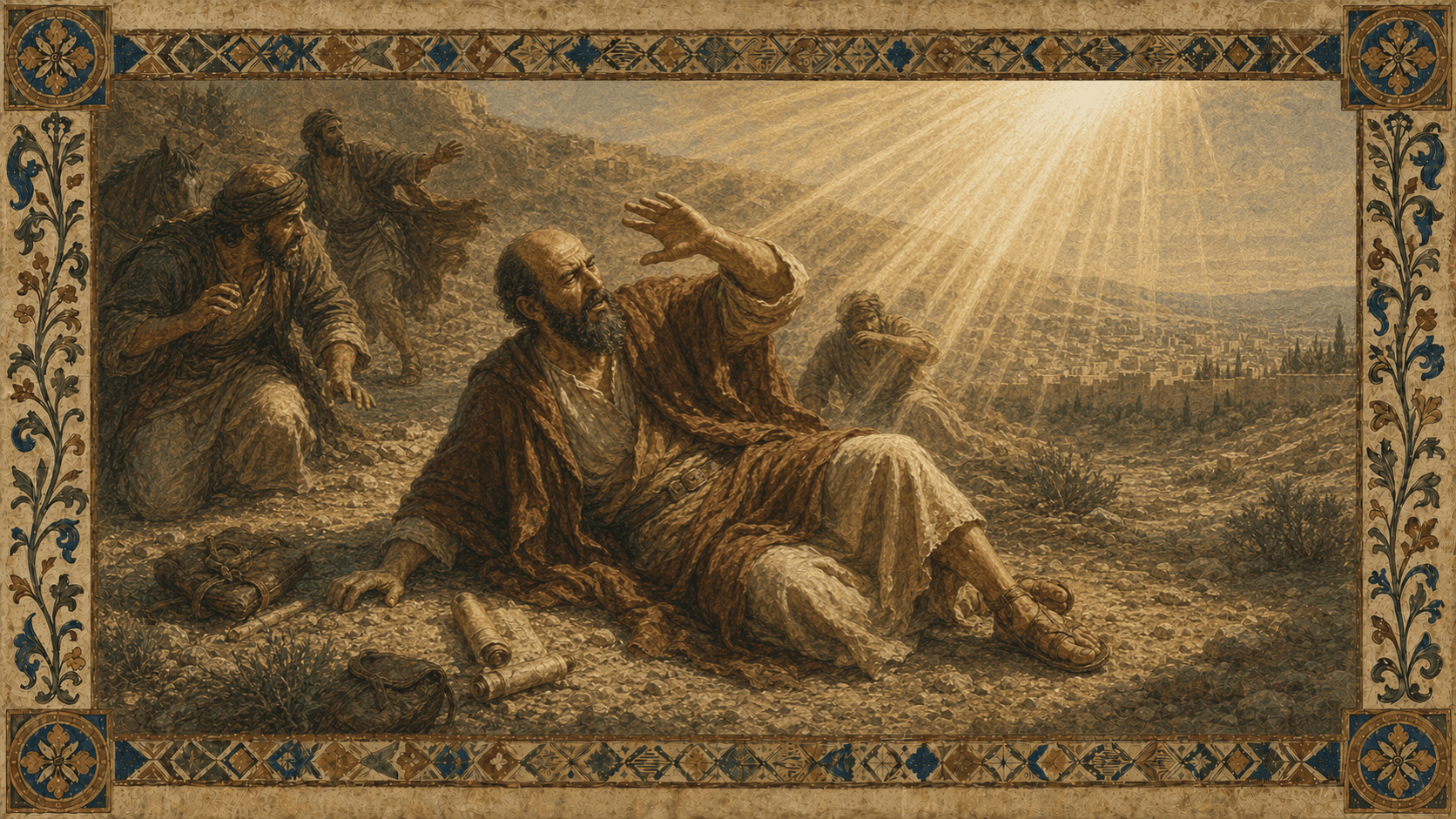
Paul fallen on the road to Damascus as heavenly light shines without depicting Christ as a figure.
Christ is light only; the persecutor is stopped on the road.

He was on the road to Damascus, carrying letters that authorized him to arrest any followers of Jesus he found there, when it happened. Around midday a light from heaven, brighter than the sun, flashed around him, and he fell to the ground.

A voice said: Saul, Saul, why persecutest thou me? He asked who was speaking. And the voice answered: I am Jesus whom thou persecutest. Acts 9:4-5, KJV

It is one of the most consequential conversations in history, and it is four lines long. In it, two things are revealed that Paul would spend the rest of his life unfolding. First, that Jesus is alive — risen, in glory, speaking from heaven to a man on a road. And second, that to persecute the Church is to persecute Jesus himself — that Christ so identifies with his people that what is done to them is done to him. The whole of Paul's theology of the Church as the Body of Christ is already there, in the question he was asked while lying in the dust.

He got up blind. They led him into Damascus by the hand. For three days he neither ate nor drank. Then God sent him a Christian named Ananias, understandably terrified since Saul's reputation had preceded him, who laid hands on him, restored his sight, and baptized him. The hunter was received by the hunted, and became one of them.

Mission

The apostle to the Gentiles.

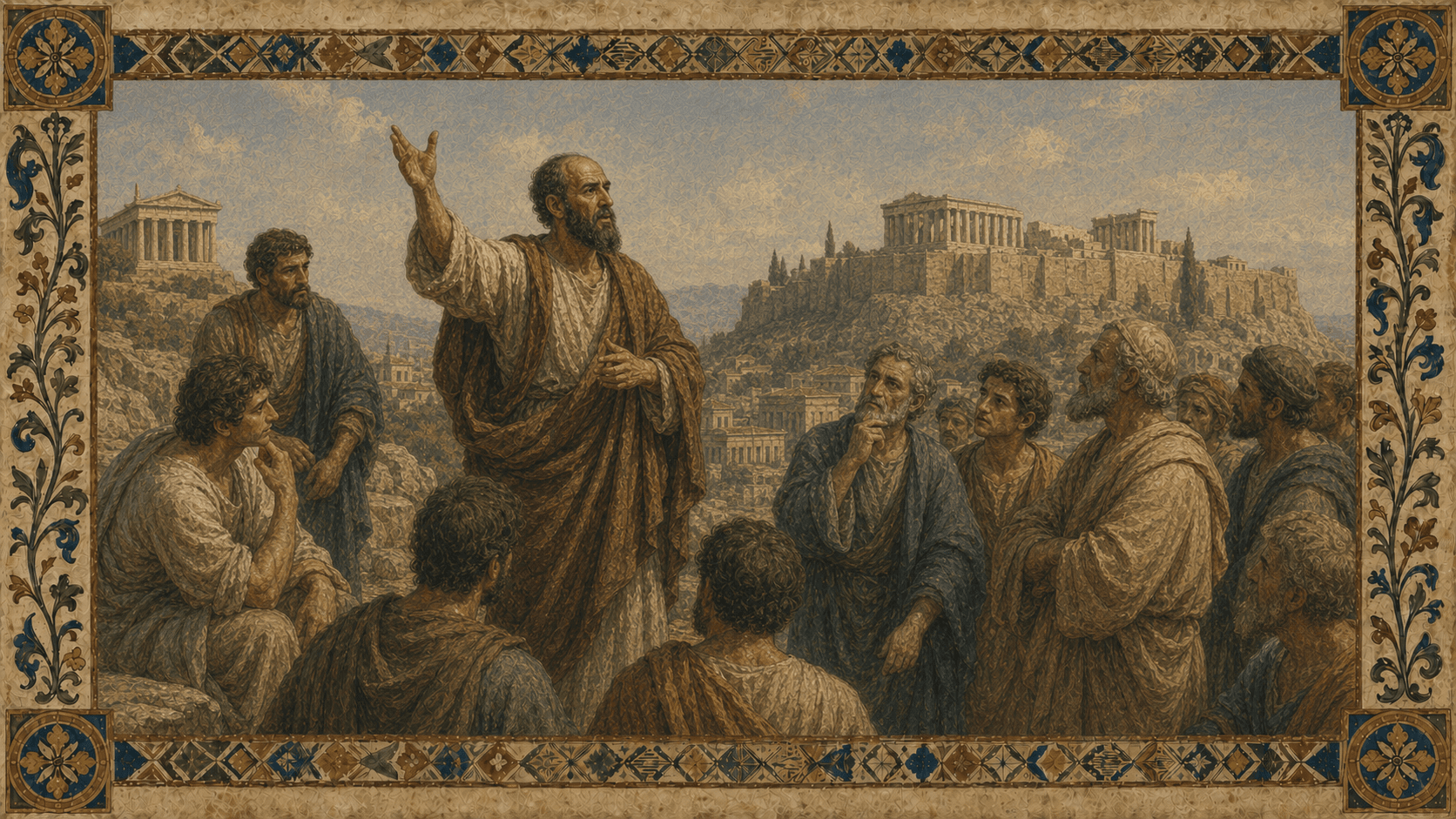
Paul preaching to Greek philosophers at the Areopagus in Athens.
Paul at Athens, carrying a Jewish Messiah into the Gentile world.

Paul was not one of the Twelve. He had not walked with Jesus in Galilee. He insisted, all his life, that his commission came directly from the risen Christ — that he was an apostle not from men nor through man, but through Jesus Christ. And the commission he was given was specific: to carry the Gospel to the Gentiles, the non-Jewish nations, the whole pagan world that had been outside the covenant.

This was the great question the early Church had to settle, and Paul was its sharpest voice. Did a Gentile have to become a Jew first, be circumcised and keep the whole Law, in order to follow the Jewish Messiah? Or was the Gospel for everyone, on equal terms, through faith in Christ? Paul argued, with everything he had, for the second. The door was open to everyone. In Christ, he wrote, there is neither Jew nor Greek, slave nor free, male nor female. The Council of Jerusalem agreed with him, and the Church became what it is: universal, catholic, for the whole world.

He spent the rest of his life proving it with his feet. Across three great missionary journeys he crossed and re-crossed the eastern Mediterranean, preaching in synagogues and marketplaces, arguing with philosophers on the Areopagus in Athens, planting a church and moving on, then writing back to hold it together. He was beaten with rods and with whips, stoned and left for dead, shipwrecked three times, imprisoned repeatedly, and he kept going.

Galatians 2

Paul and Peter.

The two pillars of the Roman Church were not always in agreement, and the New Testament does not pretend otherwise.

Peter was the rock, the leader of the Twelve, the first among the apostles. Paul was the late-coming outsider, the former persecutor, the apostle to the Gentiles. They were, between them, the two halves of the early Church — the mission to the Jews and the mission to the nations — and at Antioch they collided.

Peter had been eating freely with Gentile converts, as the Gospel allowed. Then some stricter Jewish Christians arrived, and Peter, not wanting to offend them, drew back and stopped sharing the table with the Gentiles. Paul saw it as a betrayal of the whole principle they had fought for — that the Gospel makes Jew and Gentile equal — and he confronted Peter to his face, in public, and told him he was wrong.

It is a remarkable thing for Scripture to record: one apostle publicly correcting another, and the greater of the two accepting the correction. The Church has never been embarrassed by it. It does not undermine Peter's office; it shows that the office is held by real men who can be wrong about how to apply the truth, and that even Peter could be told so. Peter and Paul are honored together, on the same day, June 29 — not because they always agreed, but because each gave his life for the same Lord, and the Church was built on both of them.

Scripture

The letters.

An abstract manuscript ornament for Paul's letters with blurred ink bands, lamp, and reed pen.
Letters, abstract ink, lamp.

Paul's letters are the oldest Christian writings we have — older than the Gospels. He wrote them to specific churches with specific problems, never imagining they would become Scripture, and they became the foundation of Christian theology.

From them the Church drew some of its deepest teaching. That we are justified, set right with God, by grace through faith in Christ, and not by our own earning. That the Church is the Body of Christ, with Christ as the head and every believer a member, so that no one is saved alone. That the gifts of the Spirit are many but the Spirit is one. That love is greater than faith and hope, and outlasts everything — the thirteenth chapter of First Corinthians, read at half the weddings in the Western world, is Paul.

And running through all of it is the single discovery that reorganized his life: that he could not save himself, that no amount of zeal or law-keeping had ever made him righteous, and that what he could not do, Christ had done for him. The man who had been the most rigorous keeper of the Law in his generation became the apostle of grace — precisely because he knew, from the inside, that the Law had never been able to make him good.

"I am crucified with Christ: nevertheless I live; yet not I, but Christ liveth in me." Galatians 2:20, KJV

Weakness

The thorn.

There is one more thing Paul tells us about himself that the Church has never let go of.

He had been given, he says, extraordinary revelations — visions, a being caught up to the third heaven. And to keep him from pride, he was also given what he calls a thorn in the flesh: some affliction he never names, a weakness or a suffering that would not leave him. He begged God three times to take it away. The answer he got is one of the most important sentences in the New Testament:

"My grace is sufficient for thee: for my strength is made perfect in weakness." 2 Corinthians 12:9, KJV

Paul drew from it the lesson that runs against everything the world believes: that God's power does not work around our weakness but through it; that a man at the end of his own resources is exactly where grace does its best work. When I am weak, then am I strong. The most capable man in the early Church built his whole spirituality on the discovery that his capability was not the point.

Rome

Rome and martyrdom.

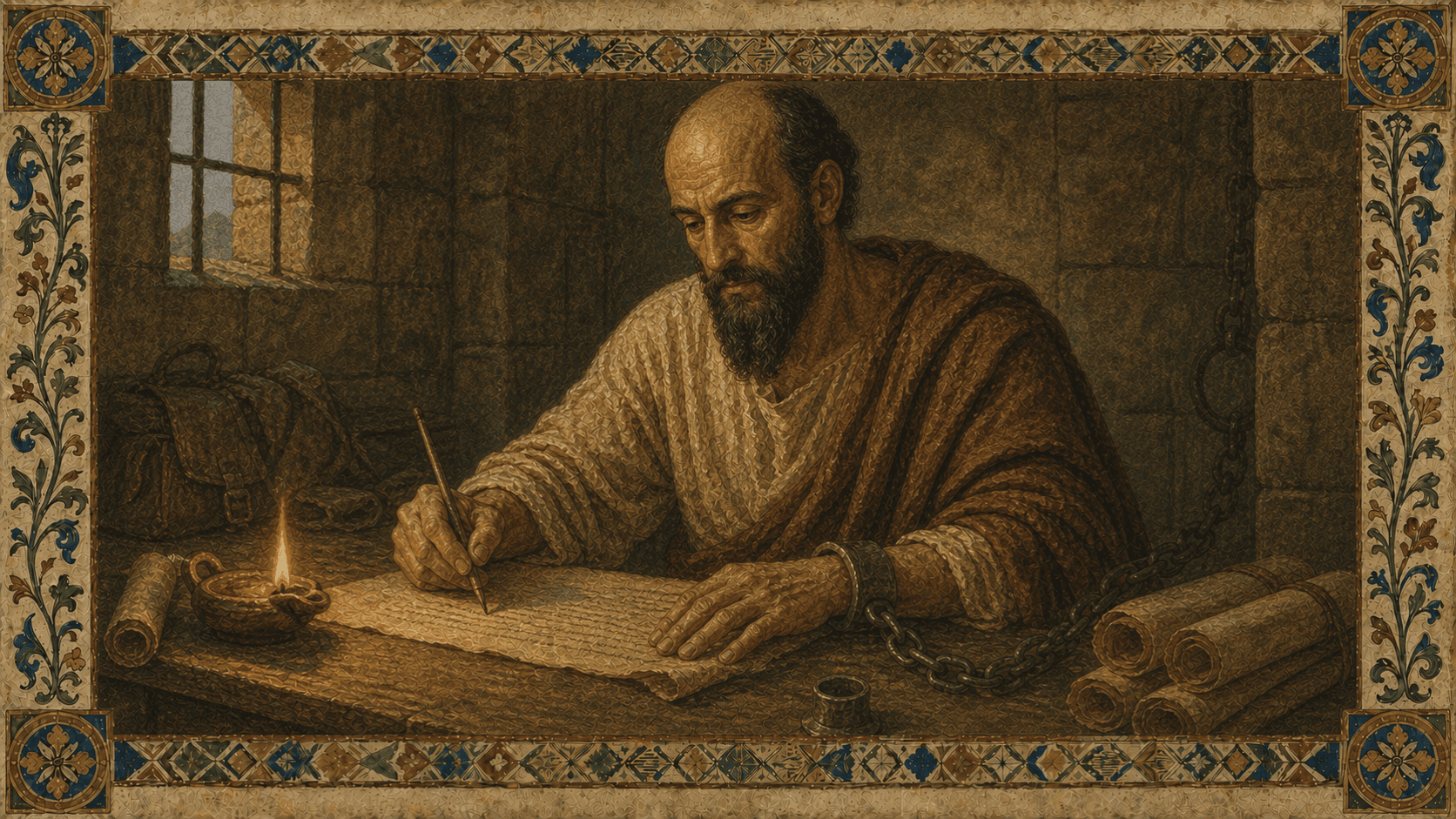
Paul writing in chains by lamplight in a Roman cell, used as the restrained martyrdom plate.
Paul in chains, writing near the end; the page avoids execution spectacle.

The end of Paul's life passes partly out of the clear light of Scripture and into the Church's tradition. Acts leaves him under house arrest in Rome, still preaching. The constant tradition of the Church holds that he was released, traveled and preached further, perhaps as far as Spain, which he had hoped to reach, and was then arrested a second time and brought back to Rome under Nero's persecution.

There, by the same tradition, he was condemned and executed. Because he was a Roman citizen, he was not crucified, as Peter was, but beheaded, the citizen's death, at a place outside the city now called the Three Fountains. He was buried nearby, on the road to Ostia, and the great basilica of St. Paul Outside the Walls stands over his grave today, his relics beneath its high altar, as Peter's are beneath the basilica on the Vatican hill.

The two of them died in the same city, in the same persecution, within a few years of each other — the fisherman and the scholar, the rock and the apostle to the nations — and the Church has buried them at its two poles and honored them together ever since.

For Today

Why he matters now.

He matters now because he is the proof that no one is past saving — not even the person actively trying to destroy the faith.

Paul was not a seeker who drifted toward God. He was an enemy, sincere and effective, doing real damage, certain he was right. The risen Christ did not wait for him to come around. He stopped him on the road and turned him into the greatest missionary in history. For anyone who believes they have gone too far, done too much harm, been on the wrong side too long to be of any use to God — Paul is the answer. The Church's greatest evangelist began as its most dangerous persecutor. Grace reached him mid-stride, mid-error, on the way to do more damage.

He matters, too, because of the weakness. We live in a culture that worships competence and hides its cracks. Paul — brilliant, tireless, the most gifted man in the early Church — staked everything on the opposite claim: that he was weak, that he could not save himself, that the power at work in him was not his own, and that this was good news. That is a sentence for everyone who has hit the end of what they can do on their own.

And he matters because he finished. He was beaten, jailed, shipwrecked, betrayed, and finally killed, and he kept going to the end, and he died able to say he had kept faith. Most people do not need a saint who never struggled. They need one who struggled the whole way and did not quit. Paul is that saint.

Reading Trail

Where to read him.

Paul wrote a third of the New Testament. Start with the letters that show the man and the heart of his message.

  1. Philippians — short, warm, written from prison, full of joy. The best place to meet Paul as a person.
  2. 1 Corinthians 13 — the hymn to love. Read it slowly; it is more demanding than the weddings make it sound.
  3. Galatians — the fighting Paul, defending the freedom of the Gospel; includes the confrontation with Peter at Antioch.
  4. Romans — his masterwork, the fullest statement of his theology of sin, grace, and salvation. The hardest and the deepest.
  5. 2 Timothy— his last letter, written facing death. "I have finished my course."

His story in Acts, chapters 9 and 13-28, is the narrative companion to the letters. Read them alongside each other.

A Word of Paul

The finish.

He wrote this near the end, in prison, knowing he was going to be executed. It is not a boast; it is a runner's report at the finish line. He had been given a race no one would have chosen — beatings, shipwrecks, prisons, the constant near-certainty of a violent death — and he had run it all the way without stopping and without turning back to the life he had before. 2 Timothy 4:7

The man who began by trying to destroy the faith ended by keeping it, all the way to the block. That is the whole arc of grace in one sentence.

Connected Saints

A family of holiness.

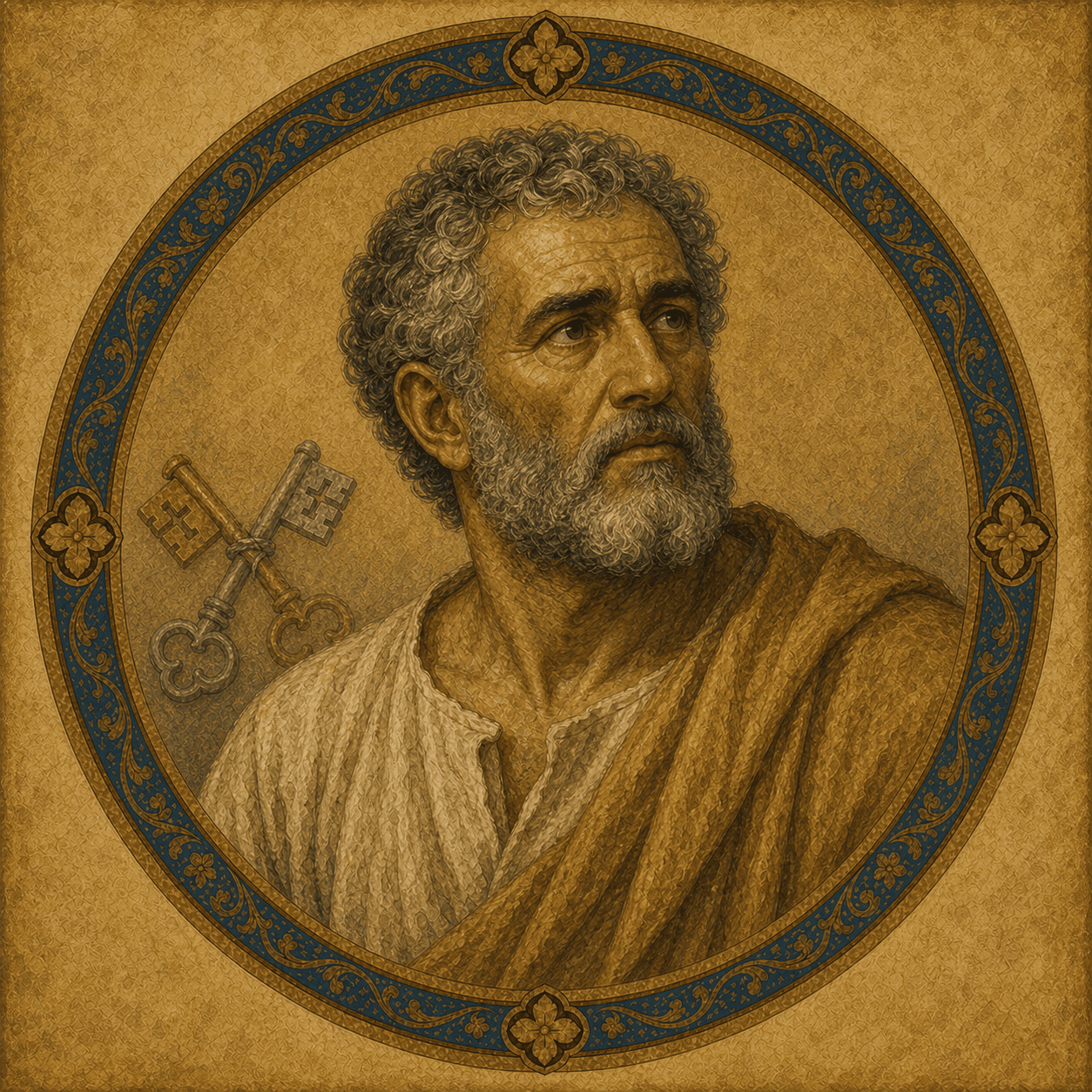
Portrait medallion of St. Peter with gray beard and subtle crossed keys, matching his established hero face.

St. Peter

The rock, the leader of the Twelve, and the other pillar of the Roman Church. Peter and Paul share the feast of June 29.

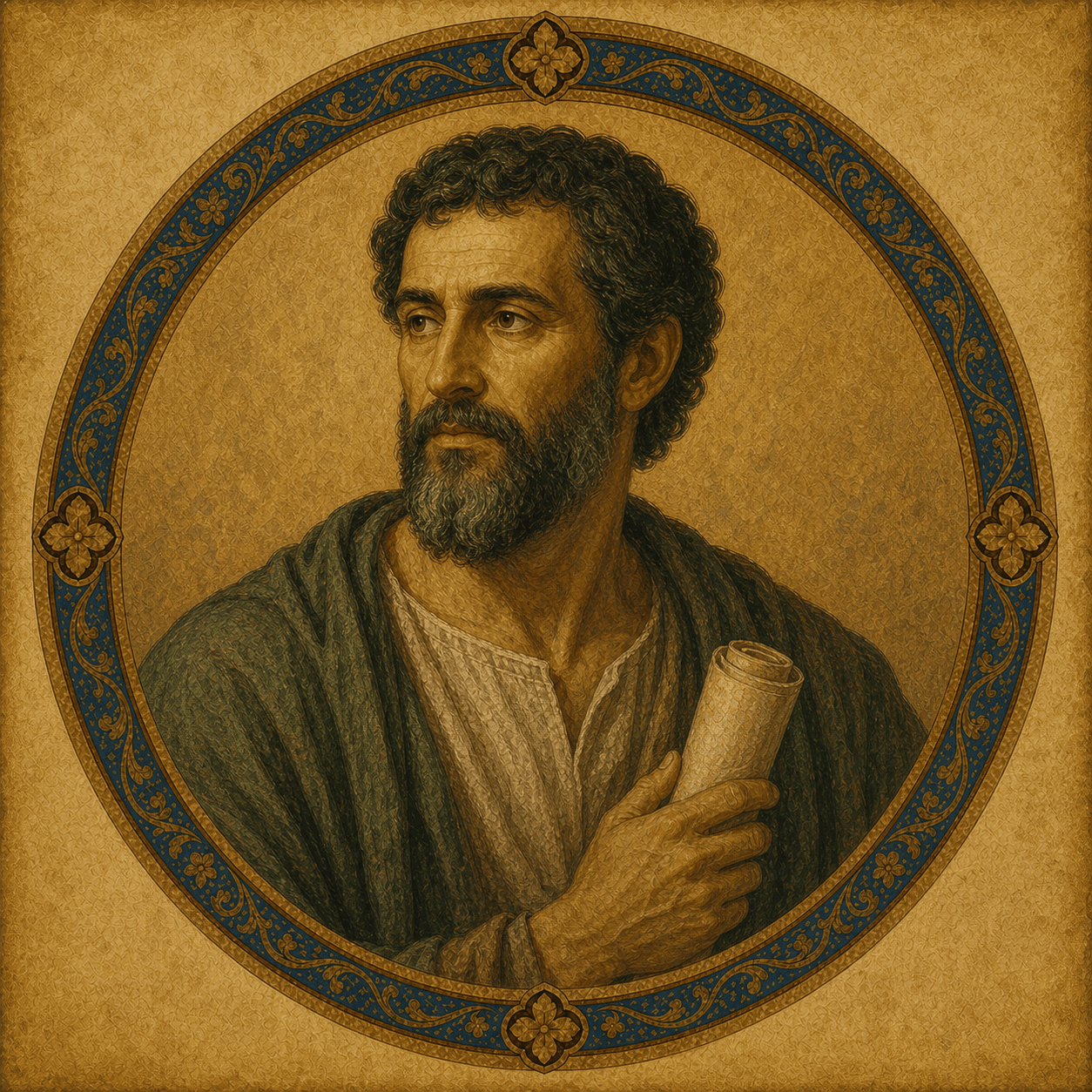
Portrait medallion of St. Barnabas with scroll and green mantle.

St. Barnabas

The apostle who vouched for the newly converted Paul when the Church was still afraid of him.

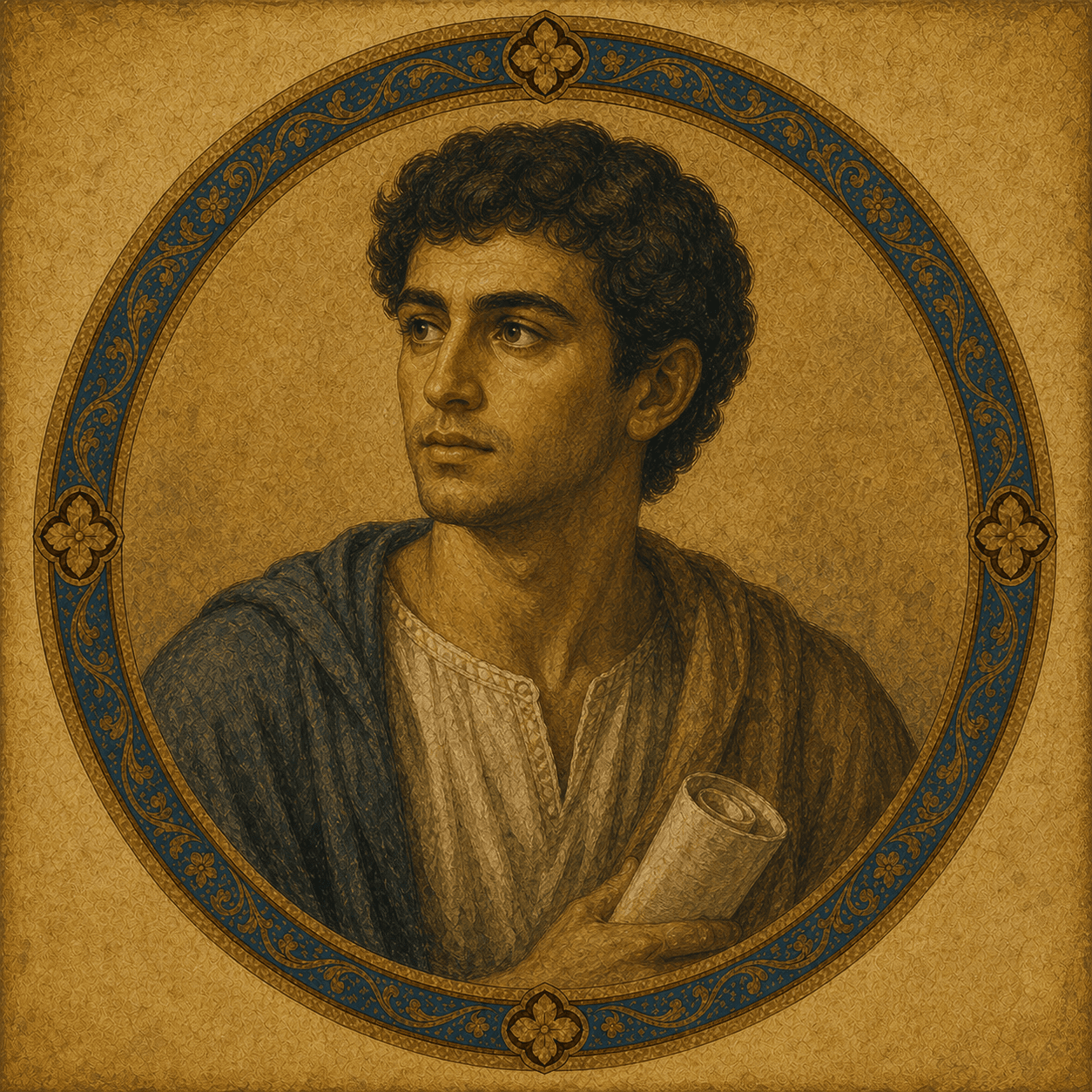
Portrait medallion of St. Timothy as a young apostolic disciple with a scroll.

St. Timothy

Paul's closest disciple and true child in the faith, to whom two Pauline letters are addressed.

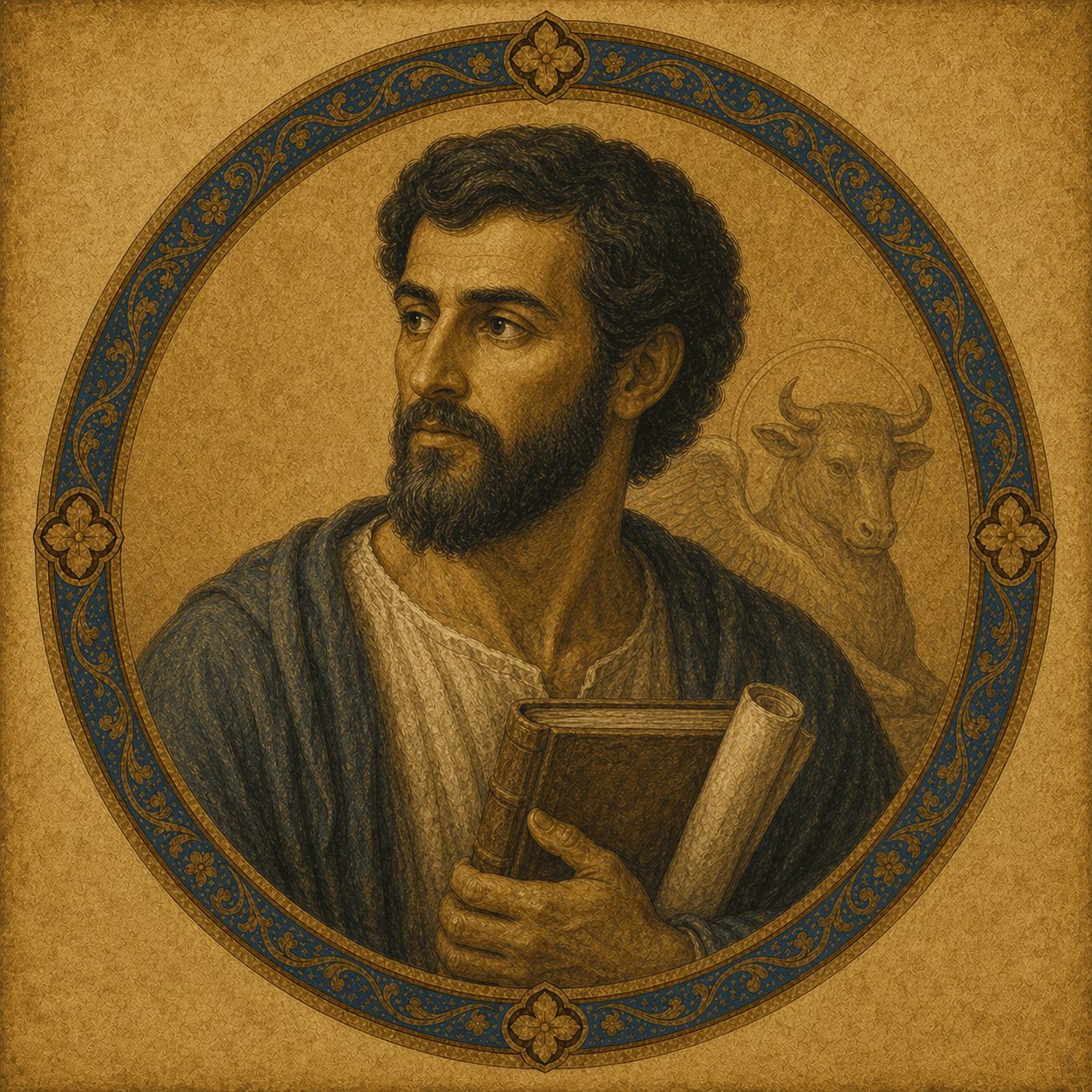
Portrait medallion of St. Luke with codex and subtle winged ox motif.

St. Luke

The beloved physician, evangelist, and author of Acts, who traveled with Paul and preserved his story.

Frequently Asked

Paul, plainly.

Who was St. Paul?+
He was a first-century Pharisee from Tarsus named Saul who violently persecuted the early Church, was converted by an encounter with the risen Christ on the road to Damascus, and became the greatest missionary of the early Church — the Apostle to the Gentiles. He founded churches across the Roman Empire, wrote thirteen of the New Testament's letters, and was martyred in Rome under Nero. His feast, shared with St. Peter, is June 29.
Was Paul one of the twelve apostles?+
No. The Twelve were chosen by Jesus during his earthly ministry; Paul never met Jesus before the crucifixion. He is called an apostle because the risen Christ commissioned him directly on the road to Damascus and sent him specifically to the Gentiles. He insisted all his life that his authority came straight from Christ, not from the other apostles.
What happened on the road to Damascus?+
Saul was traveling to Damascus to arrest Christians when a light from heaven struck him to the ground and the voice of the risen Jesus asked, Saul, Saul, why do you persecute me? He was blinded for three days, then healed and baptized by a Christian named Ananias. The experience turned the Church's chief persecutor into its greatest apostle. It is commemorated on January 25 as the Conversion of St. Paul.
Did Paul and Peter argue?+
Yes. At Antioch, as recorded by Paul in Galatians 2, Peter had been eating with Gentile converts, then drew back to avoid offending stricter Jewish Christians. Paul confronted him in public for compromising the principle that the Gospel makes Jew and Gentile equal. The Church has never hidden the episode; it shows that even the apostles were real men, and that the truth of the Gospel mattered more to them than saving face.
How did St. Paul die?+
By the constant tradition of the Church, Paul was martyred in Rome under Nero, between about A.D. 64 and 67. Because he was a Roman citizen, he was beheaded rather than crucified, at a place outside Rome now called the Three Fountains, and was buried on the road to Ostia. The Basilica of St. Paul Outside the Walls stands over his grave.
How many letters did Paul write?+
Thirteen letters in the New Testament bear his name, from Romans through Philemon, making him the most prolific author in the New Testament after the evangelists. A fourteenth, the Letter to the Hebrews, was traditionally associated with him, but its authorship has been debated since the early Church. The page stays with the careful modern framing: thirteen Pauline letters, with Hebrews treated separately.
What is St. Paul the patron saint of?+
He is the patron of missionaries, fittingly for the man who carried the Gospel across the Roman world, and of theologians, writers, and the press, because of his letters. His traditional symbols are a sword, the instrument of his martyrdom, and a book, his letters.

Sources

Read beyond summaries.

Paul's page is grounded first in Acts and the Pauline letters. The end-of-life release, later travels, and beheading are named as Church tradition where Scripture is silent.

Scripture

  • The Acts of the Apostles, chapters 9 and 13-28 — the conversion, missionary journeys, trials, and Roman imprisonment.
  • The Pauline letters: Romans, 1-2 Corinthians, Galatians, Ephesians, Philippians, Colossians, 1-2 Thessalonians, 1-2 Timothy, Titus, and Philemon.
  • Direct Scripture quotations on this page use public-domain King James Version wording.

Early Witness

  • The Catholic Encyclopedia entry on St. Paul for chronology, Roman citizenship, missionary itinerary, and the Roman martyrdom tradition.
  • Clement of Rome, 1 Clement, and Eusebius of Caesarea for early Christian witness to Paul's sufferings and martyrdom.
  • The release after Paul's first Roman captivity, possible Spain journey, second arrest, and beheading are treated as Church tradition, where Acts no longer narrates the story.

Magisterial

  • The Catechism of the Catholic Church, which cites Paul extensively on grace, justification, the Church as the Body of Christ, and the sacramental life.
  • Pope Benedict XVI's Pauline Year audiences (2008-2009), a concise papal reading of Paul's life and teaching.
  • Recommended reading: Philippians, Galatians, Romans, 2 Timothy, and N. T. Wright, Paul: A Biography.

Last reviewed: June 3, 2026

On this page+