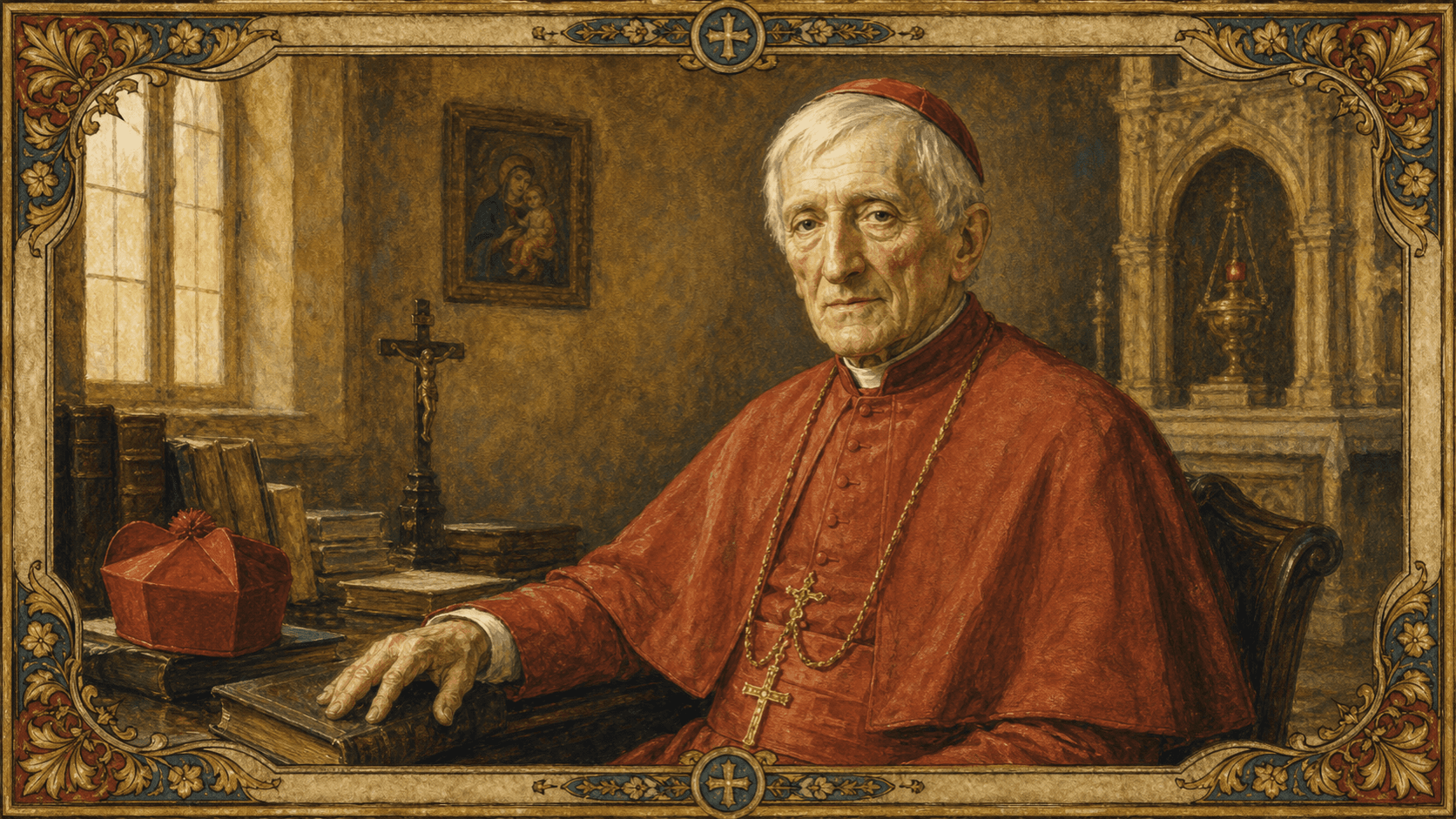
St. John Henry Newman as an aged cardinal in red, seated in an Oratory study.

Saints Library

John Henry Newman

Feast October 9 · Doctor of the Church · 1801-1890

The English convert who followed the evidence of the early Church one step at a time, even when the next step cost him nearly everything.

The Story

He followed truth into the dark.

John Henry Newman was by his thirties the most influential clergyman in the Church of England and the most magnetic preacher at Oxford. He wanted to renew Anglicanism by recovering its ancient Catholic roots.

He set out to prove that the Church of England was the true middle way between Protestantism and Rome. His study of the early Church destroyed the argument. The more deeply he read the Fathers, the more clearly he saw that the ancient Church looked far more like Rome than Canterbury.

In October 1845 he was received into the Catholic Church. He lost Oxford, reputation, friendships, and his old world. He gained the truth.
Oxford

His life was organized around truth.

Newman was born in London in 1801 and underwent a deep first conversion at fifteen. He went up to Oxford, became a fellow of Oriel College, and in 1828 became vicar of the University Church of St. Mary the Virgin.

His Sunday sermons were quiet and searching rather than theatrical. A generation of students remembered them because Newman seemed to know the interior life of the soul before him.

Oxford Movement

He tried to prove the middle way.

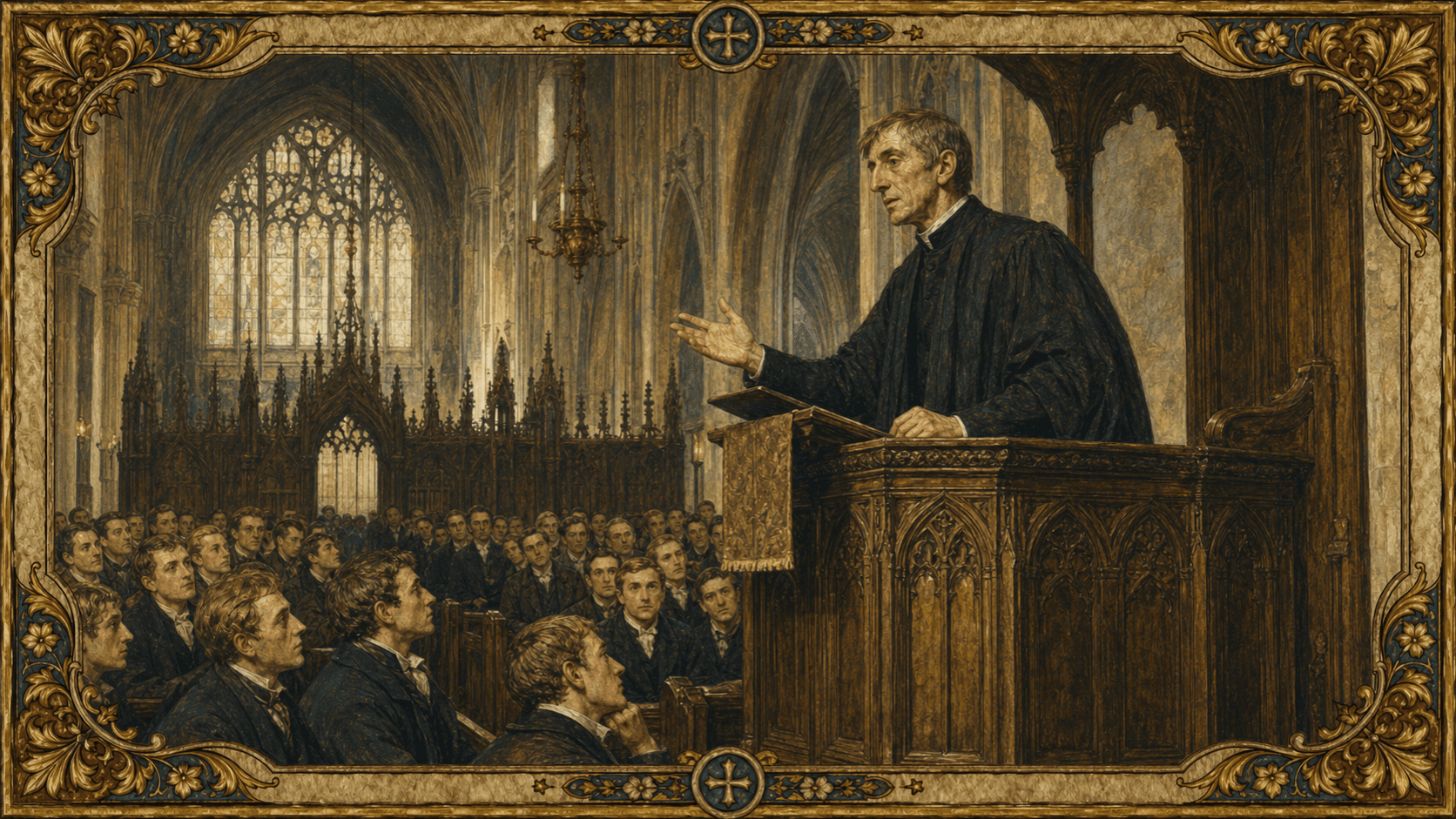
John Henry Newman preaching in the University Church at Oxford during the Oxford Movement.
Newman preaches at the University Church during the Oxford Movement.

In the 1830s Newman and his friends launched the Oxford Movement, arguing that the Church of England was not a mere state institution but a branch of the one, holy, catholic, and apostolic Church.

The theory was beautiful, and Newman believed it. He called it the via media, the middle way. But he was too honest to stop testing it against the first centuries of Christian history.

The Fathers

Augustine shook him.

The decisive blow came through the Fathers. Newman saw again and again that the parties history vindicated were in communion with the whole Church, while clever middle parties disappeared.

A sentence from Augustine struck him with unusual power: Securus judicat orbis terrarum- the secure judgment of the whole world. Newman compared the moment to Augustine's own tolle lege. His Anglican position began to dissolve.

Littlemore

The costly step became unavoidable.

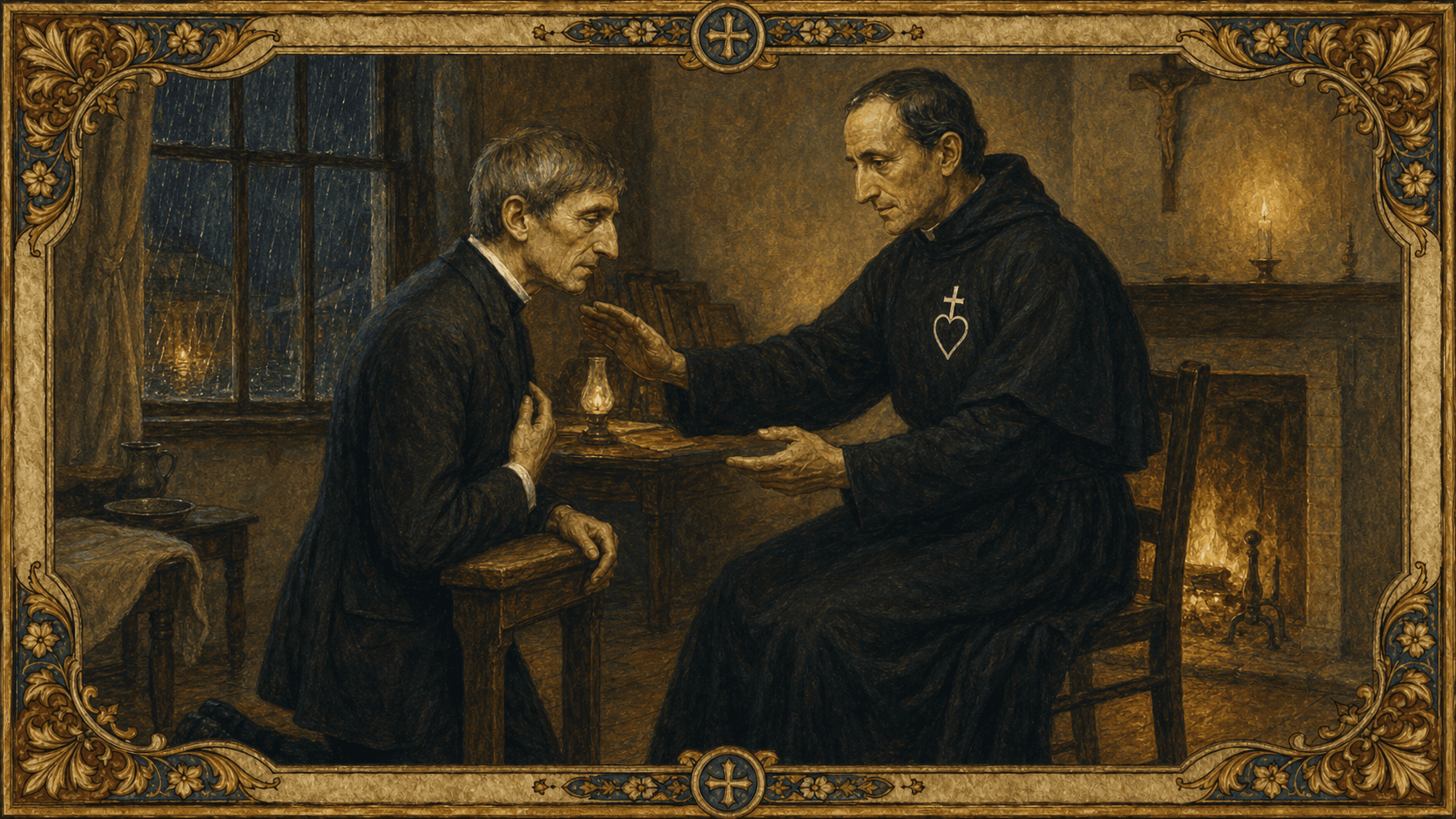
John Henry Newman received into the Catholic Church by Blessed Dominic Barberi at Littlemore.
Newman is received into the Catholic Church by Blessed Dominic Barberi at Littlemore.

Newman withdrew to Littlemore, laid down his Anglican ministry, and waited in prayer and study. He did not rush. He did not want the conclusion. But he would not live against what he had come to believe.

On a rainy night in October 1845, Blessed Dominic Barberi arrived at Littlemore. Newman knelt, made his confession, and was received into the Catholic Church on October 9.

After Rome

Conversion did not make life easy.

Newman was ordained a Catholic priest in 1847 and brought the Oratory of St. Philip Neri to England. The Birmingham Oratory became his home.

He was suspected by many Anglicans as a deserter and by some Catholics as too subtle and too sympathetic to modern questions. Projects failed. His gifts were underused. He bore long obscurity with patience.

Vindication

He answered slander with his whole life.

In 1864 Charles Kingsley accused Newman, and Catholic priests generally, of not caring for truth. Newman answered with the Apologia Pro Vita Sua, laying open the entire history of his religious opinions.

The book restored his reputation because it showed what kind of man he was: not a trickster, but one of the most painfully honest converts in Christian history.

The Teacher

He gave the Church tools for modern questions.

Newman explained the development of doctrine: the Church's understanding grows and unfolds while remaining the apostolic faith. He analyzed how the mind comes to assent, not by one bare proof but through the convergence of truth.

He also gave the modern Church its deepest account of conscience. It is not private preference. It is the demanding voice of God in the soul, to be formed and obeyed.

Cardinal

Heart speaks to heart.

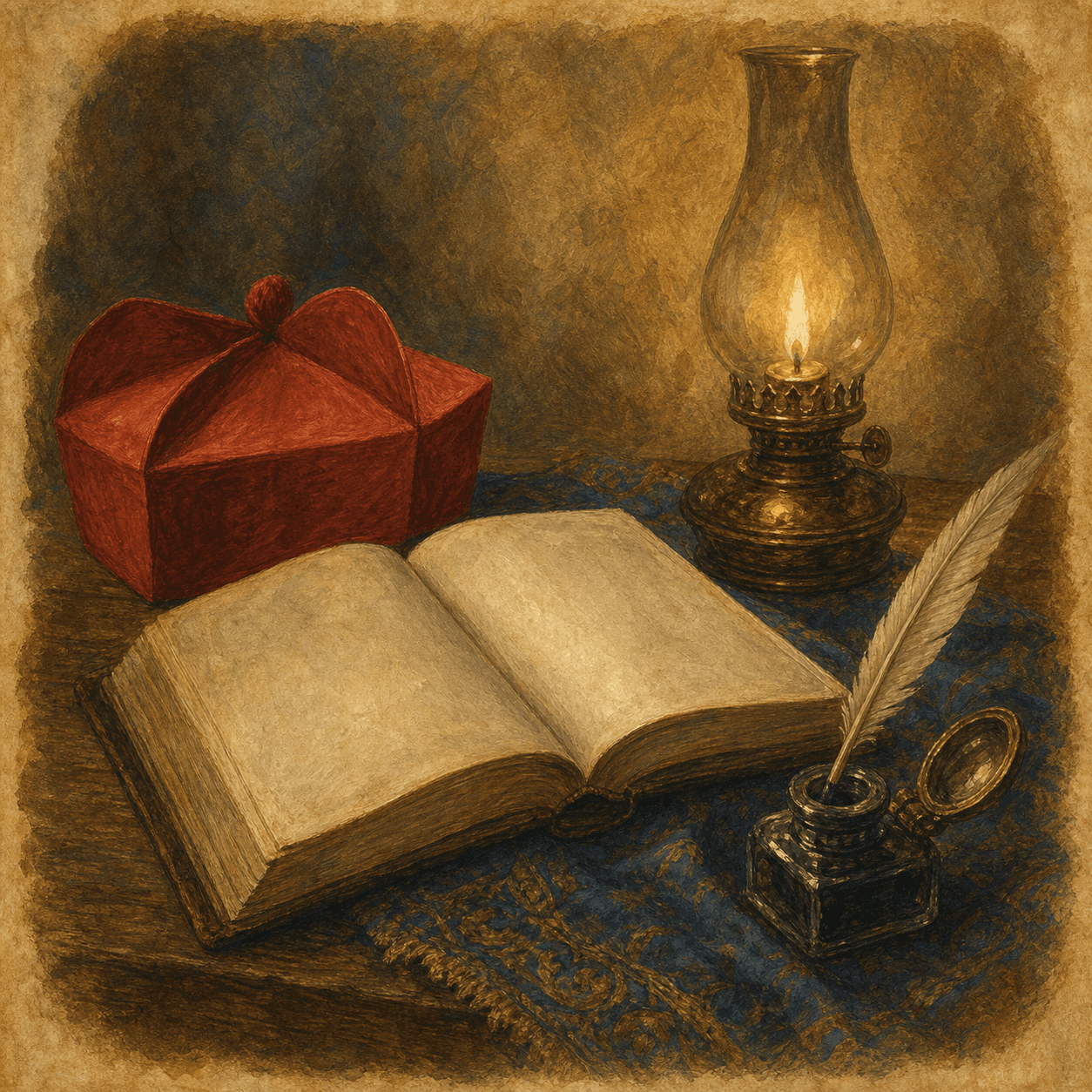
A still life for St. John Henry Newman with book, quill, biretta, and oil lamp.
The book, quill, cardinal's red, and lamp gather Newman's intellectual witness.

In 1879 Pope Leo XIII made Newman a cardinal, an extraordinary public vindication of an old priest who was not a bishop. Newman chose the motto Cor ad cor loquitur - heart speaks to heart.

In his biglietto speech he named the enemy he had fought all his life: not generosity, but the claim that there is no objective religious truth and that one creed is as good as another.

Newest Doctor

Out of shadows and images into the truth.

Newman died at the Birmingham Oratory on August 11, 1890. His chosen epitaph was Ex umbris et imaginibus in veritatem - out of shadows and images into the truth.

He was beatified by Pope Benedict XVI in 2010, canonized by Pope Francis in 2019, and proclaimed a Doctor of the Church by Pope Leo XIV on November 1, 2025. He is the thirty-eighth Doctor of the Church and the most recent person to receive that title.

Why Now

He is the saint of the next step.

Newman matters now because he is the patron of intellectual honesty: of following truth where it leads, even when it leads somewhere you desperately do not want to go.

He matters for conscience, too. In a culture that often turns conscience into preference, Newman restores its weight: the self listening for God and obeying at cost.

And he matters because of the kindly light. Most people are not given the distant scene. They are given one step. Newman shows that one step can be enough.

Reading

Read him directly.

Newman's writings are public domain and worth reading in his own voice. Begin with "Lead, Kindly Light," then the Apologia Pro Vita Sua, then The Idea of a University. For the serious theological center, read the Essay on the Development of Christian Doctrine and the Grammar of Assent.

A Word of Newman

One step enough for me.

Newman wrote "Lead, Kindly Light" years before he became Catholic, ill and far from home, unable to see where his life would go. It became the prayer of his whole life.

He could not see Oxford lost, Rome entered, suspicion endured, the cardinal's red, canonization, or the Doctors of the Church. He only knew the light was kind and that he had to follow it one step.

Connected Saints

A family of holiness.

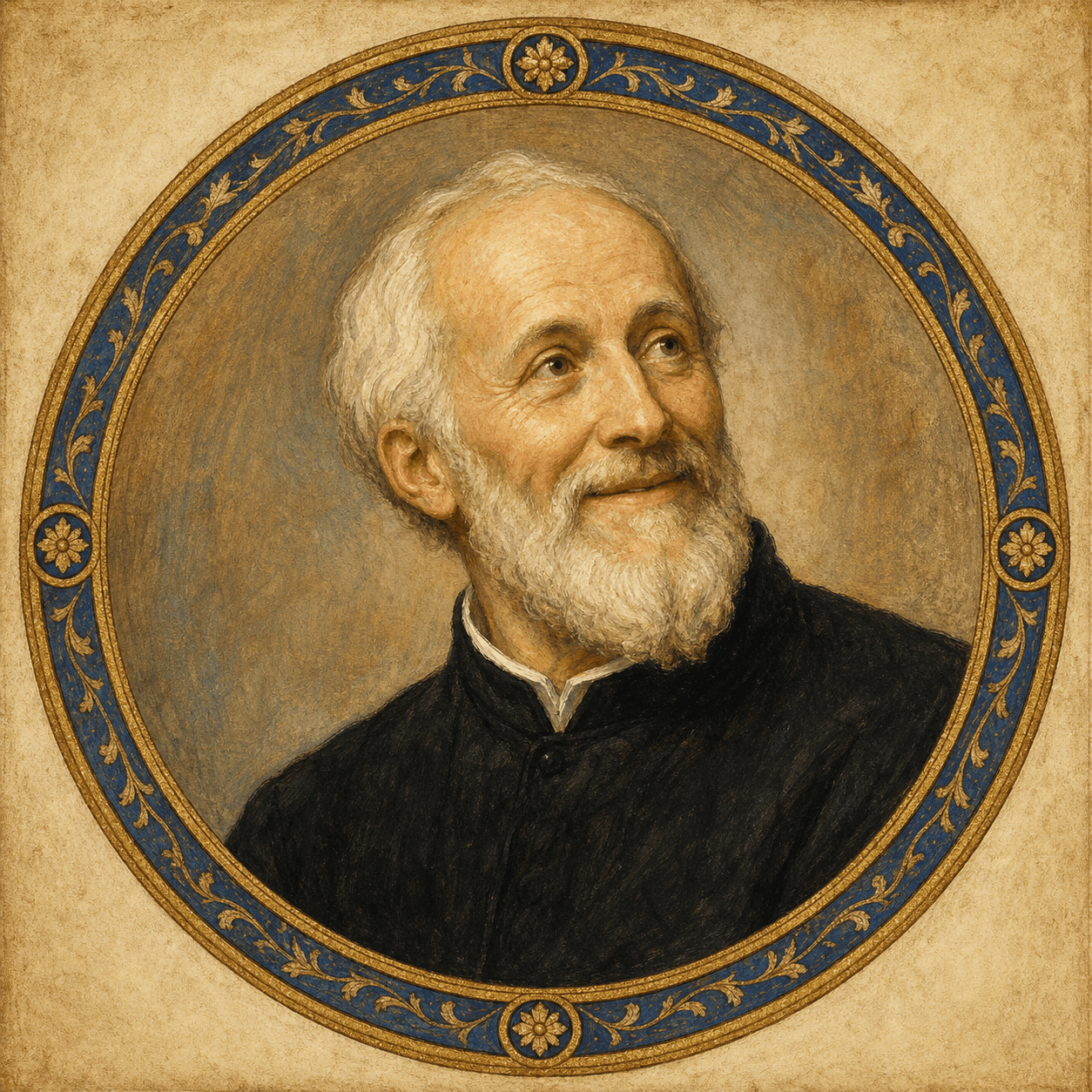
Portrait medallion of St. Philip Neri in a black Roman cassock.

St. Philip Neri

The joyful founder of the Oratory, the community Newman brought to England.

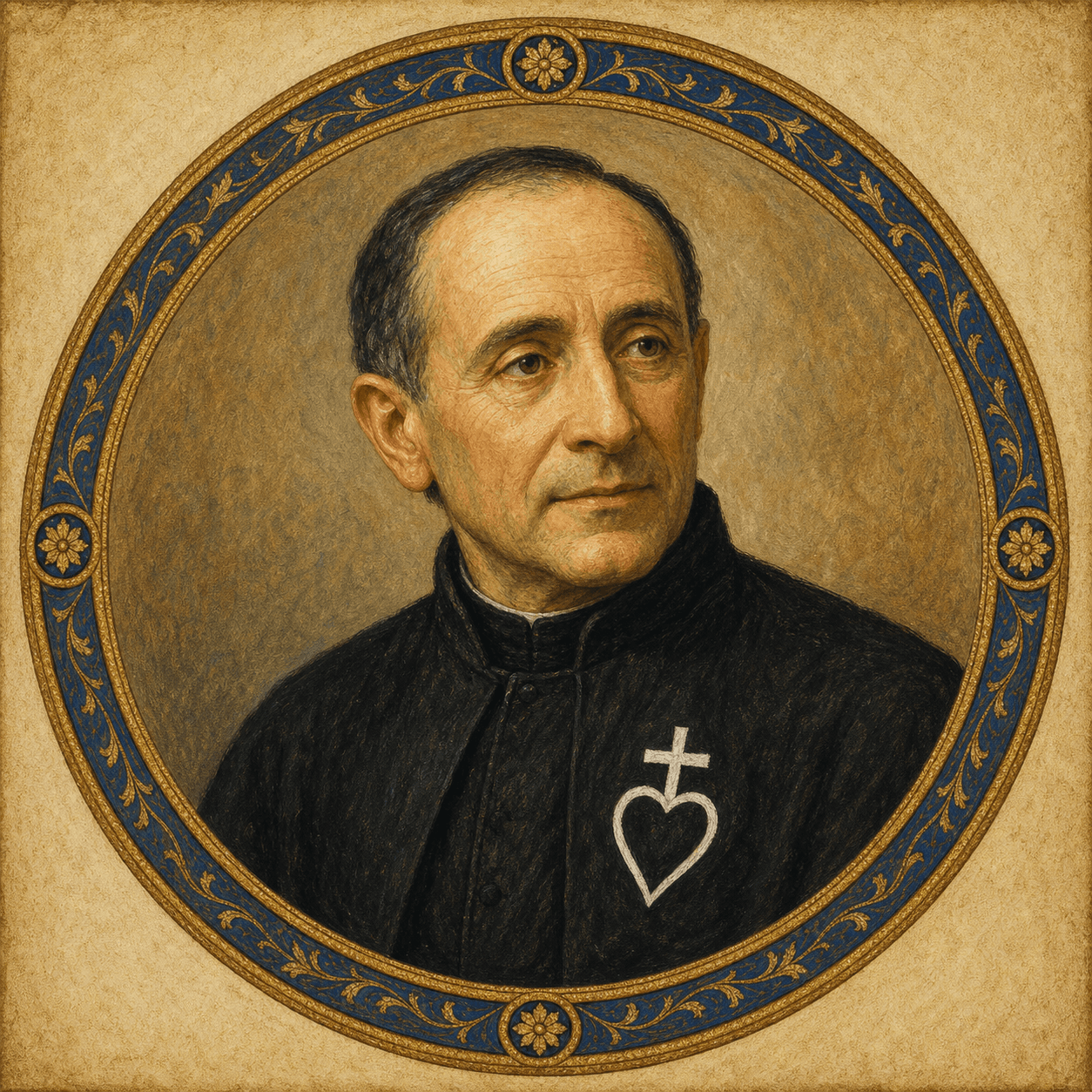
Portrait medallion of Blessed Dominic Barberi in a black Passionist habit.

Bl. Dominic Barberi

The humble Passionist missionary who received Newman into the Catholic Church.

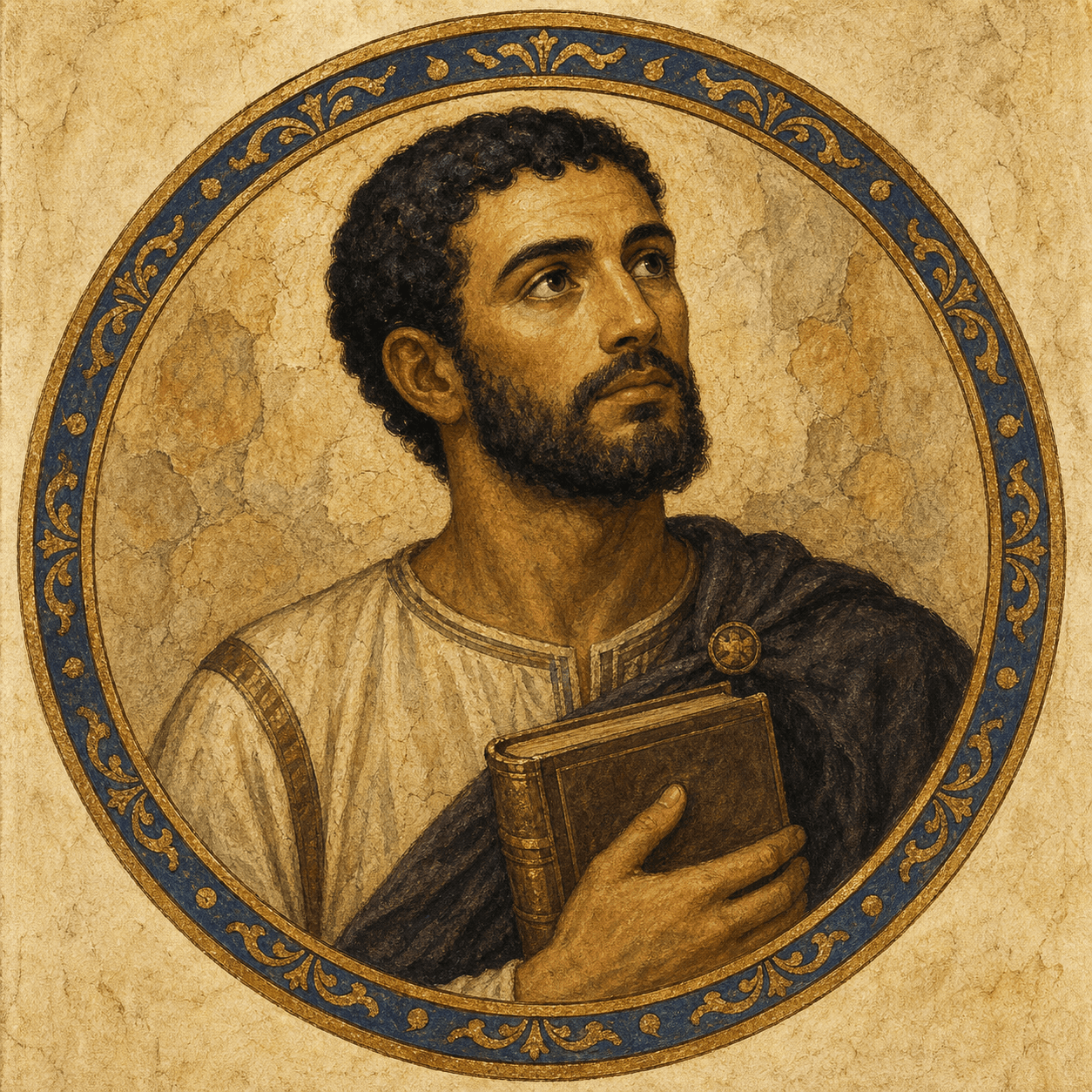
Portrait medallion of St. Augustine of Hippo.

St. Augustine of Hippo

The Father whose words, Securus judicat orbis terrarum, shook Newman's Anglican position.

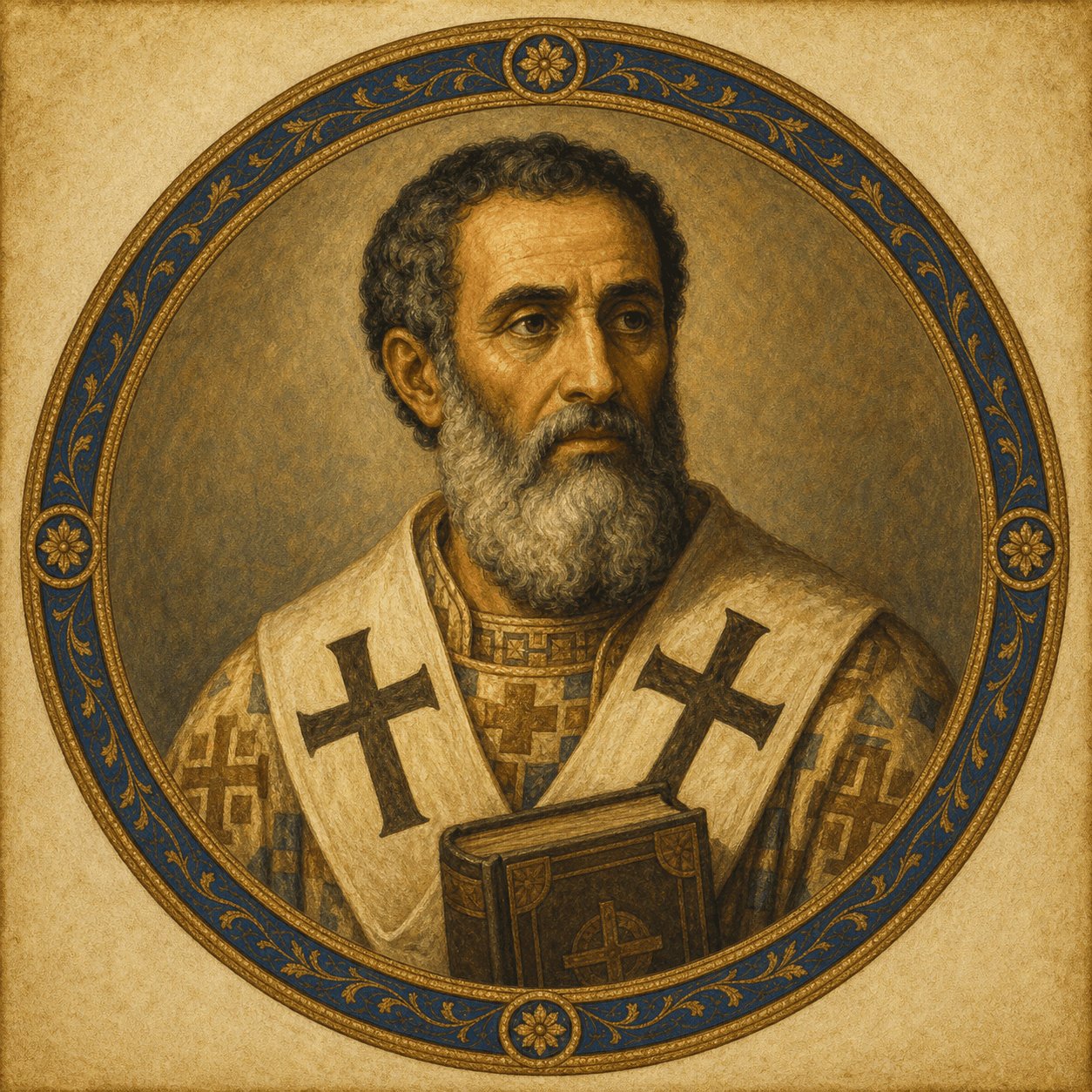
Portrait medallion of St. Athanasius in Eastern bishop's vestments.

St. Athanasius

The defender of orthodoxy whom Newman studied and loved among the Fathers.

Frequently Asked

Common questions about Newman.

Who was St. John Henry Newman?+
He was a nineteenth-century English Anglican priest, Oxford scholar, and leader of the Oxford Movement who converted to Catholicism in 1845 after years of patristic study. As a Catholic he founded the Oratory in England, wrote some of the greatest religious prose in English, was made a cardinal in 1879, canonized in 2019, and proclaimed a Doctor of the Church in 2025.
Is Newman a Doctor of the Church?+
Yes. Pope Leo XIV proclaimed John Henry Newman a Doctor of the Church on November 1, 2025. He is the thirty-eighth Doctor, joining the small company of authoritative teachers that includes Augustine, Aquinas, Teresa of Ávila, and Thérèse of Lisieux.
Why did Newman become Catholic?+
His study of the early Church convinced him, against his wishes and at great personal cost, that the Catholic Church was the Church continuous with the Fathers. He converted because he believed it was true, not because it was easy.
What is Lead, Kindly Light?+
It is Newman's beloved 1833 hymn-poem, written when he was ill, becalmed, and far from home. Its prayer for enough light to take the next step became the shape of his whole life.
What did Newman teach about conscience?+
He called conscience the aboriginal Vicar of Christ, the voice of God in the soul. He also rejected the idea that conscience is mere private preference. Real conscience must be formed, obeyed, and brought into harmony with truth.
What is the development of doctrine?+
It is Newman's account of how the Church's understanding of the apostolic faith grows and unfolds through history while remaining the same faith. He gave the Church tools to distinguish authentic development from corruption.
Why is his feast on October 9?+
October 9 is the day in 1845 when Newman was received into the Catholic Church by Blessed Dominic Barberi. The feast marks the pivot of his life.

Sources

Read beyond summaries.

Newman can be quoted directly because his works are public domain; his Doctor-of-the-Church status is recent and was checked against current Vatican references for this article.

Primary

  • St. John Henry Newman, Apologia Pro Vita Sua.
  • St. John Henry Newman, An Essay on the Development of Christian Doctrine and An Essay in Aid of a Grammar of Assent.
  • Newman's Parochial and Plain Sermons, Letter to the Duke of Norfolk, "Lead, Kindly Light," and biglietto speech.

Magisterial

  • Pope Francis's October 13, 2019 canonization of Newman.
  • Pope Benedict XVI's September 19, 2010 beatification of Newman.
  • Pope Leo XIV's November 1, 2025 proclamation of Newman as a Doctor of the Church.

Historical

  • Standard biographies, especially Ian Ker's John Henry Newman: A Biography.
  • Historical accounts of the Oxford Movement, Littlemore, Dominic Barberi, and the Birmingham Oratory.
  • Current Vatican references to Newman as Priest and Doctor of the Church.

Last reviewed: June 7, 2026

On this page+