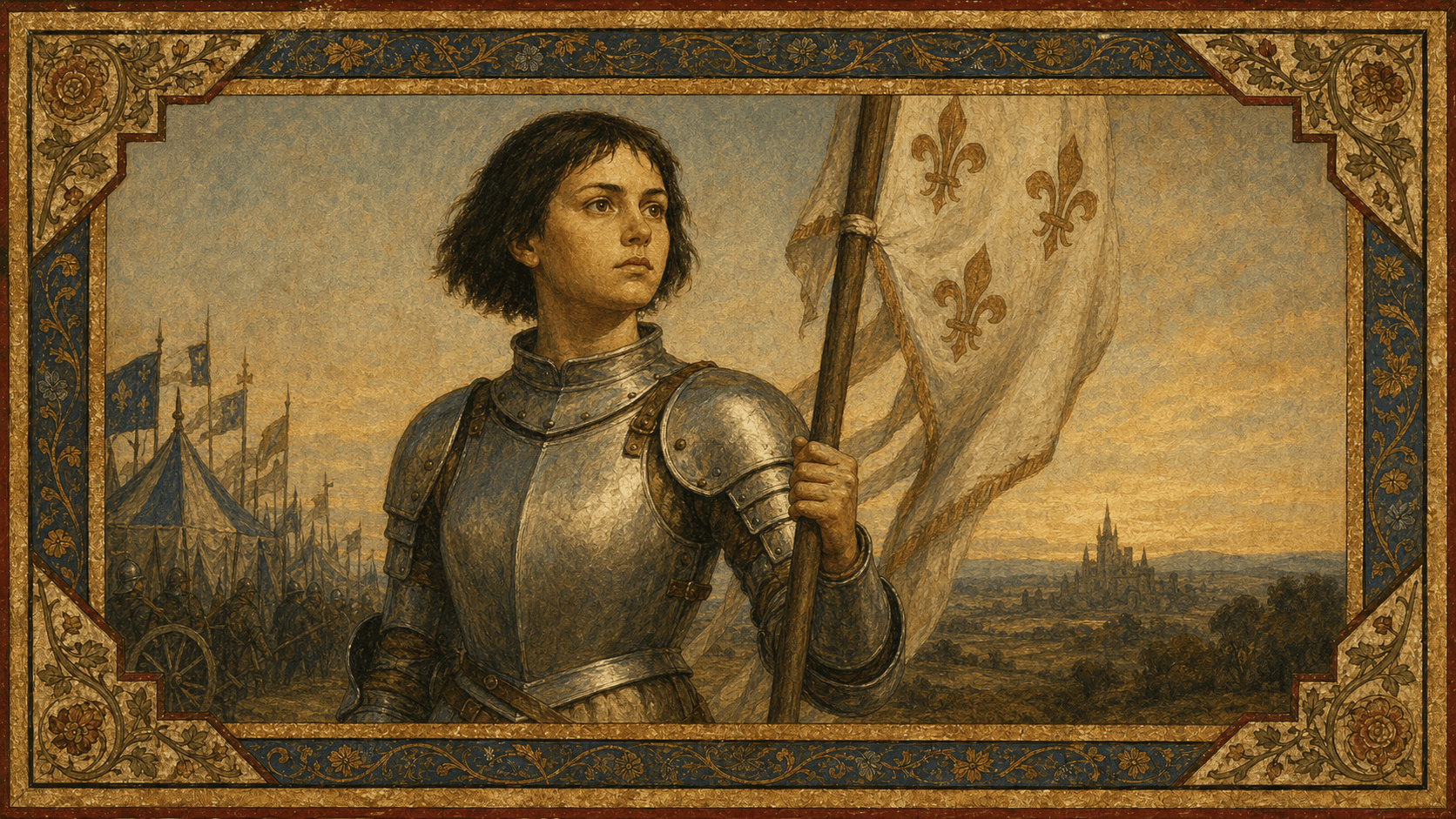
St. Joan of Arc in functional fifteenth-century armor, holding a fleur-de-lis banner.

Saints Library

Joan of Arc

Feast May 30 · Virgin · Patroness of France · c. 1412-1431

The illiterate peasant girl who helped break a siege, saw a king crowned, and died faithful before a corrupt tribunal that the Church itself would later condemn.

The Story

The girl who changed a war.

Joan of Arc could not read or write. She was a peasant farmer's daughter from Domrémy, born into the worst years of the Hundred Years' War, when much of France was under English and Burgundian control and the Dauphin had not been crowned.

Around thirteen she began to hear voices, which she said were St. Michael the Archangel, St. Catherine of Alexandria, and St. Margaret of Antioch. Over several years they pressed on her an impossible mission: go to the Dauphin, raise the siege of Orléans, and bring him to Reims to be crowned.

She did it. At about seventeen she talked her way to Charles, rode with the army to Orléans, and within days the siege was broken. Within three months she stood beside him in Reims Cathedral as he was crowned Charles VII, her banner in her hand.

Then she was captured, sold to the English, and put on trial by a church court captured by politics. They burned her at Rouen in 1431. Twenty-five years later the Church annulled the condemnation. In 1920, the Church canonized her.
Domrémy

France looked finished.

Joan was born around 1412 in a village on the Meuse River. The war with England had ground on for generations. After Agincourt and the Treaty of Troyes, the English king claimed France, much of the north was occupied, and the Dauphin Charles was uncrowned and nearly powerless.

Her family were ordinary farmers, neither rich nor destitute. The witnesses later remembered her as devout, hard-working, fond of church bells, kind to the poor, and given to prayer. Nothing in that village pointed toward command, diplomacy, trial transcripts, or a national legend.

That is part of her force. The deliverance of France, when it came, came through a teenage country girl who had no education, rank, or natural reason to be heard.

The Voices

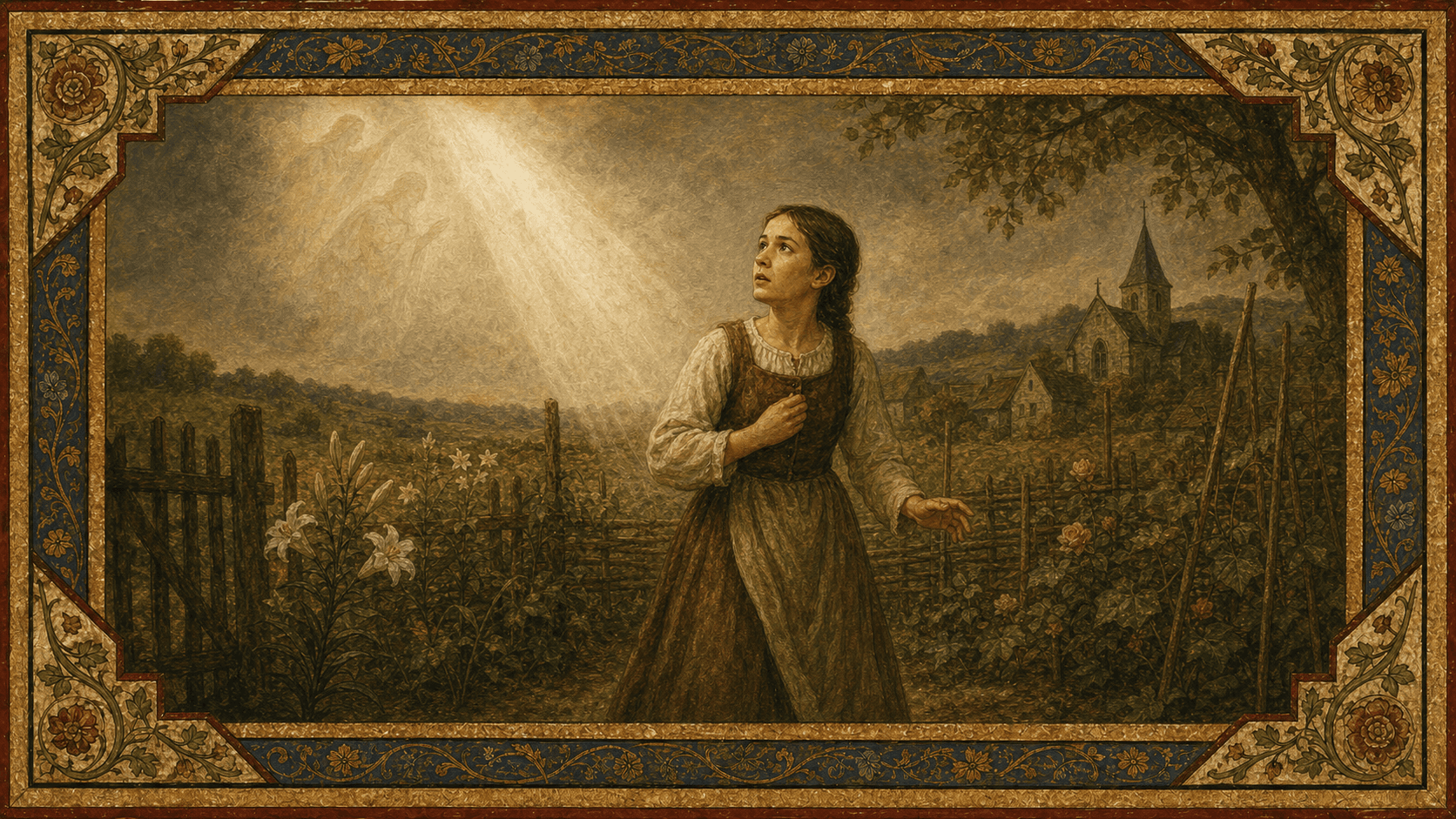
Light in the garden.

The young Joan of Arc in her father's garden, hearing her voices suggested by light.
Joan hears the voices she named as Michael, Catherine, and Margaret.

Joan said the first voice came to her in her father's garden when she was about thirteen and a half. It came with light. Over time she identified the voices as St. Michael, St. Catherine of Alexandria, and St. Margaret of Antioch.

At first they urged her toward ordinary holiness: be good, go to church, keep faithful. Then the command became specific and enormous. She was to go to the Dauphin, raise the siege, and see him crowned.

The Church does not require Catholics to explain every detail of Joan's private experiences. But the record shows a girl who went to her death rather than deny that her mission came from God, and a later Church that cleared and canonized her.

Reims

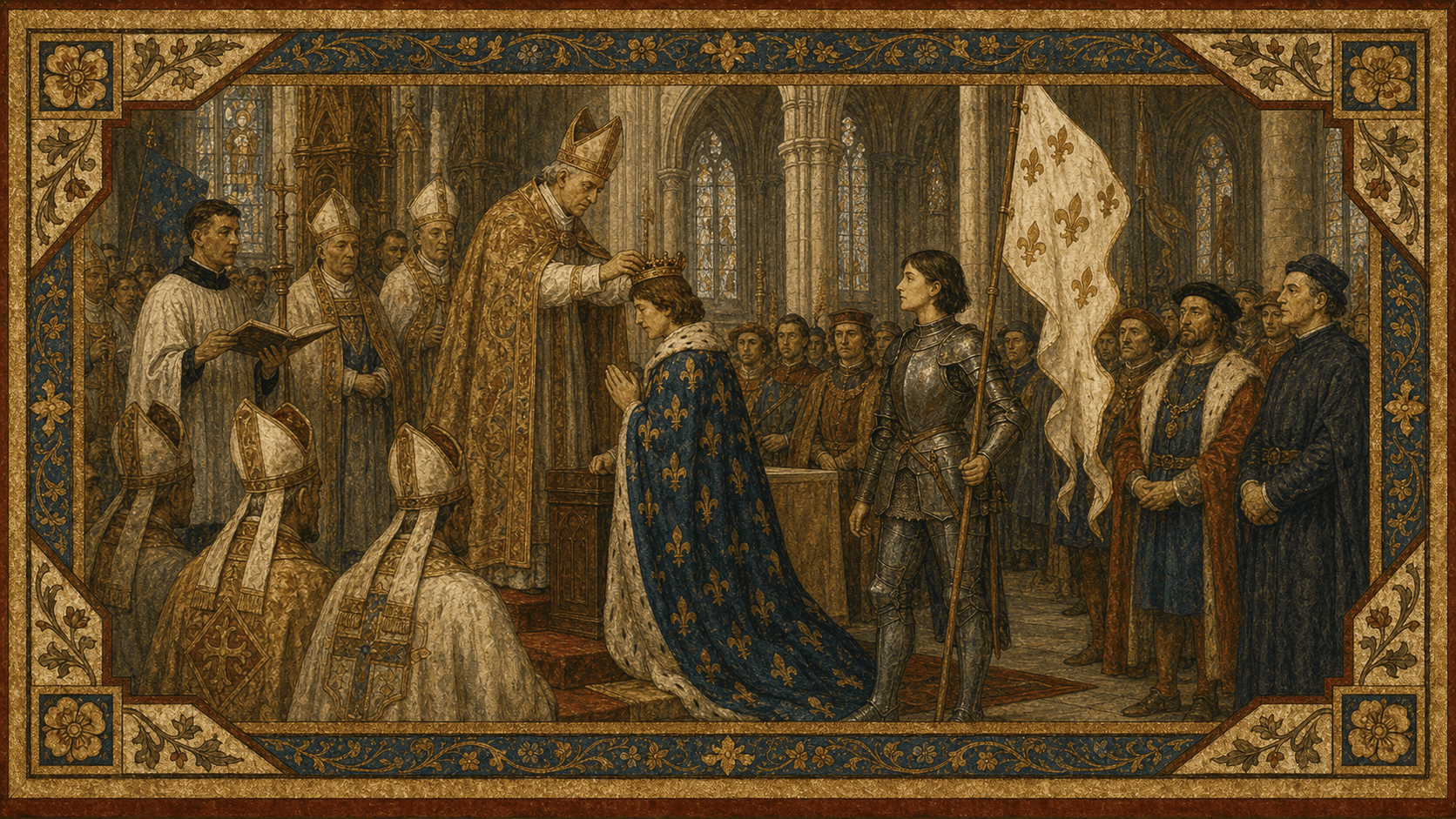
Her banner shared the honor.

Joan of Arc standing with her banner at the coronation of Charles VII in Reims Cathedral.
Joan stands with her banner at the coronation of Charles VII.

Joan reached Charles at Chinon after crossing hostile country in men's clothing for safety. He had theologians examine her. Finding nothing against her, and desperate for a turn in the war, he allowed her to go to Orléans.

She entered the besieged city on April 30, 1429. In little more than a week, the English siege works were stormed and the siege was broken. Joan was wounded by an arrow and kept going. The French cause that had looked dead was suddenly alive.

She insisted that Charles had to be crowned at Reims, the traditional coronation city. On July 17, 1429, he was anointed king there. Joan stood beside him with the banner she loved more than her sword. Later she said it had shared the struggle, so it was right that it should share the honor.

Compiègne

The king let her go.

After Reims, the momentum slowed. The new king was cautious, his advisers divided, and the court that had benefited from Joan began to lose interest in her. She kept fighting in smaller actions, more and more on her own initiative.

On May 24, 1430, outside Compiègne, Burgundian soldiers pulled her from her horse and captured her. Charles VII did not ransom or rescue the girl who had brought him to his throne. The Burgundians sold her to the English.

The English wanted more than her death. They wanted to discredit the king she had crowned by proving that the power behind Joan was evil. For that, they needed a church trial.

Rouen

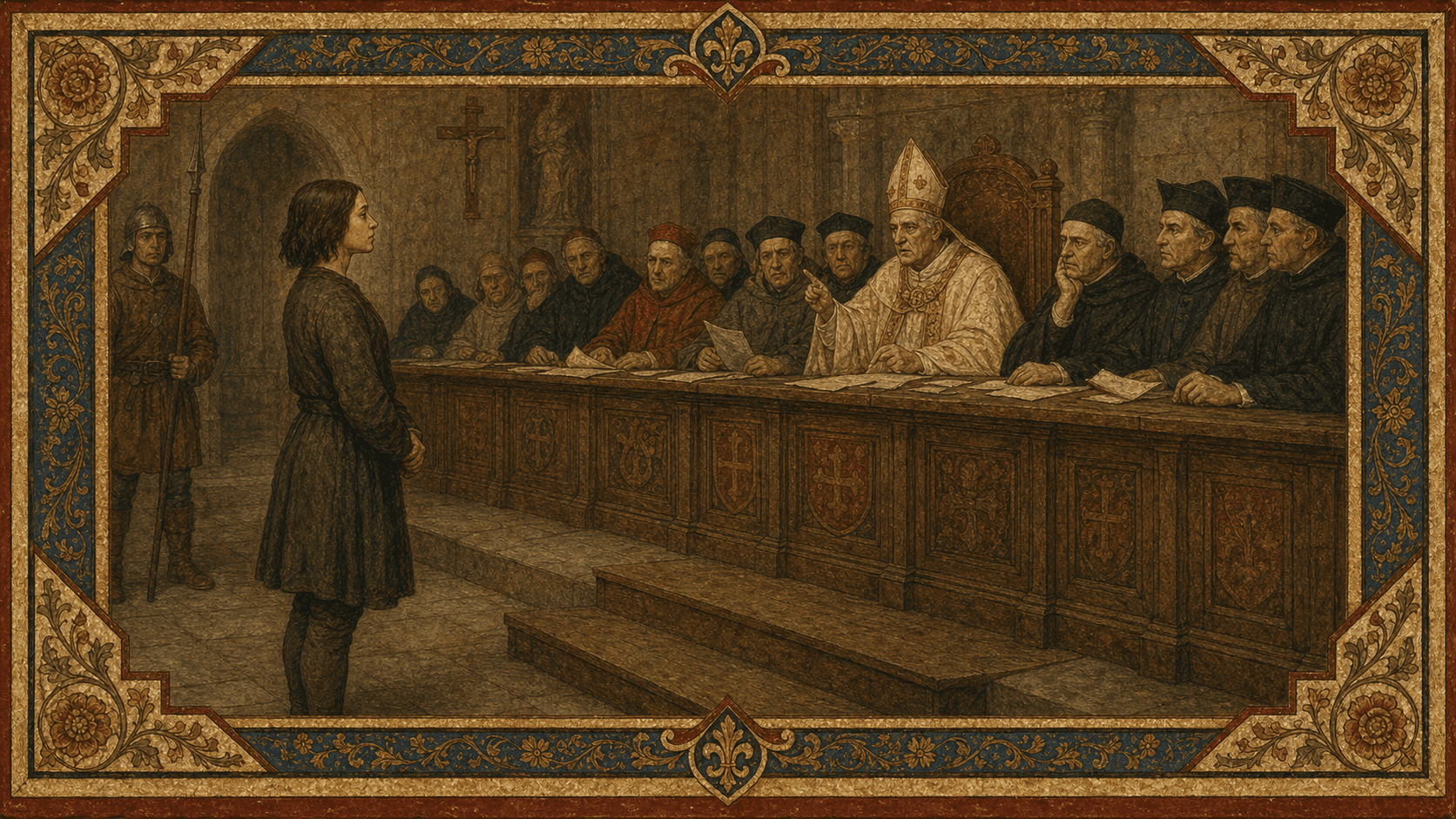
The court was a fraud.

Joan of Arc alone before the clerical tribunal at Rouen.
Joan alone before the Rouen tribunal.

The trial of Joan of Arc is one of the great injustices in Church history, and one of the best documented. It was presided over by Pierre Cauchon, Bishop of Beauvais, a partisan of the English and Burgundian cause.

Joan was held in a secular prison, chained and guarded by English soldiers, instead of in a proper church prison. She had no counsel and no friend in the room. Learned clerics questioned an illiterate teenage girl for weeks, looking for a theological snare.

They often found the opposite of what they wanted. When they asked whether she was in a state of grace, a trap designed to condemn her whichever way she answered, she replied by entrusting the whole question to God. The notary recorded that the assessors were stunnedCondemnation Trial.

Rouen

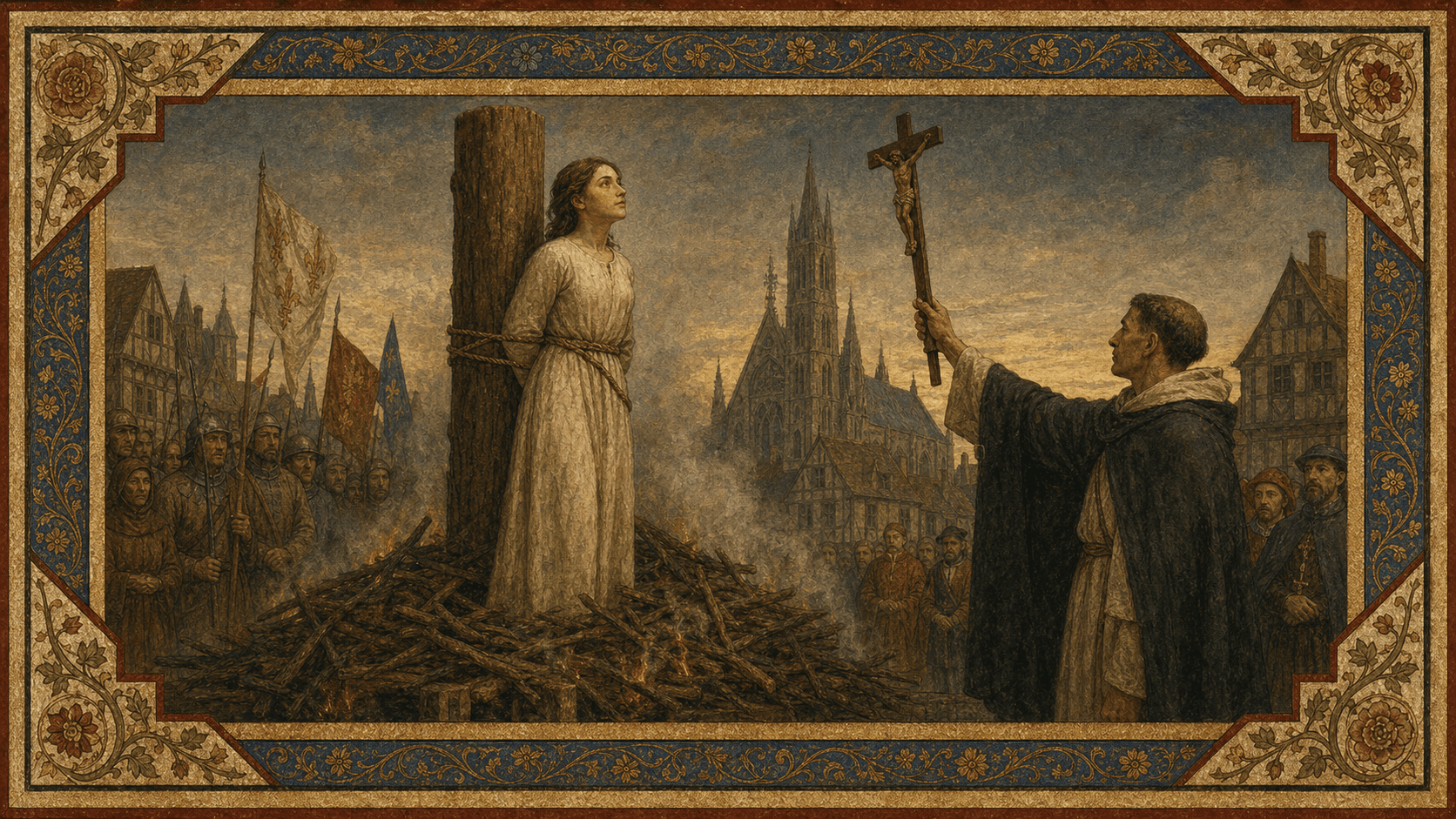
She died looking at Christ.

Joan of Arc at the stake in Rouen, looking toward a crucifix with flames kept low.
At Rouen, Joan keeps her gaze fixed on the crucifix.

They wore her down with exhaustion, isolation, and fear. For a brief moment she signed an abjuration, possibly without fully understanding what she had signed and while expecting a transfer to church custody. The promise was not kept. Days later, after resuming male clothing in prison, she was declared relapsed.

On May 30, 1431, after confession and Holy Communion, she was taken to the marketplace at Rouen and burned at the stake. She asked for a cross. A friar held up a crucifix so she could see it through the smoke.

The witnesses remembered her calling on the name of Jesus until she could no longer speak. Her ashes were scattered into the Seine so there would be no relics and no grave.

1456

The verdict was erased.

Joan's vindication came slowly. By 1450 the English had been driven out of most of France and Charles VII was secure on the throne Joan had helped him claim. A new examination opened, and in 1456, under papal authority, a court reviewed the Rouen trial.

It found fraud, illegality, and manipulation. The condemnation was formally annulled. Joan was declared innocent. The judgment that had killed her was erased.

Her canonization came centuries later, in 1920. It is worth telling that honestly. The trial that killed Joan was a real church court, however corrupt, and the men who ran it were real churchmen. The same Church burned her and canonized her. The second fact does not erase the first; it judges it.

Why Now

She is the saint for standing alone.

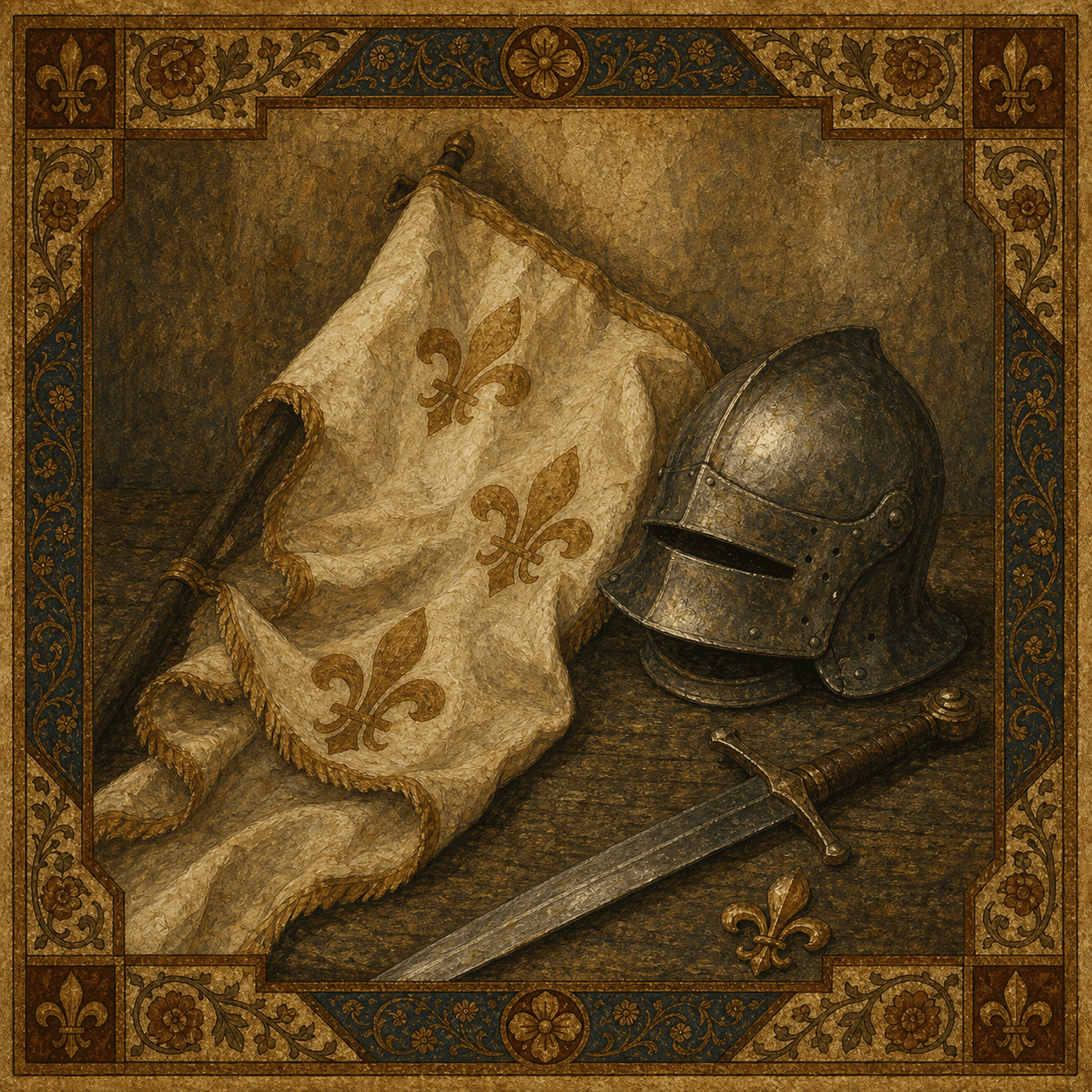
A symbolic still life for Joan of Arc with banner, armor, sword, and lilies.
Banner, armor, lilies, and the witness of a trial record.

Joan matters because every ordinary calculation said she was nobody: a girl, a peasant, illiterate, untrained, powerless, and from a backwater village. Through her, God did what kings, generals, and bishops could not.

She matters for the trial: one frightened, faithful teenager against the assembled power and learning of a corrupt establishment, holding to the truth because it was true. She did not have status. She had honesty, faith, and the courage to keep answering.

And she matters because of how she held the Church. She was betrayed by corrupt churchmen and still died in the sacraments, asking for a crucifix and calling on Jesus. She did not confuse the sins of the Church's officers with the Lord of the Church.

Reading

Where to read her.

Start with the transcript of the 1431 trial of condemnation. Joan is unusually present to us because her answers were recorded at length. Read the interrogations and you meet her directly.

Then read the 1456 rehabilitation proceedings, where witnesses from Domrémy, Orléans, and Rouen help restore the portrait the first trial tried to destroy. Régine Pernoud's documentary work is the best modern doorway into that record.

A Word of Joan

The trap failed.

Her judges asked whether she was in a state of grace. To say yes could be painted as presumption; to say no would condemn herself. The unlettered girl answered more cleanly than the doctors could attack.

She claimed nothing for herself and placed everything in God's hands. It is the whole of Joan in one sentence: humble before God, fearless before men, not clever in the shallow sense, but true.

Connected Saints

A family of holiness.

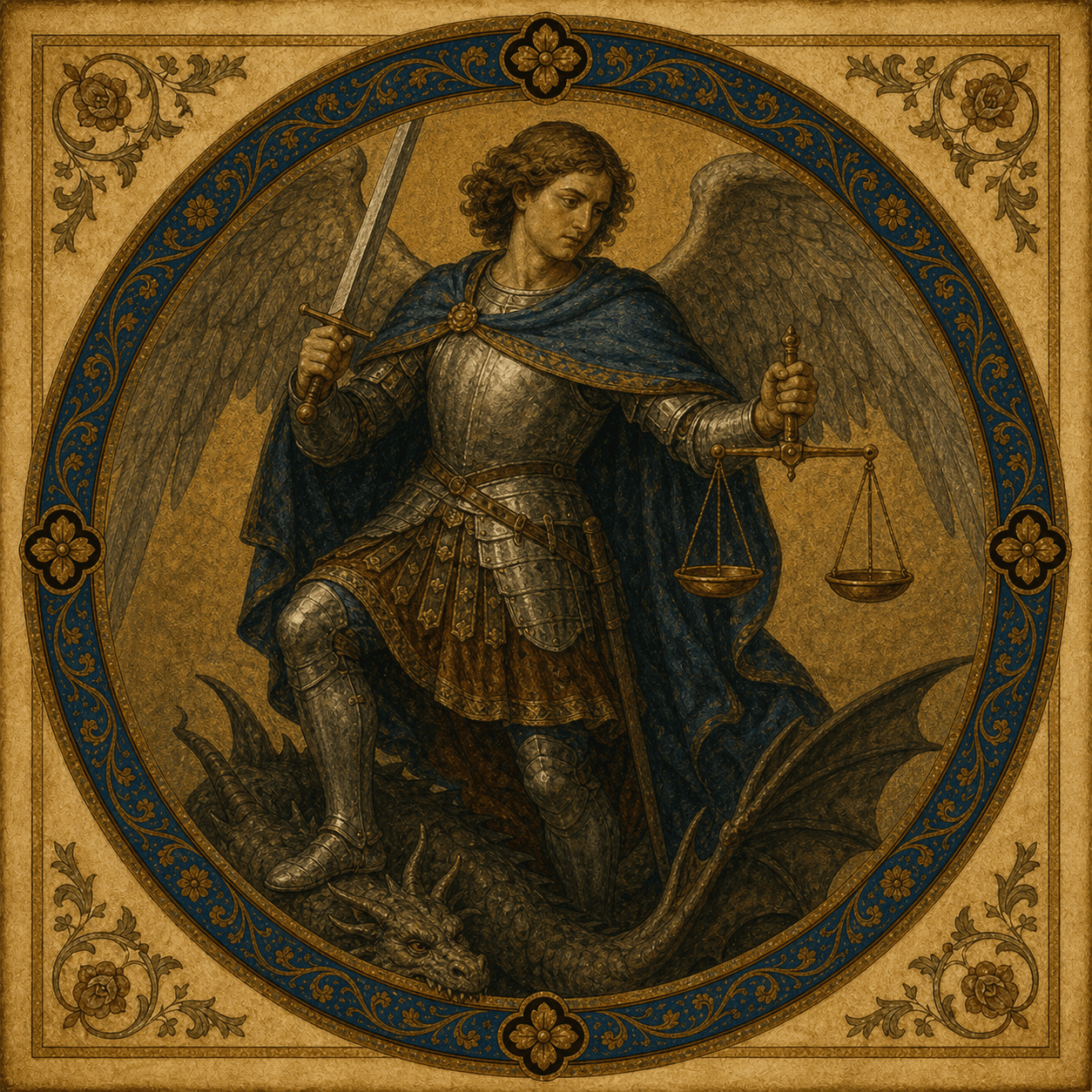
Portrait medallion of St. Michael the Archangel with armor, scales, and dragon.

St. Michael the Archangel

The warrior archangel whom Joan named as the first and greatest of her voices.

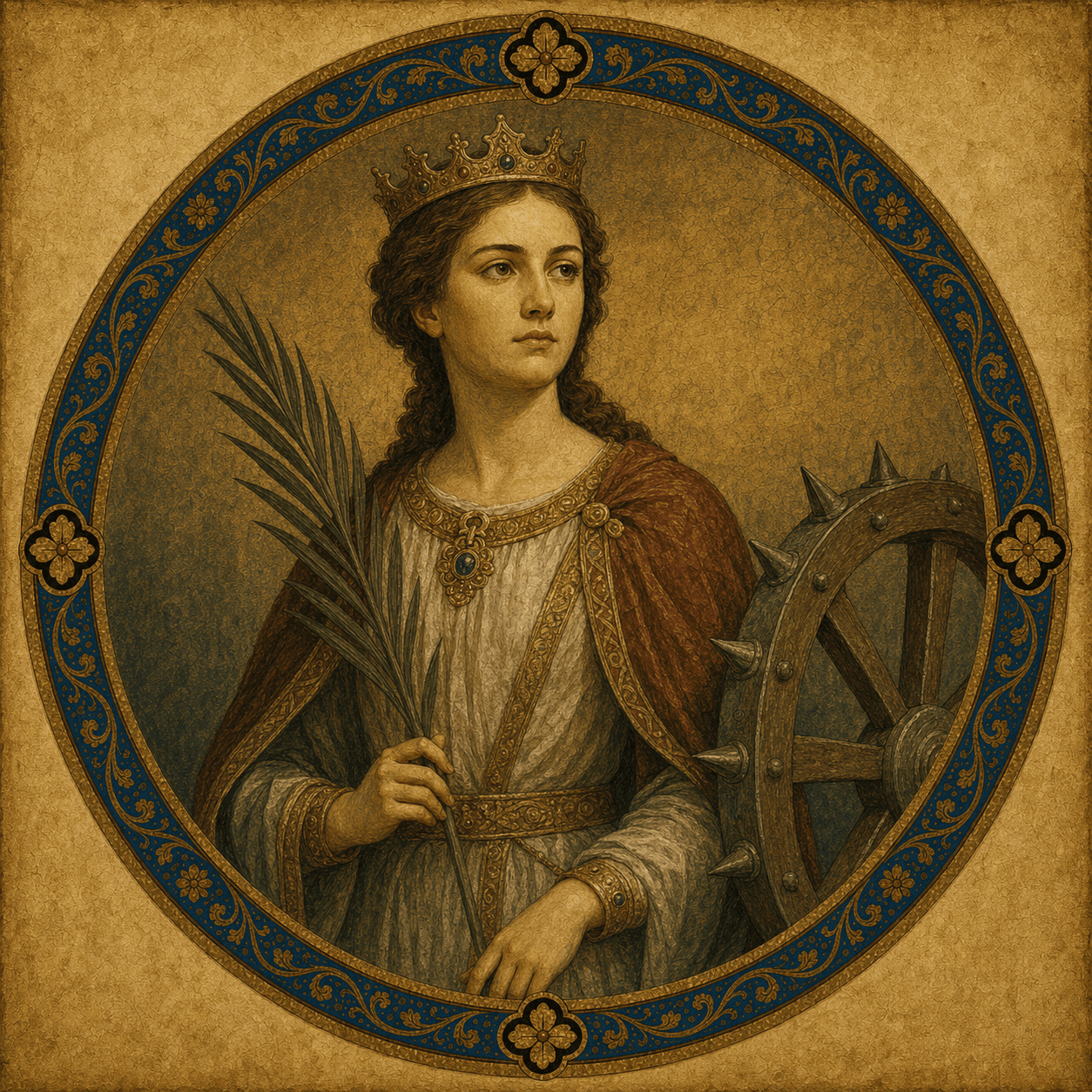
Portrait medallion of St. Catherine of Alexandria with crown, palm, and breaking wheel.

St. Catherine of Alexandria

The early virgin-martyr with the wheel, distinct from Catherine of Siena.

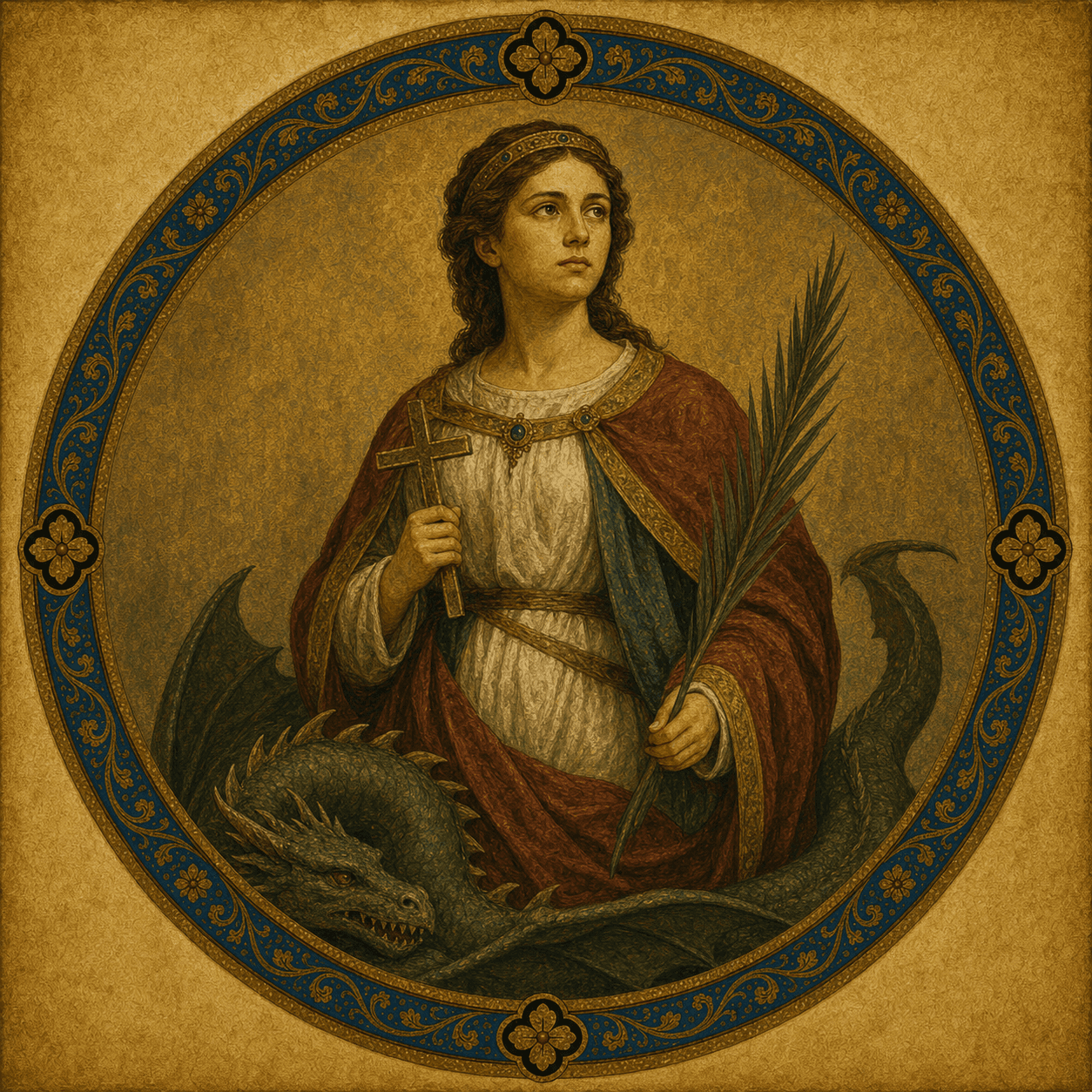
Portrait medallion of St. Margaret of Antioch with cross, palm, and dragon.

St. Margaret of Antioch

The early virgin-martyr much loved in the medieval West and named among Joan's voices.

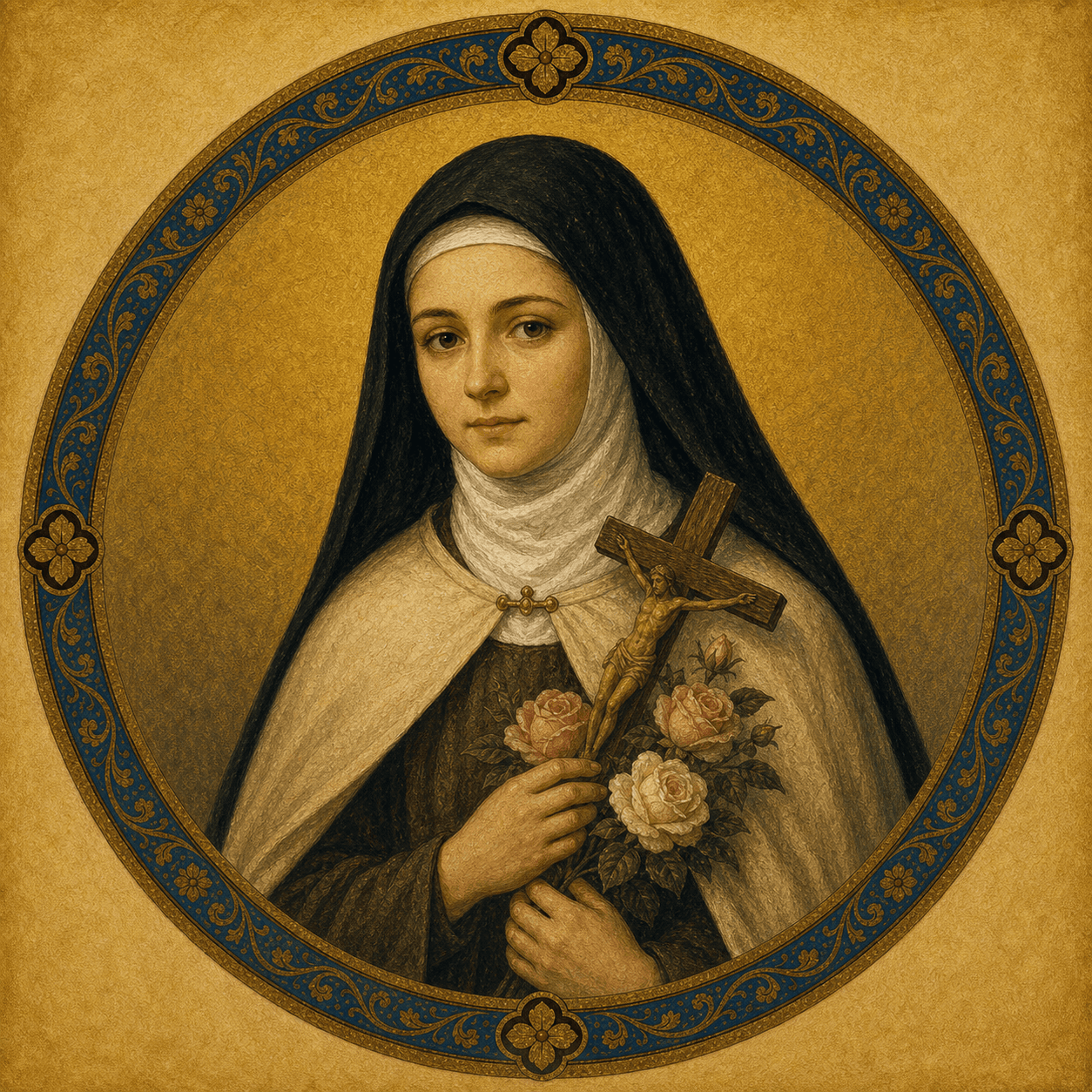
Portrait medallion of St. Thérèse of Lisieux in the Carmelite habit.

St. Thérèse of Lisieux

The other great holy daughter of France, named with Joan a patroness of the nation.

Frequently Asked

Questions for reading Joan honestly.

Who was St. Joan of Arc?+
She was a teenage French peasant girl who said she was guided by the voices of saints during the Hundred Years' War. At about seventeen she helped break the siege of Orléans and saw the Dauphin crowned King Charles VII at Reims. Captured and sold to the English, she was condemned by a corrupt church court and burned at Rouen in 1431. Her condemnation was annulled in 1456, and she was canonized in 1920.
What were Joan of Arc's voices?+
Joan said that from about age thirteen she heard voices accompanied by light, and that she came to identify them as St. Michael the Archangel, St. Catherine of Alexandria, and St. Margaret of Antioch. They first urged her to be good and go to church, then commanded her to help raise the siege of Orléans and bring the Dauphin to Reims.
Did the Catholic Church really burn Joan of Arc?+
Yes. She was condemned and handed over for execution by a church court presided over by Bishop Pierre Cauchon, a partisan of the English cause. In 1456, under papal authority, the Church reviewed the case, found the trial corrupt and illegal, and annulled the condemnation. Joan's story holds both facts together: corrupt churchmen killed her, and the Church later cleared and canonized her.
Was Joan of Arc a martyr?+
She is often called one, and she died faithful under a judicial killing. But her formal canonization category is Virgin, not Martyr. The trial was bound up with politics, war, and efforts to discredit the king she had crowned, so this page uses the Church's formal title while still treating her death as a holy witness.
Did Joan of Arc fight with a sword?+
She wore armor, entered military campaigns, and was wounded in battle, but she said she loved her banner far more than her sword. Her role was leadership, inspiration, and command under the mission she believed God had given her, not battlefield glamour.
Is St. Catherine of Alexandria the same as St. Catherine of Siena?+
No. Catherine of Alexandria is an early virgin-martyr associated with a crown and breaking wheel, and one of the voices Joan named. Catherine of Siena is the fourteenth-century Dominican tertiary and Doctor of the Church. They are different saints.
Where is St. Joan of Arc buried?+
Nowhere. After the execution, her ashes were thrown into the Seine so that there would be no relics and no grave. The surviving trial records are the great documentary witness to her life.

Sources

Read beyond summaries.

This page treats Joan's execution with restraint, names her formal canonization category as Virgin, and holds together the corrupt 1431 condemnation, the 1456 annulment, and the 1920 canonization.

Primary

  • The Trial of Condemnation of Joan of Arc(1431), especially Joan's own answers before the Rouen tribunal.
  • The Trial of Rehabilitation / Nullification (1456), gathering testimony from witnesses who knew Joan and annulling the condemnation.

Historical

  • The Hundred Years' War context: Domrémy, Chinon, Orléans, Reims, Compiègne, Rouen, and the English-Burgundian political interest in her condemnation.
  • Régine Pernoud's documentary work on Joan, especially Joan of Arc: By Herself and Her Witnesses.
  • Daniel Rankin and Claire Quintal's edition of early witnesses and other documentary introductions to the trial materials.

Magisterial

  • The 1456 decree of nullity, issued under papal authority, formally annulling the judgment that condemned Joan.
  • Pope Benedict XV's 1920 canonization of St. Joan of Arc, after her 1909 beatification.
  • Catechetical teaching on conscience, private revelation, the Church's holiness, and the sins of her members.

Last reviewed: June 5, 2026

On this page+