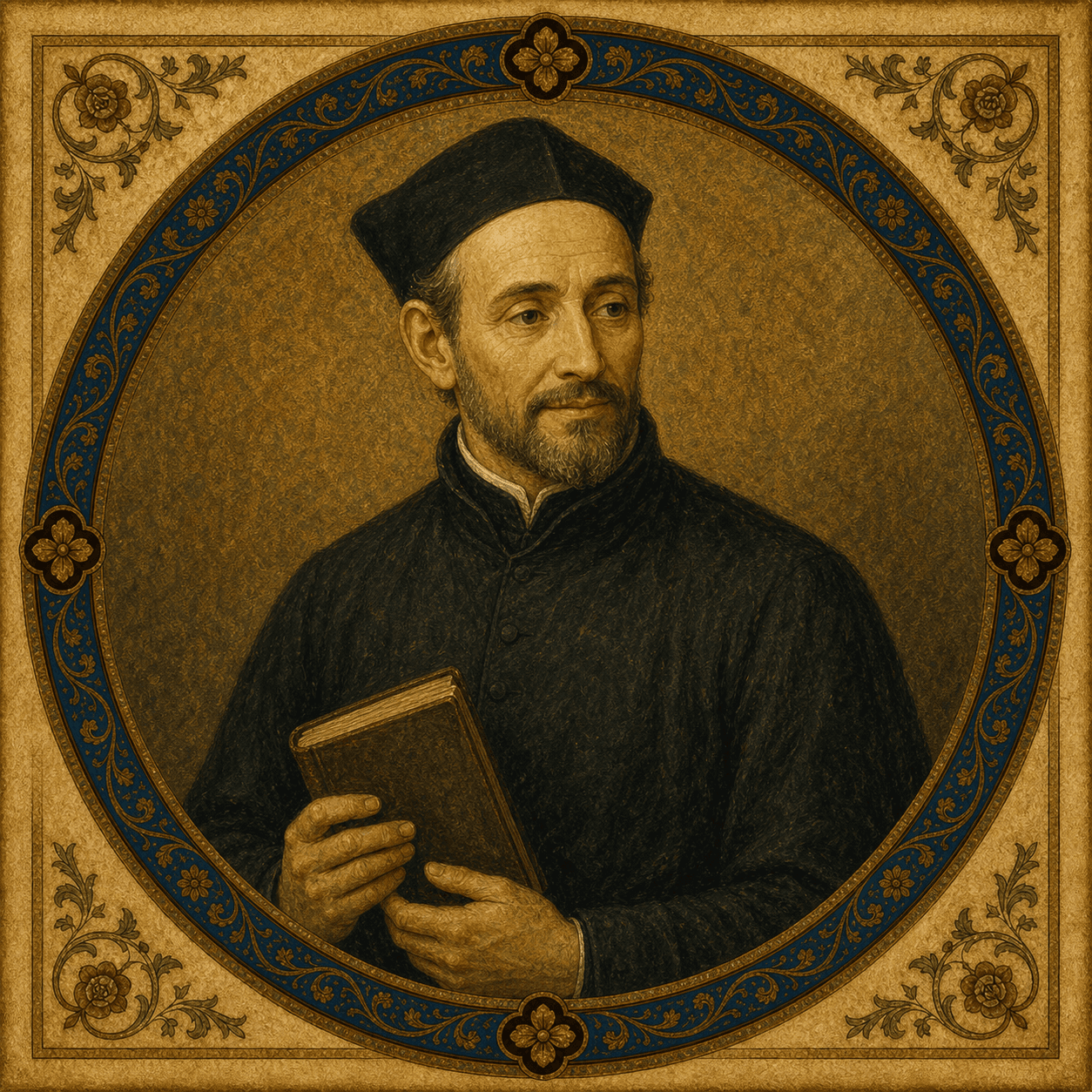
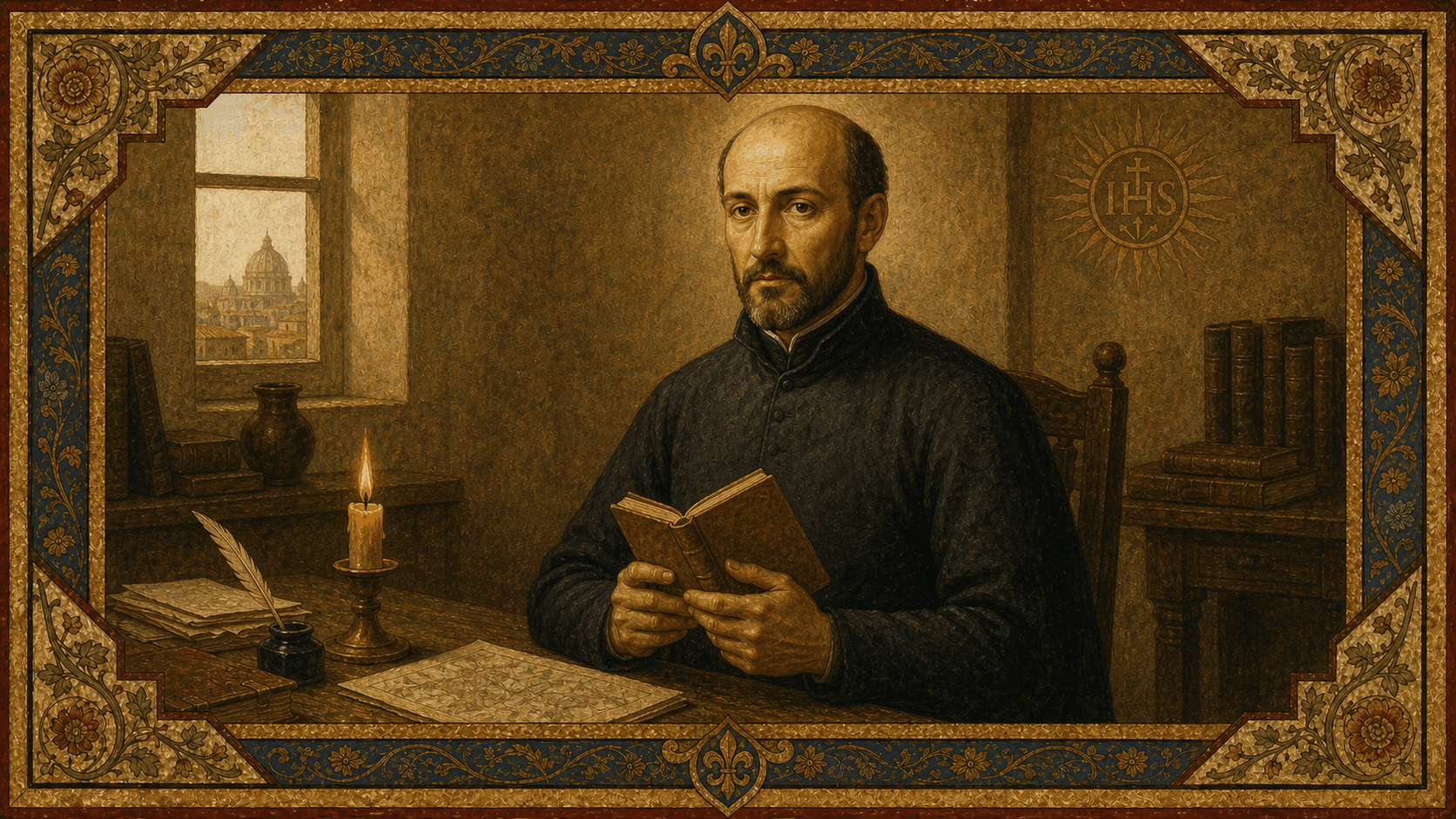
St. Ignatius of Loyola in a black Jesuit cassock with the IHS emblem.

Saints Library

Ignatius of Loyola

Feast July 31 · Founder of the Jesuits · 1491-1556

The proud soldier whose shattered leg became the doorway to discernment, the Spiritual Exercises, and the Society of Jesus.

The Story

A cannonball made a saint.

Ignatius of Loyola did not begin as a holy man. He began as a vain, ambitious Basque nobleman who loved courtly glory, military honor, fine clothes, and the drama of his own reputation.

At thirty, defending Pamplona against a French army, he refused to surrender a position that was already lost. A cannonball tore through his legs and ended the life he had been building.

During the long convalescence that followed, there were no romances of chivalry for him to read. There were only a life of Christ and lives of the saints. Out of boredom, he read them. Then he noticed something that changed the Church.

Worldly fantasies excited him and left him empty. Thoughts of imitating the saints also stirred him, but afterward they left peace. That attention to what desire leaves behind became the seed of Ignatian discernment.
Loyola

He was trained for glory.

Ignatius was born in 1491 in the castle of Loyola, in the Basque hills of northern Spain, the youngest of a large noble family. It was the Spain of Ferdinand and Isabella, the Reconquista just completed, and a new world opening across the sea.

Sent young into noble households and then into arms, he became a man of that world: brave, hot-tempered, ambitious, drawn to honor and advancement. He was not a soft convert waiting to happen. He was a hard, driven man whose virtues and vices were wound together.

That matters because Ignatius did not become holy by becoming less himself. He became holy when the whole force of who he was was aimed at God.

Pamplona

He learned to read desire.

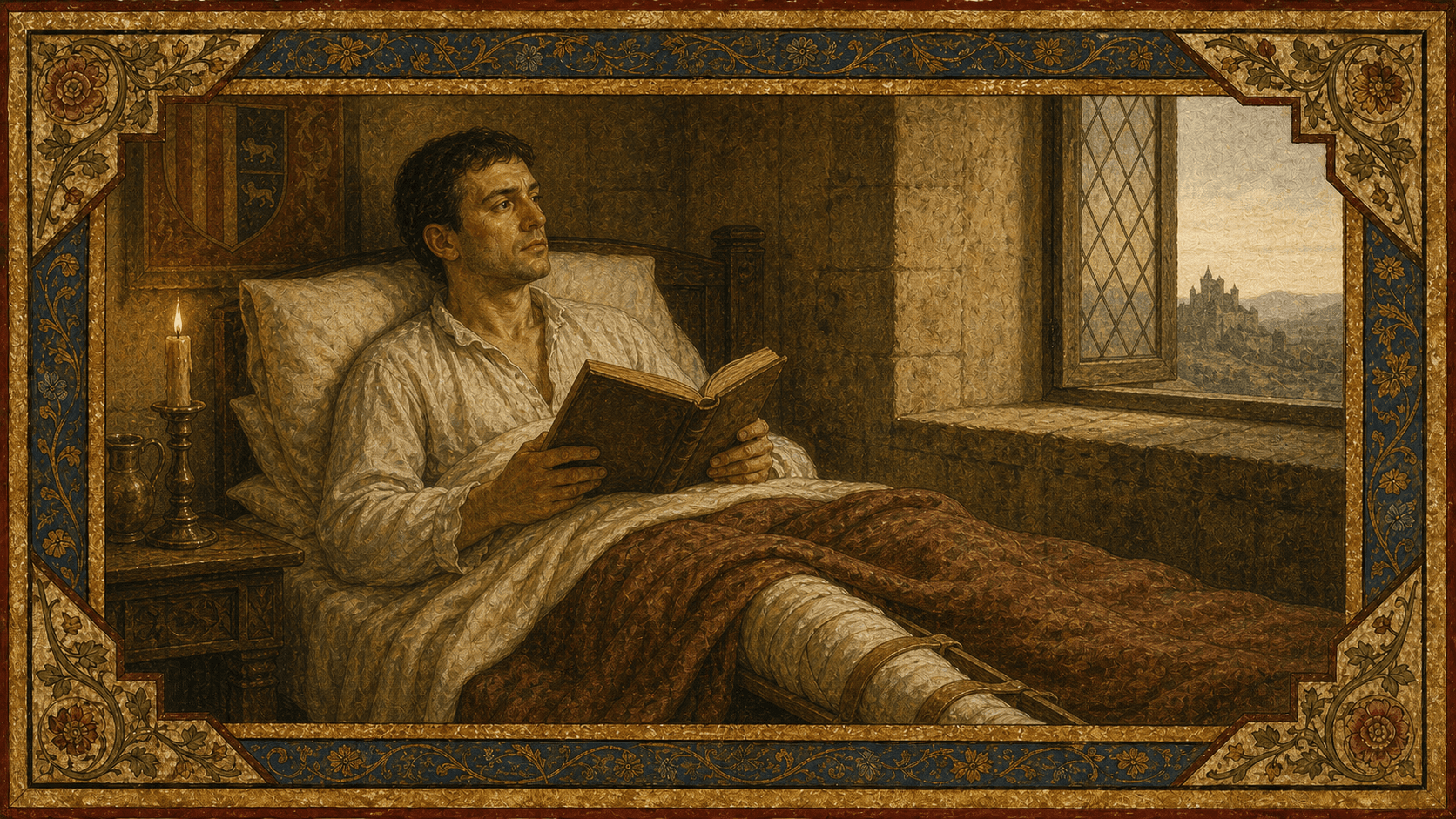
Ignatius recovering from his cannonball wound, reading the lives of Christ and the saints.
Ignatius reads the life of Christ and the saints during his convalescence.

The wound was severe. One leg was shattered and the other badly damaged. The surgeons set the bones, and then, when the leg healed in a way that offended his vanity, it was broken and set again. He nearly died and spent months unable to move freely.

He asked for the knightly romances he loved. The castle had none. So he read what was available: Christ and the saints. He began to alternate his daydreams, imagining worldly glory on one side and saintly exploits on the other.

Both pleased him while they lasted. But only one left peace. Ignatius began to see that not every attractive impulse leads to God, and not every intense feeling is true consolation. Some movements leave the soul dry and restless; others leave it free.

Manresa

The soldier became a pilgrim.

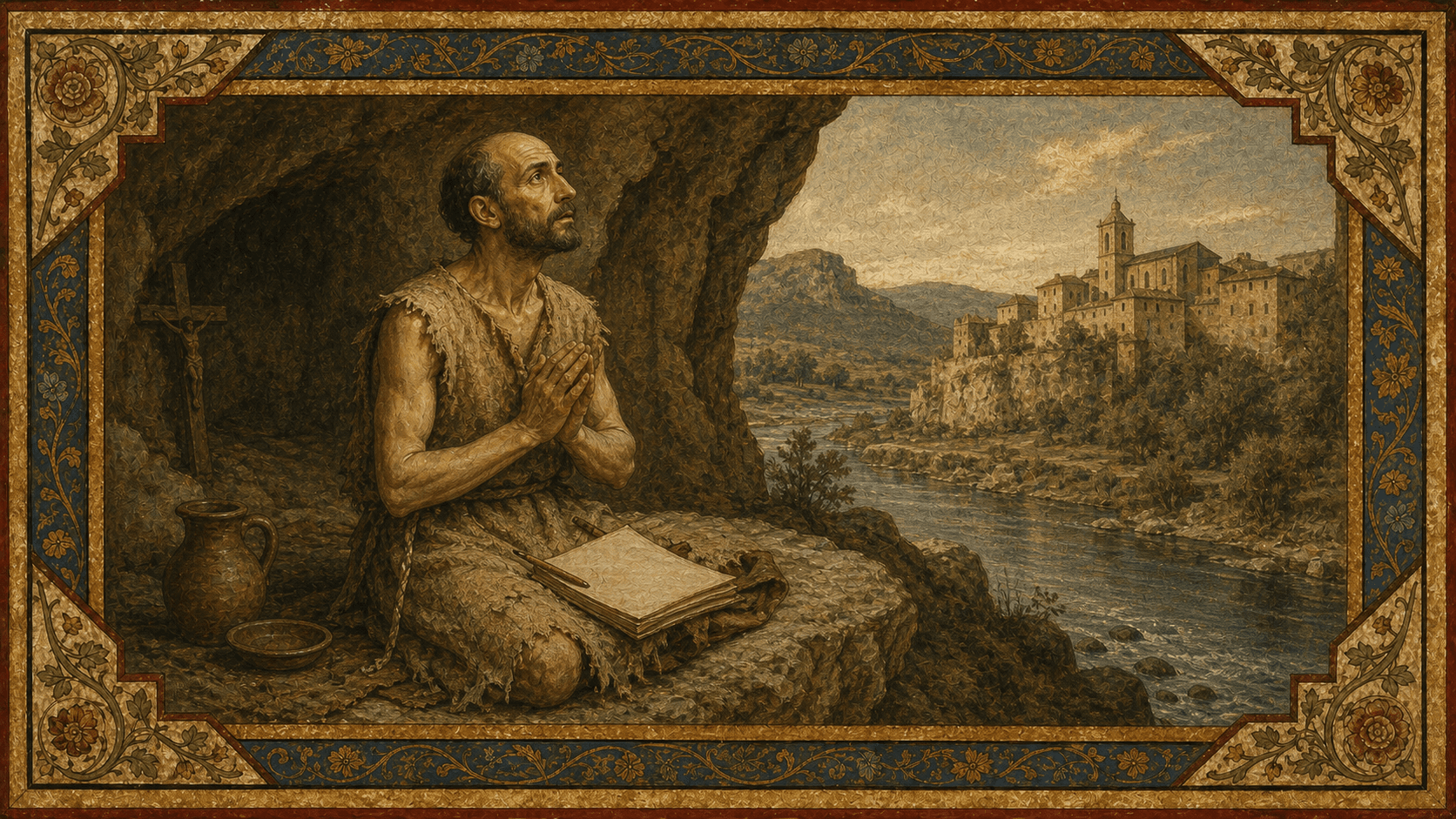
Ignatius at Manresa, writing and praying in an austere cave setting.
At Manresa, Ignatius shaped the prayer and discernment that became the Spiritual Exercises.

Once he could walk, Ignatius left Loyola. At Montserrat he made a confession of his whole life, laid his sword and dagger before Our Lady's altar, gave away his fine clothes, and put on the dress of a poor pilgrim.

He then stopped at Manresa, intending to stay briefly, and remained for months. There he lived as a penitent, begged for food, prayed for hours, wrestled with scruples, and received the deep interior illumination that he later said taught him more than all his study.

Out of that crucible came the Spiritual Exercises: a structured retreat of meditations, rules, examinations, and decisions meant to free a person to choose God's will. It is not only a book. It is a tool that works.

Paris

He went back to school.

Ignatius understood that if he wanted to help souls, he needed learning. So the former soldier, already a grown man, sat with boys to learn Latin grammar, then studied at Alcalá, Salamanca, and finally the University of Paris.

In Paris he began gathering companions through the Exercises. Among them were Francis Xavier, brilliant and ambitious, and Peter Faber, gentle and spiritually gifted. On August 15, 1534, the small group took vows at Montmartre, promising poverty, chastity, and service wherever the pope might send them if Jerusalem proved impossible.

Jerusalem did prove impossible. So they went to Rome.

Rome

The Society was born.

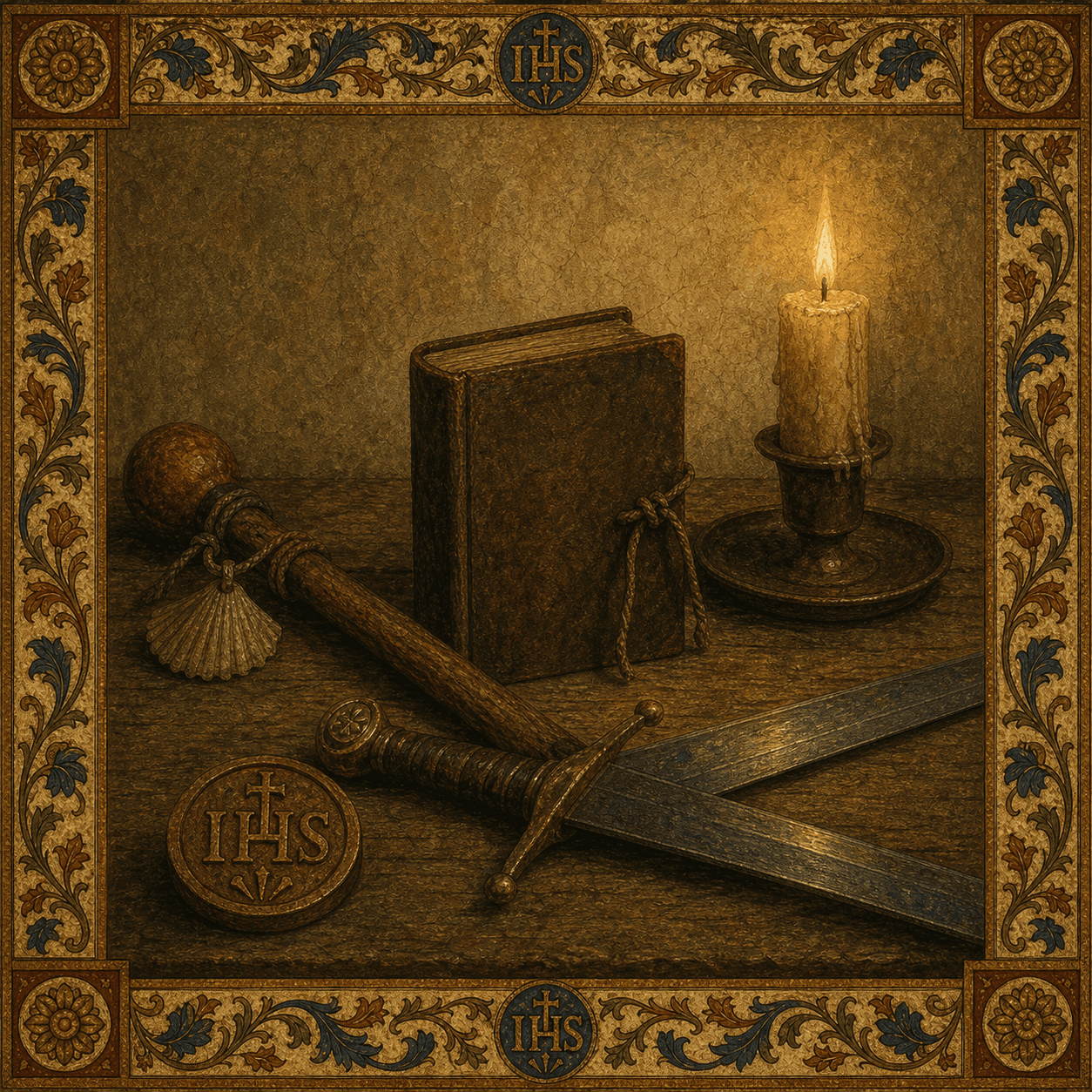
A symbolic still life for Ignatius with a black cassock, book, pilgrim staff, and IHS emblem.
Cassock, pilgrim staff, book, and IHS for the Society of Jesus.

On September 27, 1540, Pope Paul III approved the Society of Jesus with Regimini militantis Ecclesiae. The companions elected Ignatius their first Superior General, against his protests, and he governed from Rome until his death.

It was a new kind of order. The Jesuits were freed for active work, took a special vow of obedience to the pope for mission, and were organized with a strong central discipline. Ignatius built the order like a force to be deployed.

Within his lifetime, Jesuit schools spread, Francis Xavier carried the Gospel to India and Japan, and the Society grew from a handful of companions to about a thousand men on several continents.

AMDG

He taught a disciplined freedom.

Ignatian spirituality does not divide the world into prayer on one side and ordinary work on the other. It seeks God in all things: study, travel, mission, administration, business, friendship, and the concrete work in front of a person.

Its engine is discernment. The person learns to notice consolation and desolation, to become free of disordered attachments, and to choose the path that leads toward God's greater glory.

That is the force of Ad maiorem Dei gloriam, for the greater glory of God. The Ignatian question is not merely what is allowed, or what is good enough, but what serves God more fully here and now.

Rome

He died at his desk.

Ignatius died quietly on July 31, 1556, in Rome. There was no grand deathbed scene. He asked for the pope's blessing and was gone before it arrived.

He left the Spiritual Exercises, the Constitutions, many letters, a short dictated autobiography, and the Society of Jesus. His body rests beneath the high altar of the Gesù, the Jesuits' mother church.

In 1622 he was canonized by Pope Gregory XV in the same ceremony as Francis Xavier, Teresa of Ávila, Philip Neri, and Isidore the Farmer.

Why Now

He is the saint of the second act.

Ignatius matters because his sanctity began in the wreckage of the life he wanted. The cannonball looked like the end: his military career, his vanity, his courtly dreams, his whole future broken in a single blast. It was the beginning.

He matters for discernment because the modern person is drowning in choices and starved for a trustworthy way to make them. Ignatius does not offer vague inspiration. He offers a disciplined way to listen, notice, pray, and choose.

And he matters for ambitious people. He did not throw away courage, strategy, discipline, and will. He converted them. He is proof that a strong temperament can become holy when it is surrendered.

Reading

Where to read him.

Start with the Autobiography, often called the Pilgrim's Story, the short account Ignatius dictated near the end of his life. It is the fastest way to meet the man.

Then approach the Spiritual Exercises, ideally by making them under direction rather than only reading them. After that, read selected letters to meet Ignatius the governor, director, and friend.

A Word of Ignatius

The soldier surrendered.

The Suscipe stands near the summit of the Spiritual Exercises. It is total self-offering: liberty, memory, understanding, will, and all one has returned to the God who gave it.

The man who once wanted glory and advancement ended by asking only for love and grace. It is not weakness. It is the absolute surrender of a soldier, turned at last toward the only commander worth serving.

Connected Saints

A family of holiness.

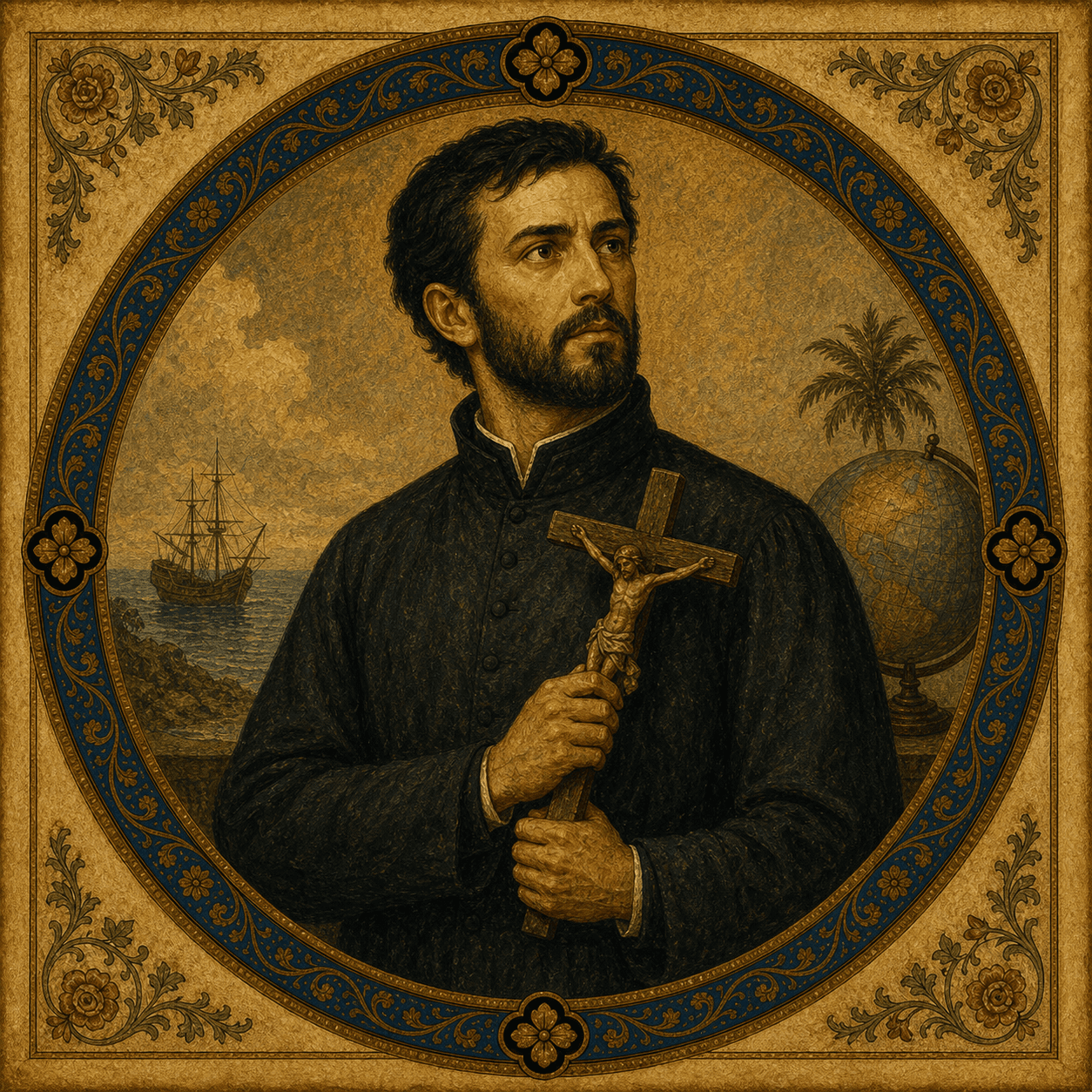
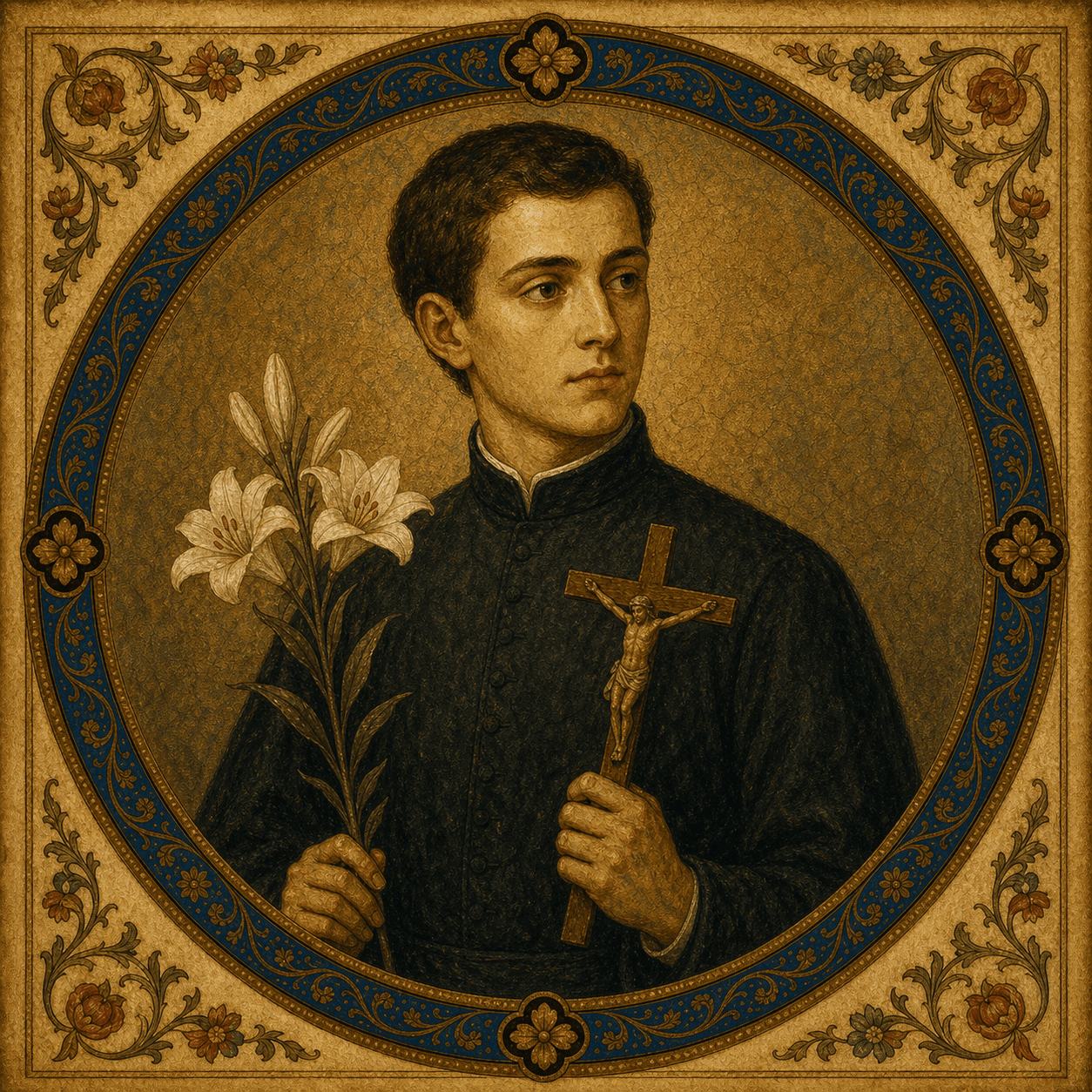
Portrait medallion of St. Francis Xavier in a black Jesuit cassock.

St. Francis Xavier

Ignatius's brilliant Paris companion and the great Jesuit missionary to India and Japan.

Portrait medallion of St. Peter Faber in a black Jesuit cassock.

St. Peter Faber

The gentle first companion whom Ignatius considered especially gifted at giving the Exercises.

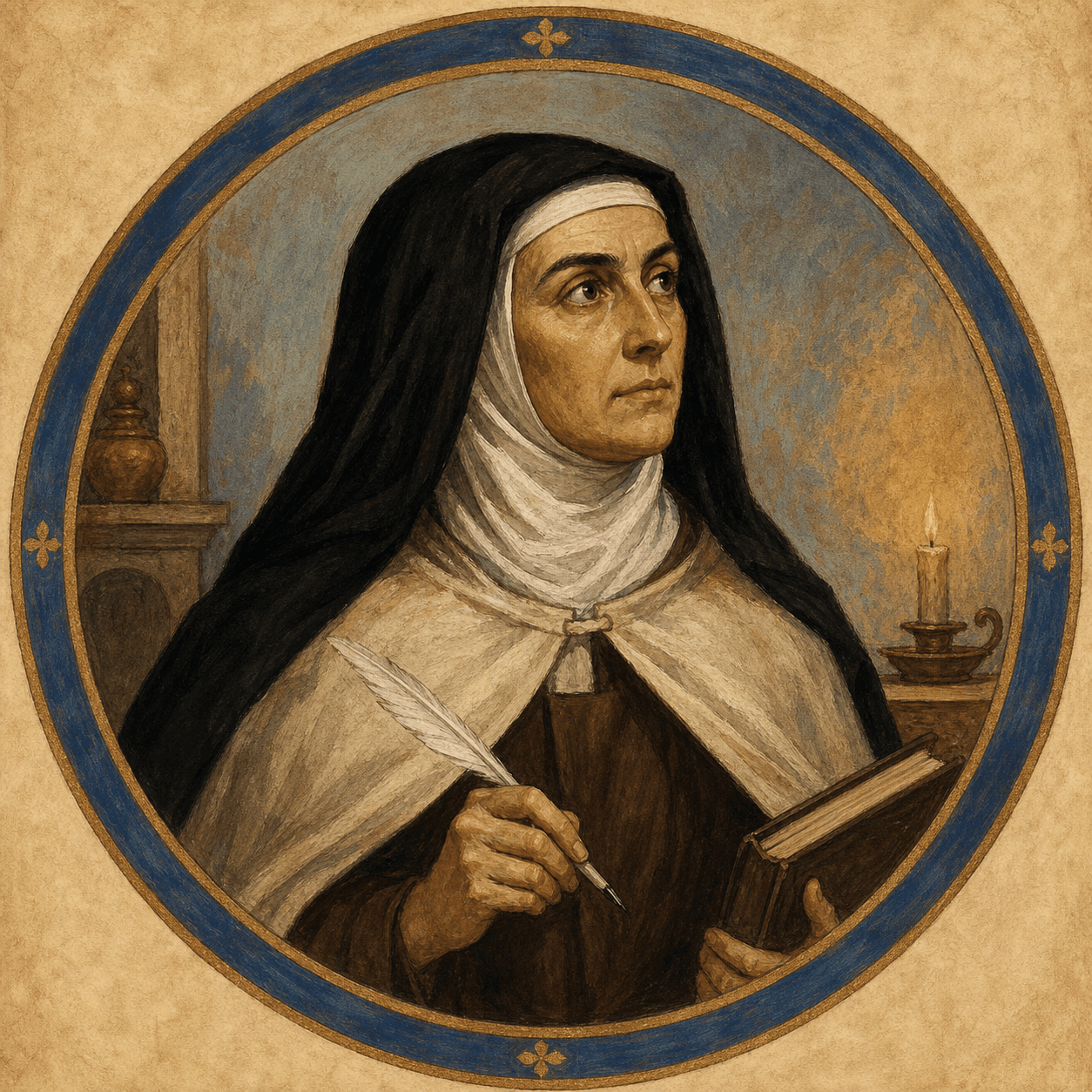
Portrait medallion of St. Teresa of Avila in a Carmelite habit with book and quill.

St. Teresa of Ávila

The Carmelite reformer canonized with Ignatius in the great 1622 ceremony.

Portrait medallion of St. Aloysius Gonzaga in a black Jesuit cassock.

St. Aloysius Gonzaga

The young Jesuit who gave up noble inheritance and died serving plague victims.

Frequently Asked

Questions for reading Ignatius clearly.

Who was St. Ignatius of Loyola?+
He was a sixteenth-century Basque soldier whose military career ended when a cannonball shattered his leg. During convalescence, reading the life of Christ and the saints, he learned the pattern of discernment that became central to his spirituality. He wrote the Spiritual Exercises, gathered companions, and founded the Society of Jesus, the Jesuits.
What are the Spiritual Exercises?+
They are a structured program of prayer and meditation, usually made as a retreat, designed to free a person from disordered attachments and help them choose God's will. Ignatius built them as a practical instrument to be done under guidance, not merely read as a book.
What is the discernment of spirits?+
It is the Ignatian art of recognizing which interior movements lead toward God and which lead away. Ignatius began to learn it on his sickbed, when he noticed that fantasies of worldly glory left him restless while thoughts of imitating the saints left him at peace.
What does AMDG mean?+
It abbreviates Ad maiorem Dei gloriam, usually rendered 'for the greater glory of God.' It expresses the Ignatian instinct toward the magis: the fuller, freer, and more generous service of God in each concrete choice.
What is the Suscipe?+
The Suscipe is the prayer of total self-offering in the Spiritual Exercises: a person gives back to God liberty, memory, understanding, will, and all possessions, asking only for God's love and grace. This page uses a project rendering from the Latin rather than copying a modern copyrighted translation.
Why do Jesuits sometimes sound military?+
Ignatius had been a soldier, and the order he founded carries some of that discipline: readiness to be sent, strong obedience, and a special vow of obedience to the pope for mission. But the aim is not violence. The Jesuit ideal is the contemplative in action, ready to serve wherever sent.
Did Ignatius and the Jesuits really become influential quickly?+
Yes. The Society of Jesus was approved in 1540, and by Ignatius's death in 1556 it had grown from a small band of companions to about a thousand men on several continents, active in education, missions, and Catholic reform.

Sources

Read beyond summaries.

This page uses the Jesuit black-cassock visual rule, treats the convalescence without gore, and renders the Suscipe from Latin rather than copying a modern copyrighted translation.

Primary

  • St. Ignatius of Loyola, The Spiritual Exercises, especially the rules for discernment and the Suscipe prayer.
  • St. Ignatius of Loyola, Autobiography / The Pilgrim's Story, dictated to Luís Gonçalves da Câmara near the end of his life.
  • St. Ignatius of Loyola, Constitutions of the Society of Jesus and selected Letters.

Historical

  • The 1521 defense of Pamplona, the convalescence at Loyola, Montserrat, Manresa, Paris, Montmartre, and the early Roman years of the Society.
  • The lives of the first companions, especially Francis Xavier and Peter Faber, and the early expansion of Jesuit schools and missions.
  • Scholarship on Ignatian discernment and the development of the Spiritual Exercisesfrom Ignatius's own conversion.

Magisterial

  • Pope Paul III, Regimini militantis Ecclesiae (1540), approving the Society of Jesus.
  • Pope Gregory XV's 1622 canonization of Ignatius, Francis Xavier, Teresa of Ávila, Philip Neri, and Isidore the Farmer.
  • Catechetical teaching on prayer, discernment, religious life, and the Church's missionary vocation.

Last reviewed: June 5, 2026

On this page+