The Story
The hermit who taught the West how to stay.
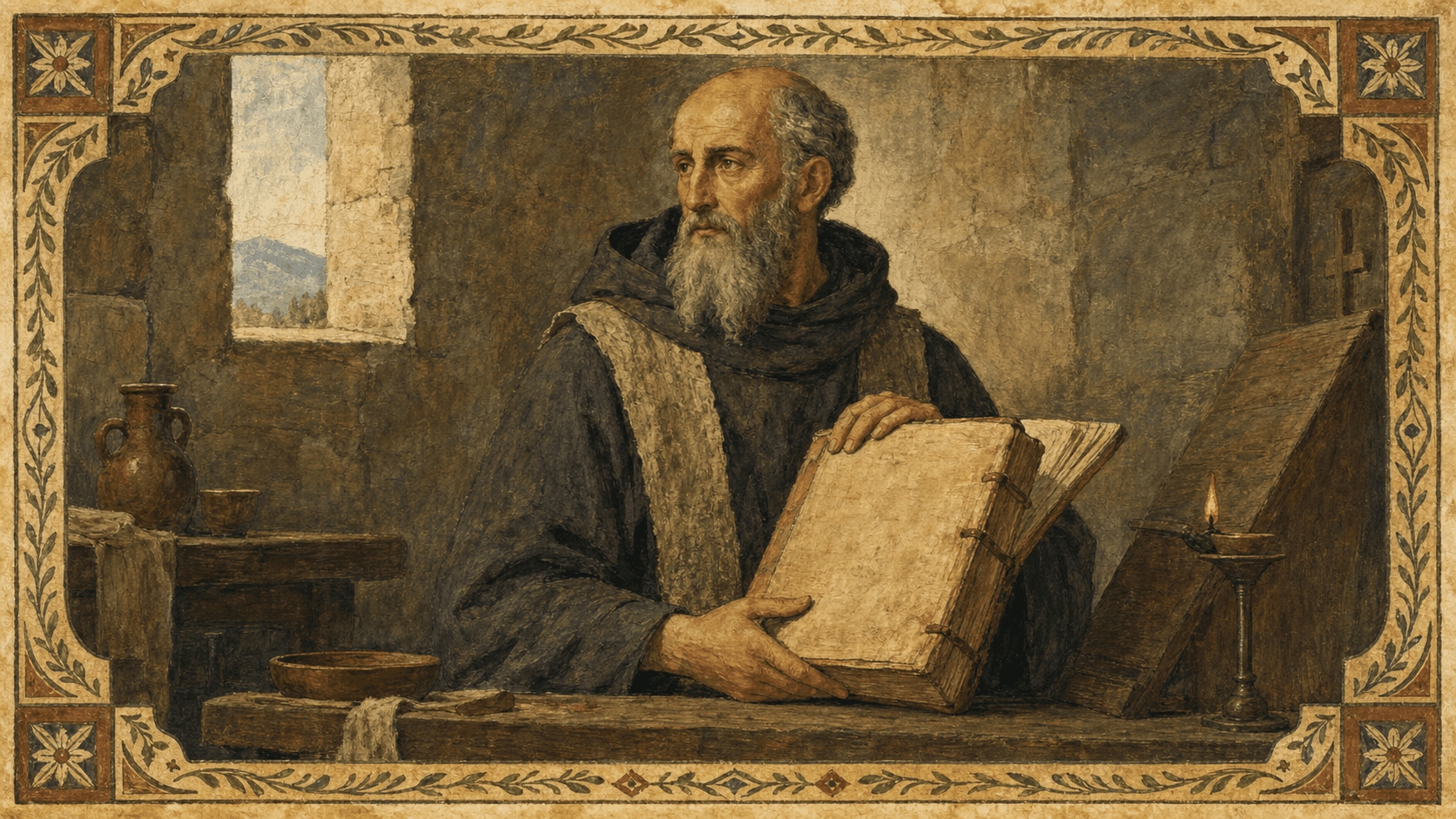
Benedict was born into the wreckage of the Roman world. The Western Empire had collapsed in his grandparents' lifetime; Italy was ruled by Goths, ravaged by war and plague, its old order gone. He was sent to Rome as a young man to study, and he was repelled by what he found there — a city of dissipation and decay — and he left, abandoning his education and his prospects, to look for God somewhere quieter.
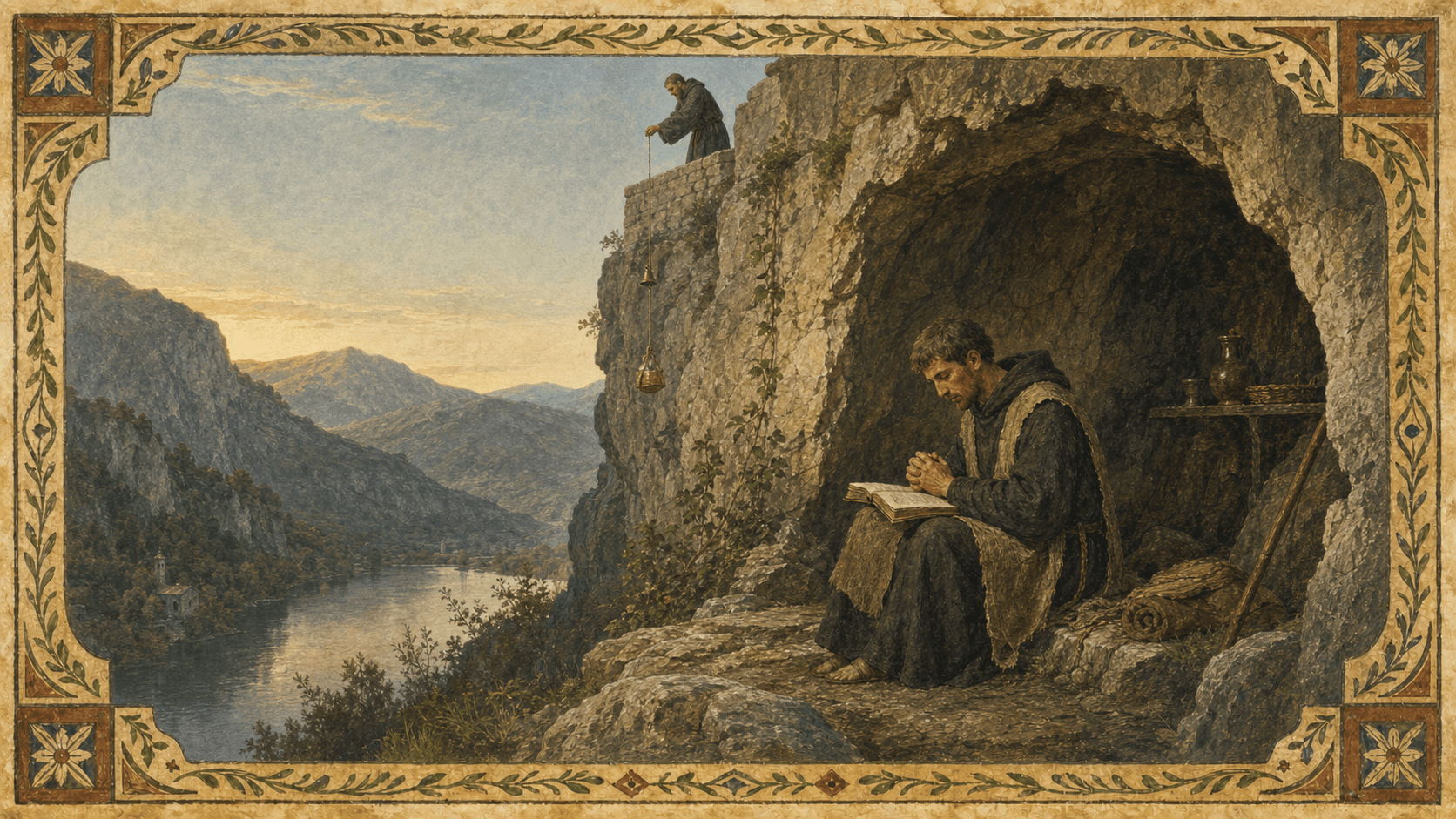
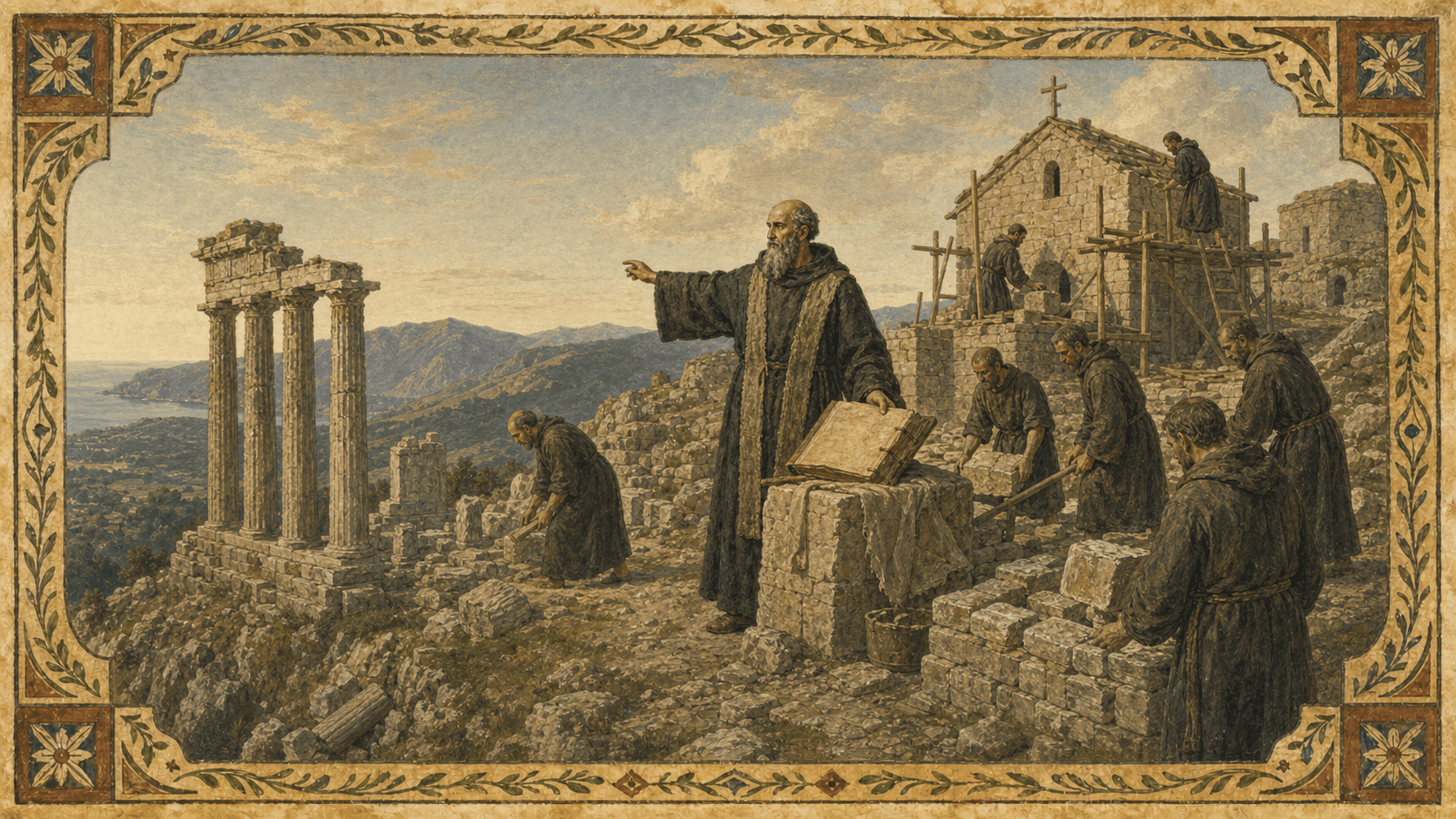
He found a cave above a lake at Subiaco and lived in it as a hermit for about three years. A single monk from a nearby monastery knew where he was and lowered bread to him on a rope. In time others heard of the holy man in the cave and came to live near him, and Benedict, who had wanted only to be alone with God, found himself almost against his will the father of a community. Then of twelve communities. Then he moved south, to a mountaintop called Cassino, and built the monastery that would become the heart of Western monasticism.
There he wrote the one thing that made him immortal: a Rule — a short manual for how a group of ordinary people who want to give their lives to God can actually live together, day after day, year after year, without destroying each other or burning out. It is moderate, humane, practical, and wise. It assumes people are weak and arranges their life so they can be faithful anyway.
He did not set out to save civilization. He set out to find God. But the monasteries that grew from his Rule became, through the long centuries after Rome fell, places where literacy, learning, agriculture, and the faith itself were kept alive in the West. The hermit who fled the ruins built the thing that outlasted them.